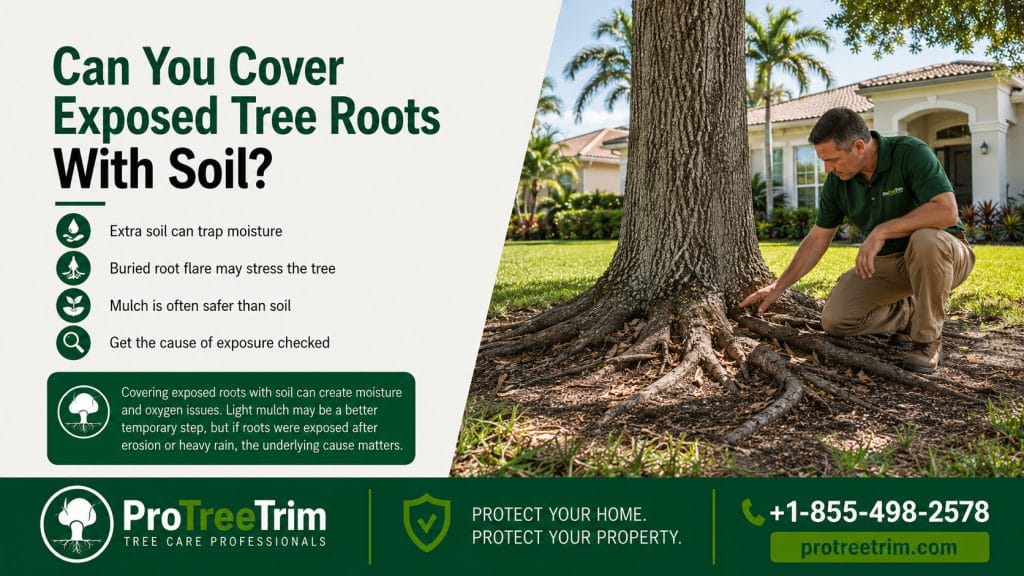
Covering exposed tree roots with soil is not always the right fix. Some surface roots are normal, especially around mature trees. Freshly exposed roots may point to erosion, runoff, compacted soil, grade changes, or root movement. Before adding soil, homeowners should ask why the roots became exposed in the first place.
Exposed Roots Are Not Always a Problem
Visible roots can look messy, especially near a lawn, walkway, driveway, or front entry. But a root showing above the ground does not automatically mean the tree is unhealthy.
Some trees naturally develop surface roots as they mature. Soil may also wash away slowly over time, especially where rainwater runs off a roof, driveway, patio, or slope. Around pavers or sidewalks, roots may become more visible because the surrounding soil has compacted or shifted.
The concern is fresh change. If roots suddenly appear after heavy rain, grading, trenching, paver repair, stump grinding, or irrigation work, the tree may be reacting to a site problem. If the exposed roots look torn, scraped, lifted, or newly cracked, that deserves more attention than long-standing surface roots.
| What you see | What it may mean |
|---|---|
| Large roots visible for years | May be normal surface rooting |
| Roots suddenly exposed after rain | Soil washout or drainage problem |
| Roots scraped by mower or equipment | Mechanical injury may be present |
| Roots lifted with cracked soil | Possible root plate movement |
| Roots near pavers or walkway | Hardscape and root zone may be competing |
| Exposed roots plus leaning | Stability should be checked carefully |
Why Adding Soil Can Backfire
The instinct to cover exposed roots makes sense. Homeowners want the yard to look level, protect the roots, and make mowing easier. But dumping soil over roots can reduce oxygen, change moisture movement, and bury the root flare.
Penn State Extension warns against trying to cover exposed roots or adding soil within one foot of the trunk, noting that moisture retained by new soil near the trunk can cause bark rot. It also advises preserving the root flare and avoiding raised beds around trees because added soil can interfere with gas exchange in the root zone.
Too much mulch can create a similar problem. University of Maryland Extension recommends keeping mulch shallow and away from the trunk, and warns that excess mulch piled on root systems can contribute to plant decline.
That does not mean roots must always stay bare. A light, careful approach may help in some landscape beds. The issue is depth and placement. A thin layer of mulch spread wide and kept off the trunk is different from burying roots under several inches of soil or building a raised bed around the tree.
Fix the Cause, Not Just the Look
Before adding anything, look at water movement. Is rain cutting through the bed? Does a downspout empty near the tree? Is irrigation washing soil away? Are pavers or driveway edges directing runoff toward the roots?
Also check traffic. Mowers, parked vehicles, foot paths, construction equipment, and repeated yard work can compact soil and expose or damage roots. University of Maryland Extension notes that a layer of organic mulch over tree roots can help reduce soil compaction, but vehicles should not be treated as normal traffic over a tree’s root zone.
If the exposed root is in a mowing path, do not shave it down to make the lawn flatter. Large roots may support the tree. Cutting them can affect stability, especially if the tree is close to a house, driveway, pool cage, fence, walkway, or utility area.
A better first move is usually:
- redirect water that is washing soil away
- keep mowers and string trimmers off roots
- use a wider, shallow mulch ring where appropriate
- keep mulch and soil away from the trunk
- avoid cutting roots for cosmetic reasons
- photograph changes after rain or yard work
When Exposed Roots Need Faster Attention
Exposed roots become more concerning when they appear with other warning signs. A root alone may not be urgent. A root paired with lifted soil, a new lean, cracked ground, trunk wounds, mushrooms, or dead limbs changes the decision.
Pay closer attention if the tree is near a roof, driveway, pool cage, fence, sidewalk, parked vehicle, septic area, or service line. A tree with root movement in an open part of the yard can be watched differently from one leaning toward a structure.
Take photos before making changes. Capture the full tree, trunk base, exposed roots, water path, nearby pavers, driveway, walkway, irrigation heads, and any lifted soil. If the roots appeared after a contractor worked nearby, include the work area in the photos.
If you are unsure whether exposed roots, soil washout, root damage, or a leaning tree needs professional attention, ProTreeTrim can help connect homeowners with local tree service support. Call +1-855-498-2578 or visit protreetrim.com.
FAQs
Can I put topsoil over exposed tree roots?
Be careful. A thin correction may be acceptable in some areas, but piling soil over roots or near the trunk can reduce oxygen and trap moisture.
Is mulch better than soil over exposed roots?
Usually, a shallow mulch layer is safer than burying roots with soil. Keep mulch away from the trunk and avoid building a mound.
Should I cut exposed roots so the lawn is easier to mow?
No. Cutting large roots can harm the tree and may affect stability. Adjust the landscape bed or mowing pattern instead.
Why did roots suddenly become exposed after rain?
Heavy rain may wash soil away, reveal erosion, or expose a drainage problem. If roots look lifted or the tree starts leaning, take it more seriously.
ProTreeTrim™ can help you take the next step.
If you are dealing with a damaged tree, fallen branch, stump, root issue, palm concern, or storm cleanup question in Florida, call ProTreeTrim for tree service support.