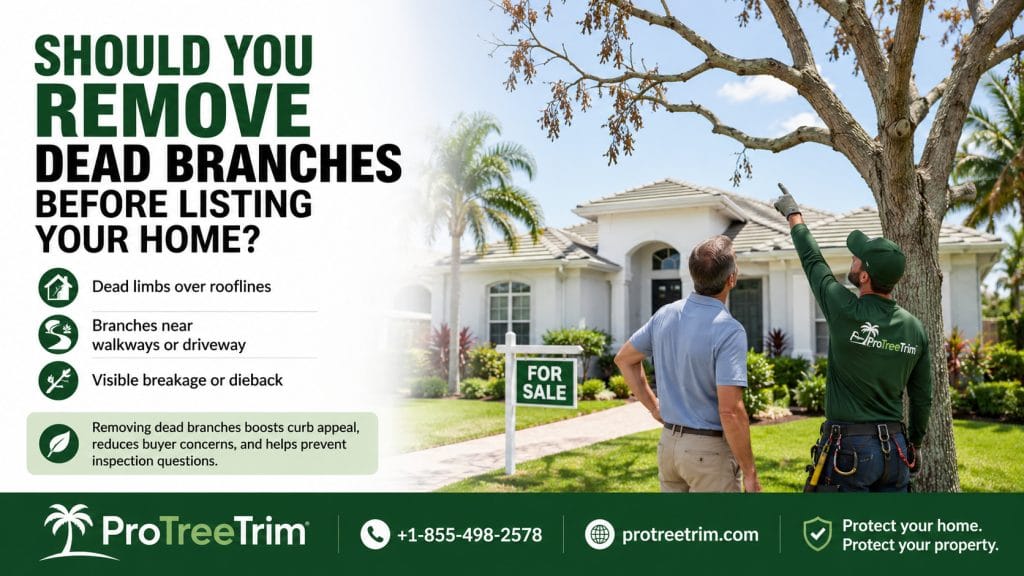
Dead branches are one of the easiest tree problems for buyers to notice. A few small twigs inside the canopy may not matter much, but a large dead limb over the driveway, roof, front walk, pool cage, or fence can quickly become an inspection question, negotiation point, or cleanup concern.
Start With Size and Location
The first question is not whether the branch is dead. It is what the branch could hit.
ISA’s TreesAreGood risk guidance describes dead branches as one of the more obvious potential hazards and notes that the risk depends on branch size and distance from possible targets. That is the same way a seller should think before listing: a dead branch over open lawn is not the same as a dead branch over the path buyers will use to enter the house.
| Dead branch location | Why it matters before listing |
|---|---|
| Over front walkway | Buyer safety and first impression |
| Over driveway or parking area | Vehicle and access concern |
| Touching or near roofline | Roof, gutter, and storm-risk questions |
| Above pool cage or patio | Screen, frame, and outdoor-living concern |
| Hanging over fence or neighbor side | Boundary and cleanup concern |
| High inside canopy over open lawn | May be less urgent, but still worth noting |
Small deadwood can be routine in many trees. Large dead limbs are different. They may break during wind, rain, or cleanup, and they make a yard look less maintained even if the rest of the home is polished.
Do Not Turn Deadwood Cleanup Into Heavy Pruning
Removing dead branches is not the same as cutting back a healthy canopy. That distinction matters before selling.
If the work is limited to deadwood, roofline clearance, or a specific hazardous limb, it often reads as responsible maintenance. If the tree suddenly looks aggressively cut, topped, or stripped, buyers may wonder whether a bigger problem was hidden.
A good pre-listing pruning plan should sound specific:
- remove large deadwood over high-use areas
- clear branches physically touching the roof or gutters
- avoid unnecessary live-canopy removal
- keep the tree’s natural shape when possible
- protect pavers, pool screens, fences, and landscaping during work
- save before-and-after photos and the invoice
If the dead branch is high, heavy, cracked, or near wires, do not handle it as a DIY job. A branch that looks manageable from the ground may be much heavier once it starts moving.
What Buyers and Inspectors May Notice
A standard home inspection is not usually a full tree-risk assessment, but visible exterior conditions can still enter the conversation. ASHI’s Standard of Practice includes visually observable exterior items such as vegetation, grading, drainage, driveways, patios, and walkways when they are likely to affect the building adversely.
That means a dead limb rubbing the roof, dropping debris into gutters, or hanging over a cracked walkway can raise practical questions. The inspector may not diagnose the tree, but the buyer may ask for the issue to be addressed or reviewed.
Before listing, walk the property as if you were seeing it for the first time:
- Can buyers walk under dead limbs?
- Are dead branches visible in listing photos?
- Is deadwood hanging over roof, driveway, or pool area?
- Are gutters packed with tree debris?
- Is there a dead limb near a power line?
- Does the deadwood appear with trunk cracks, mushrooms, or leaning?
If the answer is yes, handling the issue before listing may reduce friction later.
Keep the Records Simple
After the work is done, keep a clean record. You do not need to over-explain the tree to every buyer, but you should be ready if someone asks.
Save:
- estimate or invoice
- before-and-after photos
- debris-hauling notes
- stump or removal details if any
- related roof, gutter, fence, or screen repair receipts
- any written recommendation from the tree crew
Avoid saying the tree is “safe” unless you have a proper professional assessment supporting that claim. A better seller answer is factual: “The dead limb over the driveway was removed, debris was hauled away, and the invoice is available.”
If you are unsure whether dead branches, roofline limbs, or visible tree issues should be handled before listing, ProTreeTrim can help connect homeowners with local tree service support. Call +1-855-498-2578 or visit protreetrim.com.
FAQs
Do all dead branches need to be removed before selling?
No. Small dead twigs inside a canopy may not matter much. Large dead limbs over walkways, driveways, roofs, pool cages, or fences deserve more attention.
Will a home inspector flag dead branches?
A general inspector may note visible exterior concerns, especially if vegetation appears likely to affect the building, roof, drainage, access, or walkways. They may recommend further evaluation rather than diagnose the tree.
Should I remove dead branches before listing photos?
Often, yes, if the deadwood is visible from the street, front entry, patio, driveway, or pool area. It can make the property look better maintained.
What if the dead branch is near a power line?
Do not trim it yourself. Contact the utility first if electrical lines may be involved.
ProTreeTrim™ can help you take the next step.
If you are dealing with a damaged tree, fallen branch, stump, root issue, palm concern, or storm cleanup question in Florida, call ProTreeTrim for tree service support.