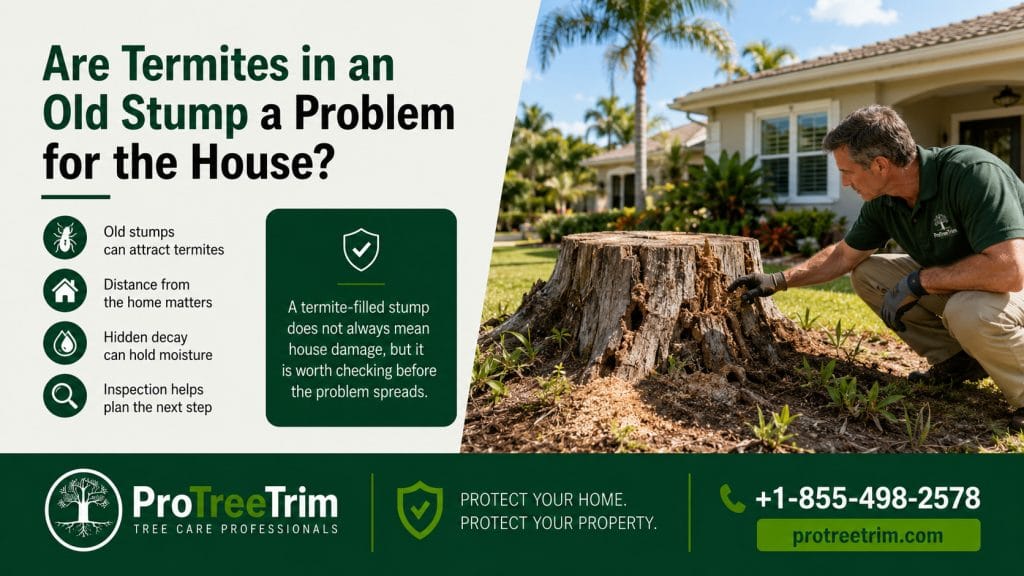
Termites in an old stump are not proof that your house is infested, but they are not something to ignore. A rotting stump is wood in contact with soil, often holding moisture and decay. That makes it a place homeowners should inspect, especially if the stump is close to the home, deck, fence, garage, or crawl space.
A Stump Can Be a Warning, Not a Diagnosis
Finding termites in a stump usually creates one immediate fear: “Are they heading for the house?” The honest answer is: maybe, maybe not.
North Carolina State Extension notes that termite swarmers found outdoors near tree stumps or landscape timbers are not, by themselves, proof that a house is infested. But they are a reminder that termites live in the environment around homes and should be monitored carefully.
That distinction matters. The stump may be an isolated food source in the yard. It may also be part of a broader moisture and wood-debris problem near the structure. The closer the stump is to the house, the more seriously it should be taken.
| What you notice | What it may mean |
|---|---|
| Termites only in a far-back stump | Monitor, remove decaying wood when practical |
| Stump close to foundation or deck | Higher reason to inspect nearby wood and moisture |
| Mud tubes on foundation or piers | Pest professional should evaluate |
| Swarmers indoors | More concerning than swarmers outdoors |
| Moist soil, mulch, or wood debris near house | Conditions may favor termite activity |
| Old roots running toward structure | Stump and root decay may deserve cleanup planning |
Check the Conditions Around the Stump
Termites need food, shelter, and moisture. EPA homeowner guidance advises against piling or storing firewood or wood debris next to the house and recommends making sure trees and shrubs are not planted too close to the structure or growing against exposed wood surfaces.
For an old stump, the practical check is simple. Is it touching or close to the foundation area? Is mulch piled around it? Does irrigation keep the area wet? Are there old roots, wood chips, fence scraps, landscape timbers, or firewood nearby? Is the stump near a wooden deck, shed, siding, porch post, or crawl-space opening?
UF/IFAS also notes that termite infestations are a year-round risk for Florida properties and trees, even though swarming is not year-round. That is one reason Florida homeowners should treat old stumps and decaying wood as part of regular property maintenance, not just a cosmetic yard issue.
Do Not Disturb Everything Before You Know What You Are Seeing
If you find termites, do not immediately chop, burn, spray, and scatter the stump debris around the yard. Disturbing the area may make it harder to understand where activity is concentrated.
Take photos first. Photograph the stump, termites if visible, nearby mulch, soil, old roots, fence line, foundation, deck, shed, or any wood-to-soil contact. If you see mud tubes, indoor swarmers, damaged wood, or recurring moisture near the home, a licensed pest professional is the right next step for the termite side of the problem.
Tree service may still matter. A decaying stump can be ground, removed, or cleaned up as part of reducing old wood in the yard. But termite treatment and structural pest inspection are not the same job as stump grinding.
If you are unsure whether an old stump, root system, or decaying tree debris should be removed as part of a cleaner yard plan, ProTreeTrim can help connect homeowners with local tree service support. Call +1-855-498-2578 or visit protreetrim.com.
FAQs
Do termites in a stump mean my house has termites?
Not automatically. Outdoor termite activity near a stump does not prove a home infestation, but it should prompt a careful check around the house and moisture-prone areas.
Should I grind a stump if termites are in it?
Often, removing old decaying wood is a smart yard-maintenance step. If termites are active near the home, talk with a pest professional before disturbing the site.
Can old roots also attract termites?
Old roots are decaying wood underground, so they may be part of the same moisture-and-wood environment. The concern is greater near foundations, decks, fences, or crawl spaces.
Who should I call first: pest control or tree service?
If you suspect termites may be near or inside the house, call a licensed pest professional first. For stump grinding, root cleanup, or debris removal, tree service support may come after the pest concern is understood.
ProTreeTrim™ can help you take the next step.
If you are dealing with a damaged tree, fallen branch, stump, root issue, palm concern, or storm cleanup question in Florida, call ProTreeTrim for tree service support.