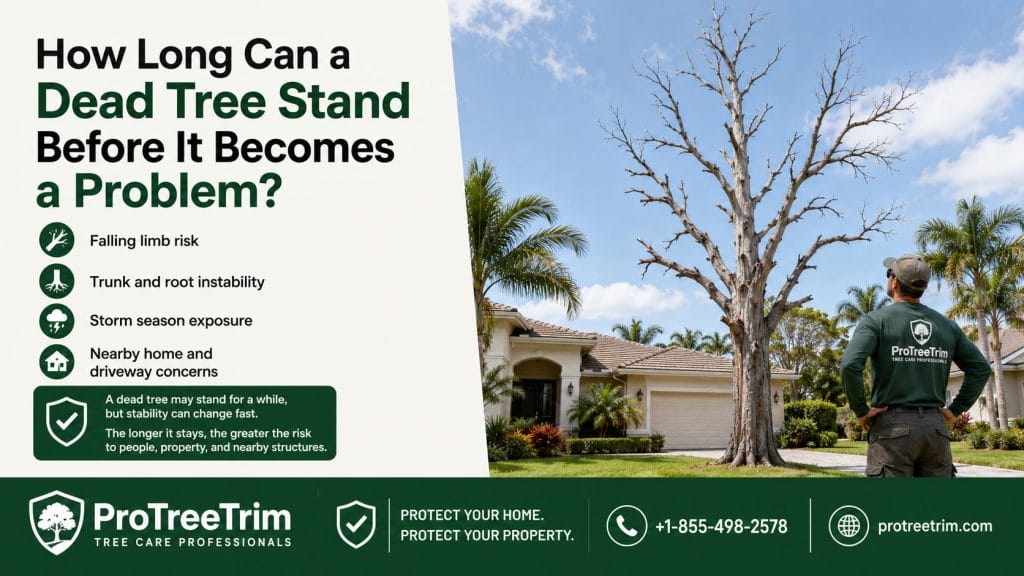
A dead tree may stay upright for months or even longer, but that does not mean it is safe to ignore. Once a tree is dead, it no longer repairs wounds, responds to decay, or holds branches the same way a living tree does. The real question is what it could hit if the trunk, roots, or limbs fail.
The Clock Depends on Location
A dead tree in the far back of a large open lot is one kind of concern. A dead tree near a roof, driveway, sidewalk, fence, pool cage, utility line, or neighbor’s property is very different.
Homeowners often ask how long they can wait. There is no clean answer because dead trees do not decline on a neat schedule. Species, size, soil, past storm damage, insects, decay, trunk wounds, and root condition all matter. A small dead ornamental tree may be manageable for a short time. A dead pine near a driveway or a dead oak with large limbs over a roof deserves faster attention.
The first step is not guessing the timeline. It is looking at targets.
| What the dead tree could hit | Why waiting becomes riskier |
|---|---|
| Roof or gutter line | Limbs or trunk sections can cause property damage |
| Driveway or parking area | Vehicles and daily access may be exposed |
| Pool cage or patio | Falling wood can damage screens, frames, or pavers |
| Fence or neighbor’s yard | Cleanup and responsibility questions can get complicated |
| Walkway or front entry | People may pass under weak limbs |
| Utility line | Electrical safety comes before tree cleanup |
Dead Limbs Often Fail Before the Whole Tree
A dead tree does not have to fall completely to become a problem. Large limbs may break first. Bark may loosen. The top may snap. A trunk cavity may widen. Roots may decay below the surface while the tree still looks upright from the street.
Look for signs that the tree is moving from “dead but standing” to “actively breaking down”:
- Large dead limbs over high-use areas
- Mushrooms or soft wood near the base
- Bark falling off in sheets
- Trunk cracks or hollow openings
- Sawdust-like material or insect activity
- A new lean after rain or wind
- Broken top or hanging branches
- Soil lifting or roots exposed on one side
Do not shake the trunk, cut test branches, or pull loose bark to see how bad it is. That can put you in the fall zone and does not give a reliable answer.
What Homeowners Should Do Before Removal
Take photos before the tree is cut. Photograph the full tree, trunk base, dead limbs, nearby structures, and any visible decay or damage. If the tree is near a neighbor’s property, fence, driveway, roof, or utility line, those photos can help explain why the work was needed.
Ask for a clear scope before removal. Will the crew remove only the tree, or also grind the stump? Will large wood be hauled away? Are there access issues with pavers, irrigation, septic areas, gates, or soft soil? A dead tree can be more brittle than expected, so the removal plan matters.
If the tree is touching or close to utility lines, do not call it a normal removal job. Contact the utility first and keep people away from the area.
A dead tree may not be an emergency every time, but it is rarely something to leave out of mind. The closer it is to people, property, or access routes, the less sense it makes to wait.
If you are unsure whether a dead tree, stump, or root issue needs professional attention, ProTreeTrim can help connect homeowners with local tree service support. Call +1-855-498-2578 or visit protreetrim.com.
FAQs
Can I leave a dead tree standing if it is not near the house?
Sometimes, but keep checking for falling limbs, trunk cracks, decay, leaning, and whether people or pets use the area nearby.
Is a dead tree always an emergency?
No. Urgency depends on size, condition, decay, limb structure, and what the tree could hit if it fails.
Should the stump be removed after a dead tree comes down?
Often, yes. A leftover stump can decay, attract insects, interfere with mowing, and create a future settling or replanting issue.
Can a dead tree fall without warning?
It can fail suddenly, especially after wind, rain, root decay, or limb breakage. That is why location and visible decay matter.
ProTreeTrim™ can help you take the next step.
If you are dealing with a damaged tree, fallen branch, stump, root issue, palm concern, or storm cleanup question in Florida, call ProTreeTrim for tree service support.