
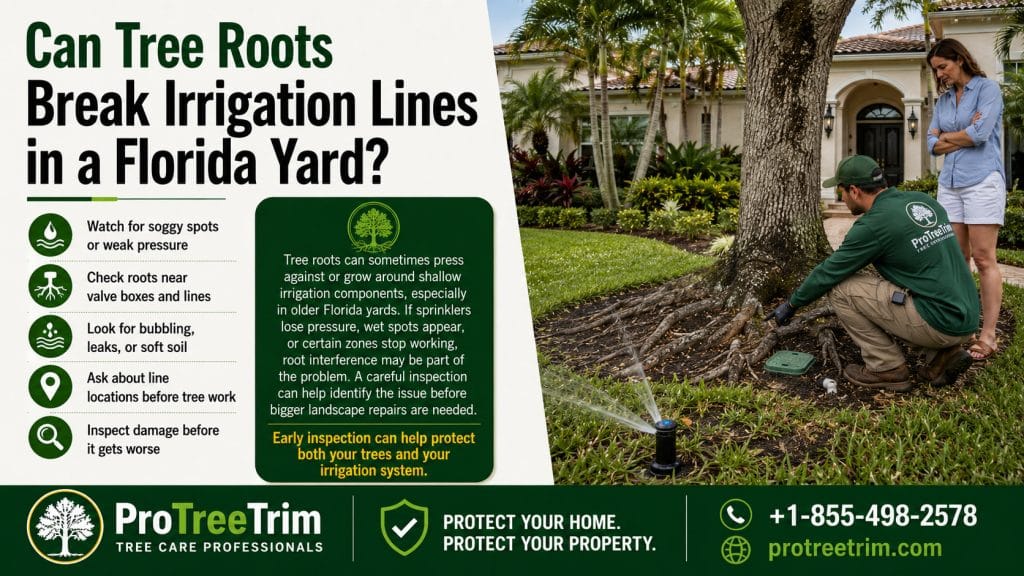
Tree roots can contribute to irrigation problems in a Florida yard, but they are not always the only cause. A broken sprinkler line may come from root pressure, shallow installation, soil movement, mower damage, old fittings, or repeated repairs in the same bed. The key is to check the pattern before cutting roots or replacing pipe.
Why Roots and Irrigation Lines End Up in the Same Place
Roots grow where conditions support them. In many Florida landscapes, that means mulch beds, damp soil near sprinkler heads, and areas where irrigation keeps the ground softer than the surrounding yard. If a tree sits near a driveway, walkway, pool deck, or planting bed, the irrigation system may already be running through the same tight space as the roots.
A small leak can make the problem worse. Moist soil around a damaged fitting may encourage more root growth into that area. Over time, homeowners may notice low water pressure, a soggy patch, a sprinkler head that tilts, or one zone that never seems to perform correctly.
Not every irrigation issue is root damage, though. Sandy soil can shift. Shallow lines can be nicked during planting. Edging tools, stump grinding, fence work, or paver repairs can also disturb irrigation parts.
| What you notice | Possible explanation |
|---|---|
| One wet spot near a tree bed | Leak, broken fitting, or poor drainage |
| Sprinkler head tilted by roots | Surface roots or soil movement |
| Low pressure in one zone | Leak, blockage, or damaged line |
| Repeated breaks in same area | Roots, shallow pipe, or bad repair location |
| Soft soil after irrigation | Overwatering, leak, or drainage issue |
| Raised pavers near sprinkler lines | Root pressure and soil movement may both play a role |
Be Careful Before Cutting Roots
It may be tempting to cut the root that appears to be causing the problem. That can backfire if the root is large or close to the trunk. Roots help support the tree, and cutting the wrong one may affect stability, especially near a house, driveway, pool cage, or fence.
Before digging, take photos of the wet area, the tree, the sprinkler head, and any lifted pavers or exposed roots. Mark what you know: valve boxes, sprinkler heads, drip lines, lighting wires, and septic areas. If the repair involves deeper digging, utility marking and local safety steps should be handled before work begins.
If the tree was recently removed, the roots may no longer be growing, but they can still interfere with irrigation repairs or create settling as they decay. If the tree is still standing, the better question is whether the irrigation can be rerouted or repaired without cutting major roots.
If you are unsure whether a root, stump, irrigation, or tree issue needs professional attention, ProTreeTrim can help connect Florida homeowners with local tree service support. Call +1-855-498-2578 or visit protreetrim.com.
FAQs
Do tree roots always break sprinkler lines?
No. Roots can contribute, but irrigation damage may also come from shallow lines, leaks, mower damage, soil movement, or older fittings.
Should I cut roots away from an irrigation pipe?
Be careful. Cutting large roots can affect tree stability, especially if the tree is close to a structure or driveway.
Can stump grinding damage irrigation lines?
Yes. If irrigation lines run near the stump or roots, they should be marked before grinding begins.
ProTreeTrim™ can help you take the next step.
If you are dealing with a damaged tree, fallen branch, stump, root issue, palm concern, or storm cleanup question in Florida, call ProTreeTrim for tree service support.