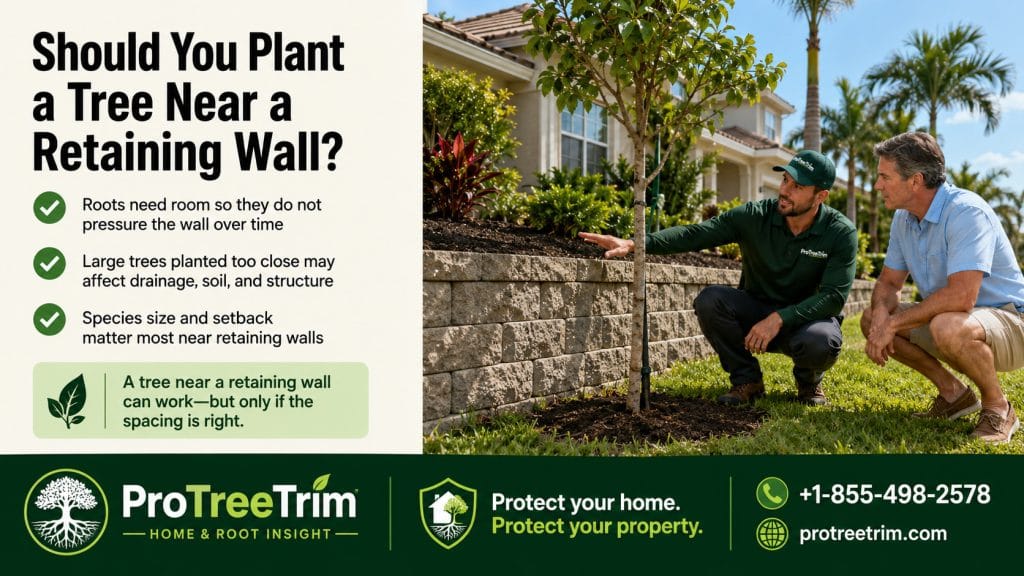
You can plant a tree near a retaining wall, but only with careful planning. A small tree in the right place can soften the wall, add shade, and improve the yard. The wrong tree too close to the wall can create root pressure, drainage problems, leaning, cracking, soil movement, and expensive repair decisions later.
Retaining Walls Already Have a Job
A retaining wall is not just a decorative border. It holds back soil, manages grade changes, supports drainage, and sometimes protects patios, driveways, fences, pool areas, or walkways.
That means a tree near a wall affects more than landscaping. Roots, irrigation, mulch, soil movement, and water flow can all change how that wall performs over time.
| Tree-wall issue | Why it matters |
|---|---|
| Roots growing behind wall | May affect soil pressure and drainage |
| Tree planted too close to wall edge | Trunk and roots may crowd the structure |
| Water collecting behind wall | Roots and wall pressure problems can overlap |
| Large canopy over wall | Branches may block access or drop debris |
| Wall cracking near tree | Root, drainage, or soil movement may be involved |
| Tree leaning from slope | Stability and target area matter |
| Future removal access is limited | Stump grinding and debris hauling may be harder |
A retaining wall planting should be planned as part of the whole site, not treated like an ordinary garden bed.
Avoid Large Trees in Tight Wall Beds
Large shade trees usually do not belong in narrow beds beside retaining walls. Even if the young tree looks harmless, the mature root system and trunk flare may eventually outgrow the space.
The concern is not only that roots may “push” the wall. The bigger issue is the combination of roots, soil expansion, water, drainage, compaction, and limited repair access. A tree that becomes too large for the wall area can make every future decision harder.
Be cautious with trees that have:
- large mature size
- strong surface roots
- fast growth
- wide canopy spread
- high water demand
- heavy limb structure
- frequent debris drop
- suckering or root regrowth habits
A tree may be beautiful in an open yard and still be wrong near a retaining wall.
Drainage Matters More Than Homeowners Expect
Retaining walls usually need proper drainage behind or around them. When water builds up behind a wall, pressure increases. A tree planted nearby can complicate that system if irrigation, roots, mulch, or soil changes alter water movement.
Before planting, look for drainage clues:
- water stains on the wall
- soil staying wet behind the wall
- mulch washing down the slope
- cracks or bulging sections
- drains or weep holes blocked by debris
- irrigation spraying the wall or trunk
- soft soil near the wall base
- pavers settling near the wall
A tree should not be planted to hide a drainage problem. Fix the water issue first.
Do Not Plant Right at the Wall Edge
Planting at the wall edge may look neat at first, especially when the tree is small. But as the trunk widens and roots expand, the tree may crowd the wall, lean over the lower area, or limit repair access.
A better planting spot gives the tree enough room for:
- trunk flare
- root spread
- mulch without burying the trunk
- irrigation control
- future pruning
- wall inspection
- wall repair access
- possible stump grinding if removal is ever needed
A tree squeezed into a narrow strip above a wall may become expensive to manage later.
Think About What Is Below the Wall
A tree above a retaining wall may eventually lean, drop limbs, or shed debris toward whatever sits below. That could be a driveway, patio, sidewalk, pool deck, fence, walkway, neighbor’s yard, or lower planting bed.
Before planting, stand below the wall and look up.
Ask:
- What would the tree hit if a limb failed?
- Would roots or soil movement affect the wall?
- Would leaves or fruit fall onto a walkway or patio?
- Would the tree block stairs or access?
- Would pruning require working from the lower side?
- Would removal be possible without damaging the wall?
A tree near a retaining wall should be safe and maintainable from both sides.
Smaller Trees and Shrubs Often Work Better
In many retaining wall areas, smaller trees, shrubs, ornamental grasses, or layered plantings are better than large trees. They soften the wall without creating major root or canopy pressure.
Better wall-side planting often uses:
| Planting choice | Why it may work better |
|---|---|
| Small ornamental tree | Adds height without overwhelming the wall |
| Shrubs | Provide coverage with easier maintenance |
| Groundcover | Helps reduce erosion without major roots |
| Grasses | Add texture and movement with less structural conflict |
| Layered planting | Creates depth without relying on one large tree |
| Trees set farther back | Allows mature roots and canopy more room |
The goal is to improve the wall area without turning it into a future repair zone.
Watch Slopes and Lean Direction
Trees planted on slopes or near grade changes may grow with a lean. Sometimes that lean is natural. Sometimes it reflects soil movement, poor root support, or water-related instability.
A tree near a retaining wall deserves closer attention if it leans toward:
- the wall edge
- a driveway
- a patio
- a pool cage
- a walkway
- a neighbor’s property
- the house
- utility lines
A leaning tree above a wall can create more concern than the same tree in open lawn because the consequences below are usually greater.
Avoid Heavy Irrigation Near the Wall
New trees need water to establish, but overwatering near a retaining wall can create problems. Constant moisture can affect soil weight, root oxygen, wall drainage, and erosion patterns.
Before planting, check where irrigation heads spray and where water flows after rain. Avoid placing a thirsty tree where extra watering will keep the wall area wet.
A good watering plan should support the tree without turning the wall zone into a soggy, high-pressure area.
Future Repair Access Is Part of the Planting Decision
Retaining walls may eventually need inspection, drainage work, block repair, paver repair, or soil adjustment. If a tree is planted too close, that repair may require root cutting, branch removal, or full tree removal.
Before planting, ask:
- Can the wall be inspected after the tree matures?
- Can drainage outlets stay clear?
- Can someone repair the wall without cutting major roots?
- Can a crew access the tree for pruning?
- Could stump grinding be done without damaging the wall?
- Will the tree block stairs, gates, or equipment access?
A tree that prevents wall maintenance is too close, too large, or poorly placed.
When Planting Near a Retaining Wall Can Work
Planting near a retaining wall can work well when the tree is small enough, far enough from the wall, suited to the soil, and not dependent on heavy irrigation. It also works better when drainage is already functioning properly and future access remains open.
A good wall-side tree should:
- fit the mature space
- have manageable roots
- stay clear of wall structure
- not require constant pruning
- not block drainage
- not lean toward high-use areas
- allow wall inspection and repair
- add beauty without structural conflict
The right tree can make a retaining wall feel more natural. The wrong tree can make the wall harder to maintain.
When to Avoid a Tree Altogether
Avoid planting a tree near a retaining wall if the planting area is narrow, wet, unstable, heavily compacted, already cracking, or difficult to access.
Also avoid tree planting if the wall is already:
- bulging
- cracking
- leaning
- holding water behind it
- missing drainage outlets
- showing soil washout
- pushing nearby pavers
- close to utilities or septic components
In those cases, solve the wall, drainage, or soil issue before adding a tree.
Final Planting Test
Before planting near a retaining wall, picture the tree at full size.
Will roots crowd the wall?
Will water collect behind the wall?
Will the trunk block repairs?
Will branches hang over a walkway or patio?
Will pruning or removal be possible later?
Will this tree still look intentional in 10 years?
If the mature tree creates more risk than value, move it farther away or choose a smaller plant.
If you are unsure whether a tree is a good fit near your retaining wall, slope, patio, driveway, or fence line, ProTreeTrim can help connect homeowners with local tree service support. Call +1-855-498-2578 or visit protreetrim.com.
FAQs
Can tree roots damage a retaining wall?
They can contribute to problems when a large tree is planted too close, especially if roots, drainage, soil pressure, and wall condition are already concerns.
How close can you plant a tree to a retaining wall?
There is no single distance for every tree. It depends on mature tree size, root behavior, wall height, drainage, soil space, and future repair access.
Are shrubs better than trees near retaining walls?
Often, yes. Shrubs and smaller plants can soften the wall with less root pressure, canopy weight, and future maintenance difficulty.
Should I remove a tree growing against a retaining wall?
Not automatically. The decision depends on tree size, wall condition, roots, lean, drainage, and what the tree could affect if it declines or fails.
ProTreeTrim™ can help you take the next step.
If you are dealing with a damaged tree, fallen branch, stump, root issue, palm concern, or storm cleanup question in Florida, call ProTreeTrim for tree service support.