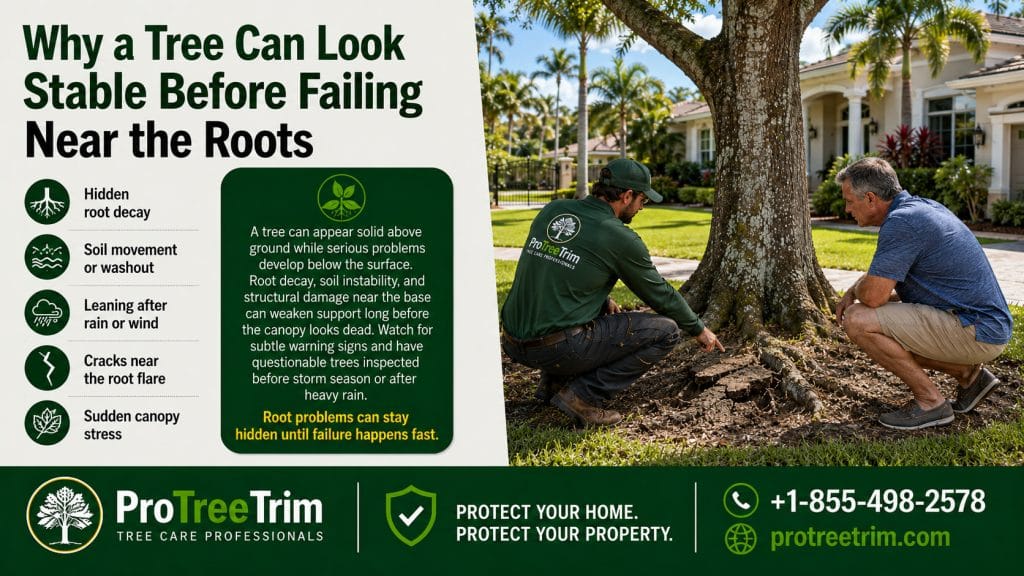
A tree can look stable from the street while root problems develop below the surface. In Florida yards, sandy soil, heavy rain, drainage changes, construction, and hidden root damage can all affect stability. Green leaves and an upright trunk are helpful signs, but they do not always tell the full story.
Root Problems Are Easy to Miss
Most homeowners notice the canopy first. If the tree still has leaves and shade, it feels safe. But a tree’s stability depends heavily on what is happening at the base and underground.
Roots can be stressed by repeated soil saturation, trenching, driveway work, paver installation, irrigation repairs, or soil added over the root flare. Sometimes a tree stands normally until wind and rain expose a weakness that has been developing for months or years.
Florida conditions can make this harder to read. Sandy soil may drain quickly in one area and stay wet in another. A yard may look dry on top while low spots near the trunk remain soft. Mulch can hide cracks, decay, mushrooms, or soil movement around the base.
| What you notice | Why it matters |
|---|---|
| Fresh soil lifting near the trunk | May suggest root plate movement |
| New lean after rain or wind | Could mean the tree has shifted |
| Exposed or torn roots | May indicate soil washout or damage |
| Mushrooms near the base | Can be associated with decay, though not always |
| Pavers or driveway edges lifting | May show root pressure or soil movement |
| Water pooling near the trunk | Can stress roots if it happens repeatedly |
What Homeowners Should Check Before Storm Season
Start with the ground, not the leaves. Look around the base of the tree for fresh cracks, raised soil, exposed roots, soft spots, or areas where mulch has pulled away. Step back and compare the tree’s angle to older photos if you have them. A tree that has leaned the same way for years is different from one that shifted after a week of rain.
Also think about nearby targets. A root issue becomes more urgent when the tree stands near a roof, driveway, pool cage, fence, septic area, parked vehicle space, or neighbor’s property. Even a tree that has not moved much can become a concern if the canopy is heavy on one side.
Do not dig around major roots or cut roots to “fix” a surface problem without guidance. Removing the wrong root can make the stability issue worse.
If you are unsure whether a tree, palm, stump, or root issue needs professional attention before storm season, ProTreeTrim can help connect Florida homeowners with local tree service support. Call +1-855-498-2578 or visit protreetrim.com.
FAQs
Can a tree fall because of root problems even if it looks healthy?
Yes. Leaves can remain green while roots, soil, or the base of the tree are under stress.
What is a warning sign of root failure?
A new lean, lifted soil, exposed roots, cracking ground, or soft soil around the trunk should be taken seriously.
Should I cut roots that are lifting pavers?
Not without guidance. Cutting large roots can affect tree stability, especially near homes, driveways, or pool areas.
ProTreeTrim™ can help you take the next step.
If you are dealing with a damaged tree, fallen branch, stump, root issue, palm concern, or storm cleanup question in Florida, call ProTreeTrim for tree service support.