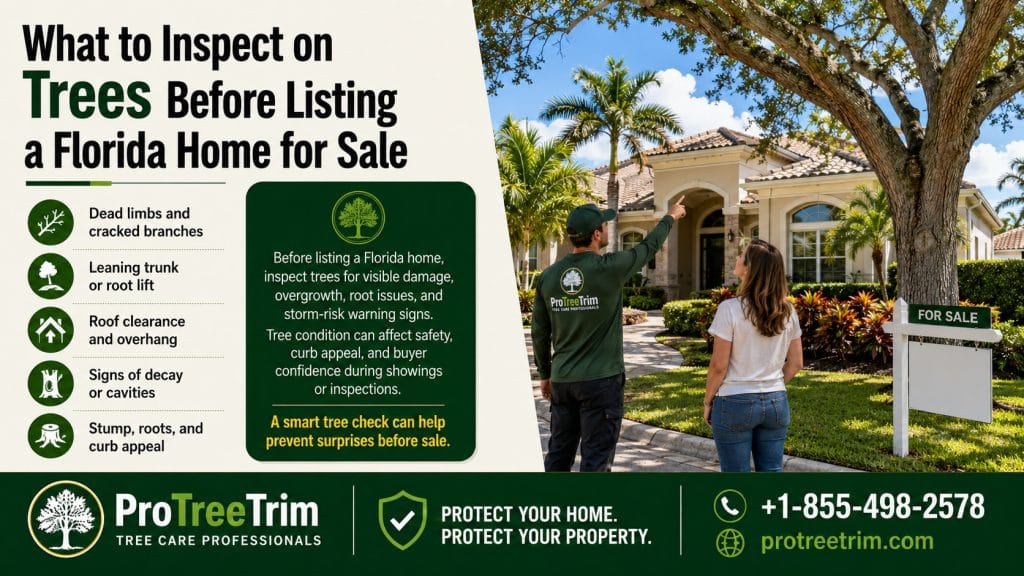
Before listing a Florida home for sale, check the trees the way a buyer, inspector, or insurance-minded homeowner might see them. A beautiful oak, palm, or shade tree can help curb appeal, but obvious limb hazards, roof contact, root damage, old stumps, or storm-weakened trees can raise questions before an offer is even made.
Start With What Buyers Can See Right Away
Walk the property from the street first. Look at the front yard, driveway, entry path, and roofline. Are branches touching the roof or gutters? Is a palm dropping fronds near the walkway? Are roots lifting pavers, cracking driveway edges, or making the front path uneven?
Buyers may not know tree care, but they do notice “future work.” A leftover stump in the middle of the lawn, a large limb hanging over a pool cage, or a tree leaning toward the house can make the yard feel unfinished or expensive. Even if the issue is manageable, it may become a negotiation point.
Do the same check in the backyard. Florida homes often have pool screens, fences, patios, outdoor kitchens, and narrow side yards. A tree that crowds those areas may make buyers wonder how difficult future trimming or removal would be.
| What to inspect | Why buyers may care |
|---|---|
| Branches touching roof or gutters | Suggests maintenance or roof concerns |
| Roots lifting pavers or walkways | Creates trip and repair concerns |
| Old stumps in visible areas | Makes yard look unfinished |
| Palms near pool cages | May mean debris and screen damage risk |
| Large limbs over driveway or patio | Raises storm-season questions |
| Soft soil or drainage near tree base | May suggest root or yard issues |
| Trees blocking side access | Can make future work harder |
Check for Documentation and Easy Fixes
Before listing, take photos of any tree work you complete: pruning, stump grinding, debris cleanup, or removal. Save invoices and notes. If a buyer asks whether a stump was ground or a risky limb was removed, clean documentation helps.
Not every tree concern needs removal. Some issues may be handled with trimming, cleanup, better clearance, or simply removing old debris. Other signs deserve a closer look before photos and showings: a split trunk, new lean, lifted roots, large dead limbs, mushrooms at the base, or a tree pressing into the roofline.
Do not try to make a risky tree “look better” with quick DIY cuts. Poor pruning can make the tree look worse and may create new structural problems.
If you are unsure whether a tree, palm, stump, or root issue should be handled before listing your Florida home, ProTreeTrim can help connect homeowners with local tree service support. Call +1-855-498-2578 or visit protreetrim.com.
FAQs
Should I remove every tree problem before selling?
No. Some issues can be managed with trimming, cleanup, or documentation. Focus first on visible risks, access problems, and curb appeal.
Can tree roots affect buyer confidence?
Yes. Roots lifting pavers, walkways, or driveway edges can make buyers worry about safety and future repairs.
Should I grind a stump before listing photos?
If the stump is visible from the street, entry, patio, or pool area, grinding it can help the yard look cleaner and better maintained.
ProTreeTrim™ can help you take the next step.
If you are dealing with a damaged tree, fallen branch, stump, root issue, palm concern, or storm cleanup question in Florida, call ProTreeTrim for tree service support.