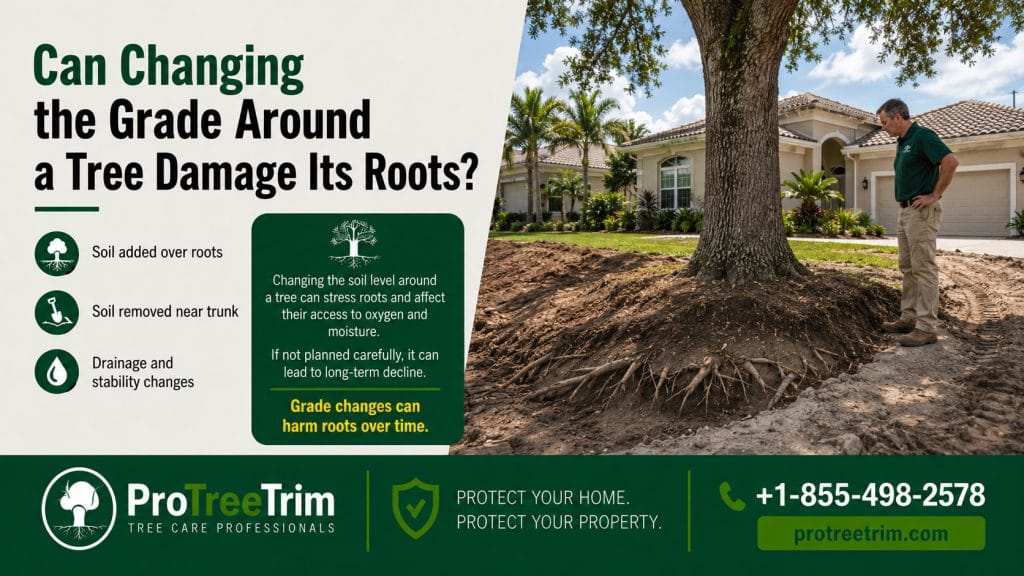
A few inches of soil can change more than the look of a yard. Raising or lowering the grade around a tree can affect roots, drainage, oxygen, trunk health, and long-term stability. The tree may not react right away, but stress can show later as smaller leaves, a thinning canopy, dead branch tips, or root problems.
Raising the Grade Can Smother the Root Area
Adding soil around a tree may seem harmless. Homeowners do it to level a yard, fix low spots, prepare for sod, build a planting bed, or make the landscape look cleaner. The problem is that roots need air as well as moisture.
When too much soil is added over the root zone, roots can lose access to oxygen. The trunk base can also become buried, especially if soil or mulch is pushed against the bark. A tree that once had a visible root flare may begin to look like a telephone pole going straight into the ground.
That is not just a cosmetic issue. A buried root flare can trap moisture, hide decay, encourage awkward root growth, and make it harder to spot insects, mushrooms, cracks, or soft wood near the base.
| Grade change | Why it matters |
|---|---|
| Soil added over roots | Can reduce oxygen around the root zone |
| Soil piled against trunk | Traps moisture against bark |
| Root flare buried | Hides important warning signs |
| New raised bed around tree | May change drainage and airflow |
| Sod installed over old roots | Can hide settling or root conflicts |
| Mulch added too deeply | Can create the same problem as added soil |
Lowering the Grade Can Cut or Expose Roots
The opposite problem happens when soil is removed. A contractor may scrape a yard to improve drainage, install pavers, widen a driveway, repair a walkway, or level the ground before construction. If that work removes soil from the root zone, roots can be cut, exposed, dried out, or damaged by equipment.
Visible roots are not always bad. Many mature trees naturally have surface roots. Freshly exposed roots after grading are different. If roots look torn, scraped, or suddenly uncovered, the tree may have lost protection and support.
Lowering the grade near a tree can also change how water moves. A bed that once drained slowly may now dry out faster. A driveway or patio project may send runoff toward one side of the tree. In Florida yards, sandy soil, irrigation, summer rain, and paver edges can make those changes show up quickly.
Watch the Tree After the Work, Not Just During It
Grade damage is frustrating because the tree may look fine when the project ends. The canopy may stay green for weeks or months. Later, the homeowner notices small leaves, branch-tip dieback, early leaf drop, one-sided thinning, or dead limbs.
That delayed response makes documentation useful. Before grading, paver work, sod installation, drainage work, or landscape renovation begins, take photos of the tree from several angles. Include the trunk base, root flare, visible roots, current soil level, driveway or paver edges, irrigation heads, and drainage path.
After the work, keep watching:
- Is the root flare still visible?
- Does water collect around the trunk?
- Did soil or mulch get pushed against bark?
- Are roots newly exposed or cut?
- Is one side of the canopy thinning?
- Are pavers, sod, or beds settling near old roots?
- Did the tree start leaning after rain?
Do not try to fix grade changes by digging aggressively around roots. That can make the problem worse. Also avoid adding more soil to cover exposed roots without understanding why they became exposed.
When Grade Changes Become a Tree-Risk Issue
A grade change is mostly a tree-health concern at first. It becomes a property-risk issue when decline overlaps with location or structure.
A tree with buried roots in an open side yard may need monitoring and correction. A tree with buried roots, dead limbs, and a canopy over a roof, driveway, pool cage, fence, or walkway deserves more attention. The same is true if grading exposed roots on one side and the tree now leans toward the house.
If a project is planned near a mature tree, ask how the root zone will be protected before work starts. If the work already happened, do not wait for the tree to look terrible before checking the site.
If you are unsure whether grade changes, buried roots, exposed roots, or post-construction tree stress needs professional attention, ProTreeTrim can help connect homeowners with local tree service support. Call +1-855-498-2578 or visit protreetrim.com.
FAQs
Can adding soil around a tree hurt it?
Yes. Too much added soil can reduce oxygen around roots, bury the root flare, trap moisture, and hide problems near the trunk.
Are exposed roots always bad?
No. Some surface roots are normal. Freshly exposed, torn, or cut roots after grading, rain, or construction deserve a closer look.
How soon will a tree show stress after grade changes?
Sometimes quickly, but often later. Watch for smaller leaves, early leaf drop, dead branch tips, canopy thinning, or new leaning over the following months.
Should I remove soil from a buried root flare myself?
Lightly pulling mulch back from the trunk may help, but avoid deep digging or cutting roots. If the grade was changed significantly, get guidance before disturbing the root zone.
ProTreeTrim™ can help you take the next step.
If you are dealing with a damaged tree, fallen branch, stump, root issue, palm concern, or storm cleanup question in Florida, call ProTreeTrim for tree service support.