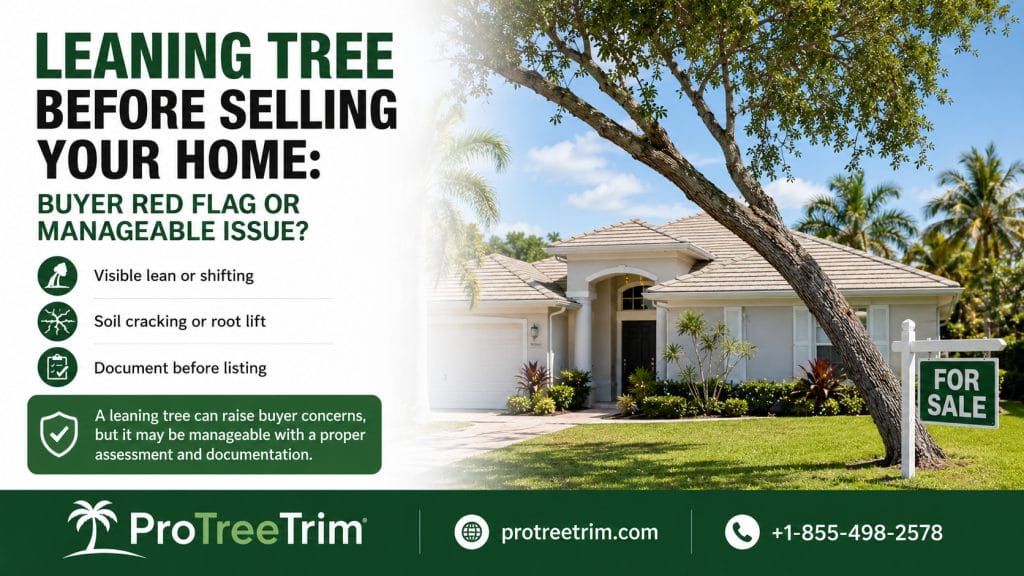
A leaning tree can make buyers nervous, especially if it points toward the house, driveway, garage, pool cage, fence, or neighbor’s property. Not every lean means the tree has to come down before listing, but a new lean, worsening lean, lifted soil, exposed roots, or trunk damage should be checked before it becomes a negotiation problem.
First, Decide Whether the Lean Is Old or New
Some trees grow with a natural lean for years. A live oak may stretch toward open light. A palm may curve slightly as it matures. If the tree has looked the same for a long time and has no other warning signs, the lean may be manageable.
A new lean is different.
If the lean appeared after heavy rain, wind, construction, driveway work, trenching, or soil washout, it deserves more attention. ISA’s tree risk guidance lists soil cracks or separation, root movement, leaning, trunk cracks, dead branches, mushrooms, construction changes, and smaller or unusually yellow leaves as signs homeowners should notice when thinking about tree risk.
| What you see | Why it matters before selling |
|---|---|
| Lean has looked the same for years | May be a stable growth pattern |
| Lean appeared after rain or wind | Root or soil movement may be involved |
| Soil lifting on one side | Possible root plate movement |
| Tree leans toward roof or driveway | Buyer concern rises because of the target |
| Dead limbs on the leaning side | Risk and maintenance questions may overlap |
| Trunk crack or split | More serious than lean alone |
| Lean near utility lines | Utility safety comes before tree work |
Think Like a Buyer Standing in the Yard
A buyer does not need to know tree biology to worry about a leaning tree. They will ask simple questions: Is it getting worse? Could it hit the house? Will insurance care? Will I have to pay for removal right after closing?
That is why the target matters. A leaning tree over open lawn is one thing. A leaning tree over a bedroom, driveway, pool screen, fence, parked vehicle area, or neighbor’s yard is harder to dismiss.
Before listing, take photos from several angles. Include the full tree, trunk base, root area, lean direction, nearby structures, and any visible cracks, mushrooms, dead limbs, or lifted soil. If you have older real estate photos, family photos, or street-view-style images that show the tree’s past position, compare them. A stable old lean is easier to explain than an undocumented recent shift.
Do Not “Fix” a Lean With Random Pruning
Cutting branches from one side may make the tree look cleaner, but it does not solve root movement, soil failure, trunk defects, or a poor planting location. In some cases, removing the wrong limb can change weight distribution and make the tree more awkward, not safer.
If the tree is otherwise healthy but has branches touching the roof, blocking the driveway, or hanging over the walkway, selective pruning may help with buyer perception. If the tree has lifted roots, a cracked trunk, decay at the base, or a new lean after storms, pruning alone may not answer the real concern.
ISA’s guidance notes that risk management options can include pruning, cabling and bracing, routine care, or removal, depending on the tree and site. It also cautions that support systems are not guarantees against failure.
What to Handle Before Listing
If the leaning tree is visible from the street or appears in listing photos, deal with the question before buyers raise it. That does not always mean removal. It may mean documentation, selective pruning, stump planning, or getting the tree reviewed before photos and showings.
A practical pre-listing checklist:
- Photograph the tree from the street, driveway, and yard.
- Compare the lean to older photos if available.
- Look for lifted soil, exposed roots, cracks, mushrooms, or dead limbs.
- Note what the tree could hit if it failed.
- Avoid DIY cutting near roofs, driveways, or wires.
- Save any pruning, removal, stump grinding, or cleanup invoices.
- Keep before-and-after photos if work is performed.
General home inspection standards can include visible exterior conditions such as vegetation, grading, drainage, walkways, patios, and driveways when they may adversely affect the building, so a leaning tree that appears connected to roof, drainage, or walkway concerns may still enter the buyer conversation even if the inspector does not perform a full tree-risk assessment.
When Removal May Make More Sense
Removal may deserve serious discussion if the tree is dead, newly leaning, aimed at the house, showing root plate movement, split at the trunk, dropping large limbs, or creating visible damage to walkways, fences, pavers, or driveway edges.
If removal is chosen, remember the finish. A cut tree can still leave a stump, roots, wood chips, soil settling, or a bare patch that looks unfinished in listing photos. Plan the cleanup: stump grinding, chip removal, backfill, sod, mulch, or paver repair may all affect how the property shows.
If you are unsure whether a leaning tree, palm, stump, or root issue should be handled before listing your home, ProTreeTrim can help connect homeowners with local tree service support. Call +1-855-498-2578 or visit protreetrim.com.
FAQs
Does a leaning tree always need to be removed before selling?
No. A long-standing, stable lean may be manageable. A new lean, worsening lean, lifted soil, trunk crack, or lean toward the house deserves closer attention.
Will buyers notice a leaning tree?
Often, yes. Buyers notice trees that appear to threaten the roof, driveway, pool cage, fence, or neighbor’s property, especially during inspection or negotiation.
Should I prune a leaning tree before listing?
Only if there is a clear reason, such as deadwood, roof contact, or clearance. Pruning does not fix root movement or trunk instability.
What records should I keep if I address the tree?
Keep before-and-after photos, estimates, invoices, stump grinding details, debris hauling notes, and any written recommendation about the work performed.
ProTreeTrim™ can help you take the next step.
If you are dealing with a damaged tree, fallen branch, stump, root issue, palm concern, or storm cleanup question in Florida, call ProTreeTrim for tree service support.