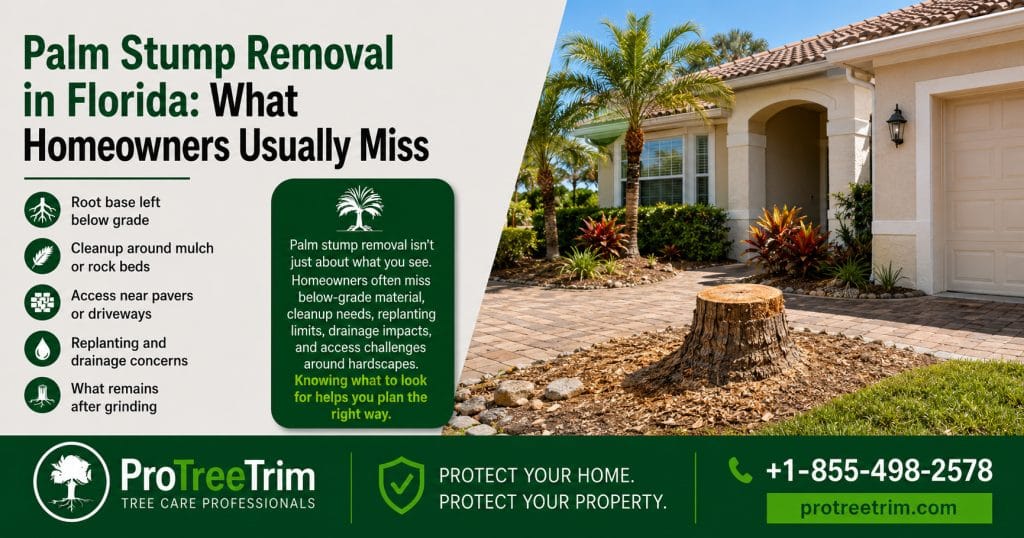
Palm stump removal in Florida is not always as simple as grinding down what is visible above the lawn. Homeowners often miss the root mass, nearby irrigation, soft soil, access limits, and what happens to the area after the stump is gone. A clean-looking removal can still leave settling, loose material, or replanting issues behind.
A Palm Stump Is Different From a Shade Tree Stump
Palm stumps do not behave exactly like oak, pine, or other broadleaf tree stumps. Instead of large woody roots spreading in the same way, palms often leave a dense, fibrous root area close to the base. That can make the stump feel stubborn even when it does not look very large.
The first thing to check is location. Is the palm stump beside a pool cage, patio, fence, walkway, driveway, or front entry? Was it planted in a tight landscape bed with irrigation lines, lighting wires, edging, or decorative rock nearby? Many Florida palms are installed close to homes for curb appeal, which means removal can involve more than the stump itself.
Also look at drainage. If the stump sits in a low, damp bed near mulch or a sprinkler head, the area may stay soft after grinding. Once the old material breaks down, the ground can settle. That matters if you plan to lay sod, reset pavers, plant a new palm, or make the bed look clean before selling a home.
What to Plan Before the Stump Is Removed
Before scheduling palm stump removal, take photos of the stump and the surrounding area. Mark anything that may be hidden: irrigation heads, drip lines, low-voltage lighting, pool equipment, septic components, or buried edging. If access is tight, measure the gate and photograph the route from the driveway to the stump.
Think about the finish, too. Do you want the grindings left in place, hauled away, or replaced with cleaner soil? A mulched bed may tolerate more leftover material than a spot planned for sod or pavers. If you want to replant, avoid placing a new palm directly into loose grindings without checking soil depth and drainage.
If you are unsure whether a palm stump, root area, or tight-access removal needs professional attention, ProTreeTrim can help connect Florida homeowners with local tree service support. Call +1-855-498-2578 or visit protreetrim.com.
FAQs
Is palm stump removal harder than regular stump removal?
It can be different. Palm stumps often have dense, fibrous material near the base and may sit close to patios, pools, or landscape beds.
Can I plant another palm in the same spot?
Sometimes, but old material, soil settling, and drainage should be checked before replanting.
Should palm stump grindings be removed?
It depends on the next use. Sod, pavers, or replanting usually benefit from cleaner soil preparation.
ProTreeTrim™ can help you take the next step.
If you are dealing with a damaged tree, fallen branch, stump, root issue, palm concern, or storm cleanup question in Florida, call ProTreeTrim for tree service support.