
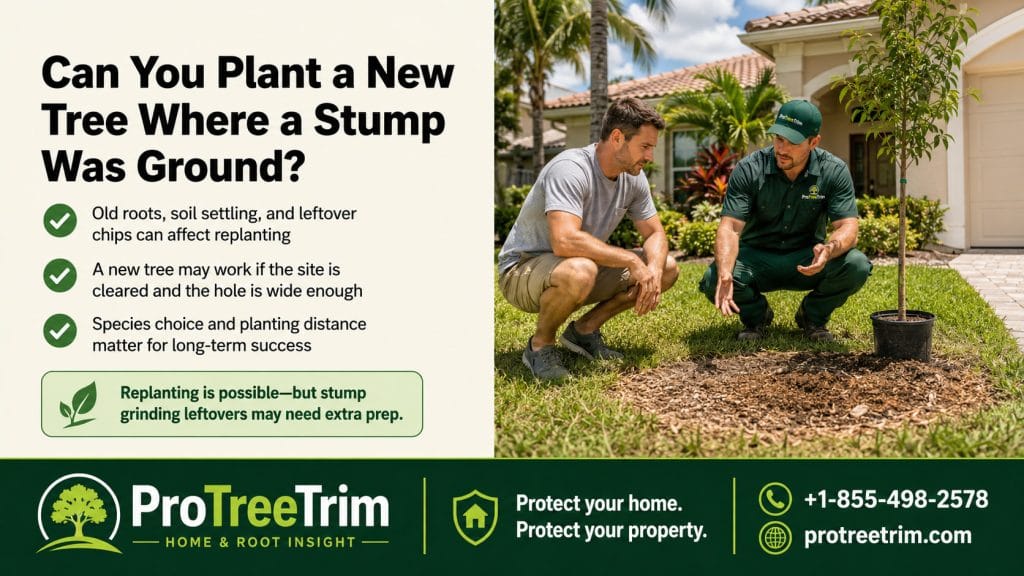
You can sometimes plant a new tree where a stump was ground, but it is not always the best spot. Stump grinding removes the visible stump, not the entire old root system. The area may still contain wood chips, decaying roots, uneven soil, low oxygen pockets, disease concerns, or settling that can make it harder for a young tree to establish.
Stump Grinding Does Not Create Fresh Planting Soil
After stump grinding, the surface may look open, but the soil below can still be full of old wood and roots. The grinder usually turns the stump into chips in the upper area. Larger roots may remain underground and slowly decay over time.
That matters because a new tree needs stable, breathable soil around its young root system. A hole full of wood chips and old roots may not give the new tree the best start.
| What remains after grinding | Why it matters for replanting |
|---|---|
| Wood chips | Can settle and change soil texture |
| Old roots | May decay slowly and leave air pockets |
| Uneven soil | New tree may sink or lean later |
| Old stump hole | May hold water or dry unevenly |
| Possible disease history | New tree may be affected if same problem remains |
| Compacted area | Roots may struggle to expand |
| Limited space | New roots may compete with old root material |
Planting Slightly Away Is Often Better
If you have room, planting the new tree a few feet away from the old stump site is usually a better choice. That gives the new tree cleaner soil, more stable root space, and fewer old roots to work around.
This is especially helpful if the old tree was large, diseased, storm-damaged, leaning, or too close to the house, driveway, fence, sidewalk, pool cage, or septic area.
Before planting in the exact same spot, ask:
- Why was the old tree removed?
- Was it diseased, declining, or storm-damaged?
- Was the stump ground deeply enough?
- Are there still large roots in the planting area?
- Is the soil full of wood chips?
- Does the area settle after rain?
- Was the old tree too close to a structure?
- Would moving the new tree prevent the same problem later?
If the original location was bad, replanting in the same place can repeat the mistake.
Remove Excess Chips Before Planting
Wood chips from stump grinding are useful as mulch in some areas, but they should not replace good planting soil around a new tree’s root ball. A thick pocket of chips can settle, hold moisture unevenly, and make the planting hole unstable.
Before planting, remove as much of the loose stump-grinding material as practical from the planting area. Mix in appropriate native soil, and make sure the new tree is planted at the correct height with the root flare visible.
Do not simply dig a small hole in the chips and drop the new tree in. That may look fine for a few weeks, but the tree may struggle later.
Watch for Settling
The ground where a stump was ground may settle over time as old roots and remaining wood decay. This can create a low spot, especially after rain or irrigation.
A young tree planted in that unstable area may sink too low. If the root flare becomes buried, the tree can develop future root and trunk-base problems. If the planting area holds water, the young roots may stay too wet.
After stump grinding, it can help to wait and watch the area through a few rain cycles before planting in the exact same spot. If the soil sinks, softens, or stays wet, that tells you the site may need more preparation.
Disease History Matters
If the old tree was removed because it was simply in the wrong place, storm-damaged, or too close to hardscape, replanting nearby may be straightforward. If the old tree died from a root disease, trunk rot, or an unknown decline, replanting the same type of tree in the same spot may be riskier.
You do not need to diagnose every old stump. But you should be cautious if the old tree had:
- mushrooms at the base
- major root decay
- unexplained dieback
- soft or hollow trunk
- repeated branch death
- oozing wounds
- pest activity
- sudden decline without storm damage
In that situation, choose a different planting location if possible, or select a different tree type better suited to the site.
Do Not Repeat a Bad Placement
Many old trees are removed because they were planted in the wrong place years ago. The new planting is a chance to fix that.
Do not plant the replacement tree in the exact same spot if the old tree was:
- too close to the house
- lifting the driveway or sidewalk
- damaging pavers
- crowding a fence
- touching the roof
- too close to a pool cage
- near utility lines
- over a septic area
- blocking access
- constantly needing hard pruning
A replacement tree should solve the old problem, not restart it.
What to Do If You Must Replant in the Same Area
Sometimes the old spot is the only realistic planting location. If so, prepare it carefully.
A better approach:
- Remove loose stump chips from the planting area.
- Check for large remaining roots.
- Replace chip-heavy material with suitable soil.
- Make sure drainage is not poor.
- Plant the new tree at the correct height.
- Keep the root flare visible.
- Mulch lightly, but keep mulch off the trunk.
- Water based on soil moisture, not habit.
- Watch for settling after rain.
The most important point is to avoid planting too deep. A new tree that sinks into an old stump hole may start life with its root flare buried.
Choose the Replacement Tree Carefully
The replacement tree should match the site better than the old one did.
If the old tree was too large, choose a smaller mature size.
If roots lifted pavers, choose a tree with better fit for the available soil space.
If limbs touched the roof, plant farther away or choose a narrower canopy.
If debris was a constant problem near a patio or pool, choose a cleaner tree.
If the area is wet, choose a species suited to that condition or fix drainage first.
Replacement planting should be a planning decision, not an emotional one.
When Waiting Is Smarter
You do not always need to replant immediately. Waiting can be smarter when the stump area is fresh, soft, chip-filled, wet, or still settling.
Waiting also gives you time to observe:
- whether the area sinks
- where water collects
- whether old roots remain in the way
- how much sun the spot gets now
- whether the original location was too close to structures
- what size tree would actually fit
A delayed planting in the right spot is better than a fast planting in a poor one.
Final Homeowner Takeaway
Yes, you may be able to plant where a stump was ground. But the better question is whether you should.
If the old location had enough room, good drainage, no disease concern, and the stump area can be properly cleaned and prepared, replanting may work. If the old tree was too close to the house, driveway, pool cage, fence, sidewalk, utilities, or septic area, move the new tree and make a better long-term decision.
If you are unsure whether a stump grinding area is ready for replanting, ProTreeTrim can help connect homeowners with local tree service support. Call +1-855-498-2578 or visit protreetrim.com.
FAQs
Can I plant a tree directly over a ground stump?
Sometimes, but it is often better to plant slightly away from the old stump site. The area may contain chips, old roots, and unstable soil.
Should I remove stump grinding chips before planting?
Yes, remove excess chips from the planting area and replace chip-heavy material with suitable soil before planting a new tree.
How long should I wait after stump grinding to plant?
There is no single rule. Waiting through a few rain cycles can help reveal settling, drainage problems, or remaining root issues.
Can old roots hurt a new tree?
Old roots can make digging difficult, decay over time, create air pockets, and contribute to settling. Disease history may also matter depending on why the old tree died.
ProTreeTrim™ can help you take the next step.
If you are dealing with a damaged tree, fallen branch, stump, root issue, palm concern, or storm cleanup question in Florida, call ProTreeTrim for tree service support.