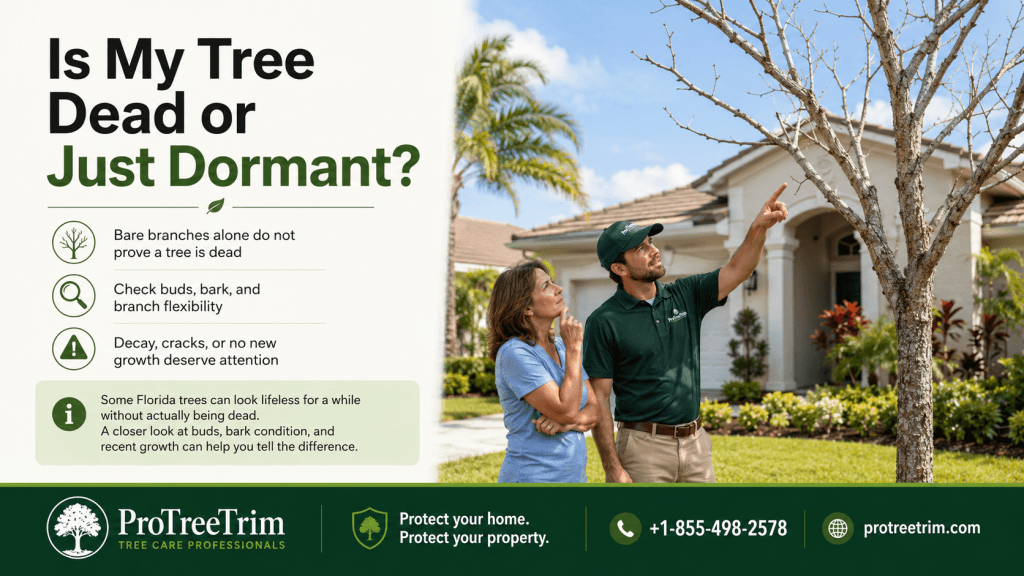
A tree with no leaves is not automatically dead. It may be dormant, stressed, delayed by weather, or declining from root, water, pest, or trunk problems. Before cutting it down, homeowners should check the season, species, buds, bark, branches, trunk base, and whether the tree has changed suddenly.
Start With the Season and the Type of Tree
A deciduous tree can lose its leaves and still be alive. That is normal during dormancy. The same look on an evergreen, palm, or tree that should be actively growing may be more concerning.
The first question is simple: Is this tree supposed to be leafless right now?
In colder parts of the country, many shade trees rest through winter and leaf out again in spring. In warmer climates, including many Florida yards, seasonal patterns can be less obvious. Some trees may drop leaves after drought, transplant stress, flooding, or storm damage. Others may thin out but not go completely bare.
A palm is different. A palm with a dead-looking crown, collapsed spear, or no healthy frond growth is not judged the same way as a leafless deciduous tree. A live oak is different again; it may shed and replace leaves seasonally, but a bare canopy paired with dead limbs, trunk cracks, or root movement deserves a closer look.
| What you see | What it may mean |
|---|---|
| Leafless deciduous tree in winter | Dormancy may be normal |
| Bare tree after drought or heat | Stress response is possible |
| One side has no leaves | Root, limb, or localized damage may be involved |
| No buds or brittle small twigs | Decline or death is more likely |
| Palm crown collapsed or missing new growth | More serious than normal frond drop |
| Bare canopy plus trunk cracks or mushrooms | Tree condition should be checked carefully |
Look for Buds, Flexible Twigs, and Living Bark
A tree that is dormant often still has signs of life. Buds may be small, firm, and easy to miss. Smaller twigs may bend slightly instead of snapping dry. Bark may look intact rather than loose, sunken, or peeling in large dead sections.
Do not start by cutting big limbs. If you are checking small twigs, use only light, reachable branches from the ground. A dry twig at the very tip does not prove the whole tree is dead. Tip dieback can happen while larger limbs remain alive.
A scratch test is sometimes mentioned by gardeners, but homeowners should use caution. Scraping bark all over the tree creates wounds and does not tell the whole story. If you check anything, keep it tiny and limited to a small twig, not the trunk or major limbs.
The pattern matters more than one spot. A tree with several living buds and flexible twigs may need time. A tree with brittle branches throughout, loose bark, no buds, fungal growth near the base, and no seasonal recovery is a different situation.
Check What Happened Before the Tree Went Bare
Trees rarely decline for no reason. A useful timeline can prevent a bad decision.
Ask yourself:
- Did the tree lose leaves after a dry spell?
- Did heavy rain leave the root area soggy?
- Was there trenching, paver repair, fence work, or driveway work nearby?
- Was the tree pruned heavily last season?
- Did a storm break limbs or split the trunk?
- Did irrigation change?
- Are there insects, sawdust, oozing sap, or bark holes?
- Is the tree near a roof, driveway, pool cage, fence, or walkway?
A tree that went bare after construction near the roots may be dealing with root stress. A tree that dropped leaves after weeks of heat may be conserving moisture. A tree that never leafed out after a trunk injury may be declining more seriously.
Do not fertilize, overwater, and prune all at once. Those rushed fixes can make the real cause harder to understand.
When Waiting Is Reasonable—and When It Is Not
Waiting can be reasonable if the tree is in a normal dormant season, has visible buds, flexible small twigs, no major structural damage, and is not threatening anything important. Take photos every couple of weeks from the same spot so you can see whether buds swell, leaves emerge, or decline spreads.
Waiting is less reasonable when the tree is near a target and already showing structural warning signs.
Pay closer attention if you see:
- large dead limbs over the roof or driveway
- trunk cracks or splitting
- mushrooms near the base
- bark falling off in large sheets
- sawdust-like material at the trunk
- root plate lifting or soil cracking
- a new lean after rain or wind
- no signs of life while nearby trees of the same type are active
A dead or severely declining tree does not need to fall completely to become a problem. Large limbs can break first. A top can snap. A trunk can split during wind or after rain softens the root zone.
If you are unsure whether a leafless tree is dormant, stressed, or dead, ProTreeTrim can help connect homeowners with local tree service support. Call +1-855-498-2578 or visit protreetrim.com.
FAQs
How can I tell if a tree is dormant or dead?
Look for firm buds, flexible twigs, intact bark, and seasonal timing. A completely brittle tree with no buds, loose bark, decay, or dead limbs is more concerning.
Should I cut down a tree just because it has no leaves?
Not immediately. First consider the season, species, recent weather, root stress, and whether nearby trees of the same type have leafed out.
Can a stressed tree lose all its leaves and recover?
Sometimes. Drought, heat, flooding, or transplant stress can cause leaf drop. Recovery depends on root health, tree species, severity of stress, and site conditions.
When should I not wait?
Do not wait if the tree has large dead limbs, trunk cracks, mushrooms, root movement, a new lean, or branches hanging over a roof, driveway, pool cage, walkway, or utility area.
ProTreeTrim™ can help you take the next step.
If you are dealing with a damaged tree, fallen branch, stump, root issue, palm concern, or storm cleanup question in Florida, call ProTreeTrim for tree service support.