
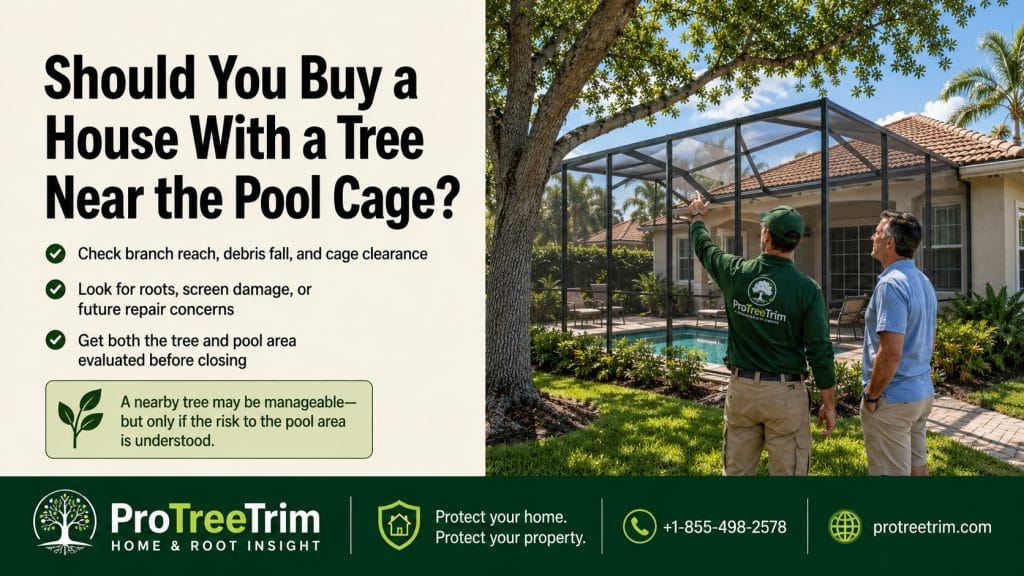
A tree near a pool cage can be a selling point or a future maintenance project. Shade around a pool area is valuable, but branches touching screen panels, palm fronds dropping onto the enclosure, roots lifting pavers, or a trunk leaning toward the cage should be checked before you close on the home.
Start With What Is Touching the Screen
A tree growing near a pool enclosure is not the issue by itself. The issue is contact, weight, debris, and future access.
During a showing, look at the pool cage from several angles. Are the branches resting on the screen? Are palm fronds lying across the top? Are seed pods or leaves collecting in one corner? Are there patched panels directly below the tree?
| What you see | Why it matters as a buyer |
|---|---|
| Branches touching screen panels | May lead to rubbing, tearing, or recurring maintenance |
| Palm fronds resting on the cage | Debris and impact concerns |
| Large limb over the enclosure | Storm and removal-cost concern |
| Patched screens below the tree | Possible history of damage |
| Leaves packed in cage corners | Ongoing cleaning and drainage issue |
| Tree leaning toward the pool area | Higher concern if lean is new or worsening |
| Roots lifting pool-deck pavers | Trip hazard and repair concern |
A few leaves in the pool area are normal. A tree physically pressing into the enclosure is a different matter.
Look at the Tree and the Cage Together
Do not evaluate the pool cage and the tree as separate issues. They affect each other.
A healthy tree with good clearance may simply need routine maintenance. A palm that drops heavy fronds onto the screen every season may become a repeated repair item. A large shade tree with a limb over the cage may require careful pruning, especially if access is tight.
Then check the cage itself. Look for torn screens, bent frame sections, loose fasteners, patched areas, sagging panels, or stains where debris collects. If the seller recently repaired the cage, ask whether a tree caused the damage.
Useful buyer questions include:
- Has this tree damaged the pool cage before?
- Were screens repaired recently?
- Has the tree been trimmed for clearance?
- Are there invoices or before-and-after photos?
- Does debris collect in the same area after storms?
- Are pavers lifting near the tree roots?
- Can a tree crew access the area without damaging the pool deck?
Do Not Underestimate Access
Tree work near a pool cage can be more complicated than tree work in open lawn. Crews may need to lower limbs carefully, protect pavers, avoid the aluminum frame, and work around fences, gates, irrigation, and pool equipment.
A tree in a tight backyard may cost more to trim or remove than a similar tree in a wide front yard. As a buyer, that matters. You are not only buying the tree; you are buying the access conditions around it.
Look for:
- narrow side gates
- fragile paver paths
- pool equipment near the work zone
- Irrigation heads around the deck
- fence lines limiting access
- branches over both the cage and the roof
- utility lines near the same tree
If future work would be difficult, it should be included in your post-closing budget.
Decide Whether It Is Shade or Risk
A poolside tree can be a real asset. It can make the outdoor space cooler, more private, and more attractive. Removing every tree near a pool cage would be a mistake.
The concern is when the tree creates an obvious cost or risk. A good tree near the pool area should feel intentional. A problem tree feels like unfinished maintenance.
| More manageable | More concerning |
|---|---|
| Healthy tree with clear space from cage | Branches resting on screen panels |
| Light seasonal debris | Heavy fronds or limbs hitting enclosure |
| Roots contained in landscape bed | Pavers lifting near pool deck |
| Easy access for trimming | Tight access around cage and fence |
| No visible cage damage | Patched or bent panels below tree |
| Stable trunk and canopy | Lean, dead limbs, cracks, or storm damage |
What to Ask Before Closing
If the tree looks close enough to create future work, ask for records. A recent trimming invoice, screen repair receipt, or stump grinding record can explain what has already been handled.
If there are active issues—branches touching the cage, dead limbs above it, leaning, or lifted pavers—consider asking for a repair, credit, or professional evaluation during the inspection period. The right approach depends on your purchase agreement and local real estate guidance, but the tree should not be ignored just because the pool area looks nice in photos.
Do not rely only on “the tree has never been a problem.” Maybe that is true. But if there are patched screens, heavy overhang, or root damage at the deck, you need more than reassurance.
If you are unsure whether a pool-cage tree, palm, root issue, stump, or overhanging limb should be handled before or after buying a home, ProTreeTrim can help connect homeowners with local tree service support. Call +1-855-498-2578 or visit protreetrim.com.
FAQs
Is a tree near a pool cage a dealbreaker when buying a house?
No. Many poolside trees are manageable and add shade. The concern rises when branches touch the cage, limbs hang over it, roots lift pavers, or screens show repeated damage.
Should I ask the seller to trim branches touching the pool cage?
If branches or palm fronds are physically touching the screen or frame, it is reasonable to ask for records, trimming, repair, or a clearer plan before closing.
Can tree roots damage pool-deck pavers?
They can contribute to lifting or uneven pavers, especially when roots, drainage, soil movement, and hardscape age overlap.
What should I photograph during the inspection period?
Photograph the full tree, pool cage contact points, patched screens, pavers, roots, trunk base, access route, and any limbs over the enclosure.
ProTreeTrim™ can help you take the next step.
If you are dealing with a damaged tree, fallen branch, stump, root issue, palm concern, or storm cleanup question in Florida, call ProTreeTrim for tree service support.