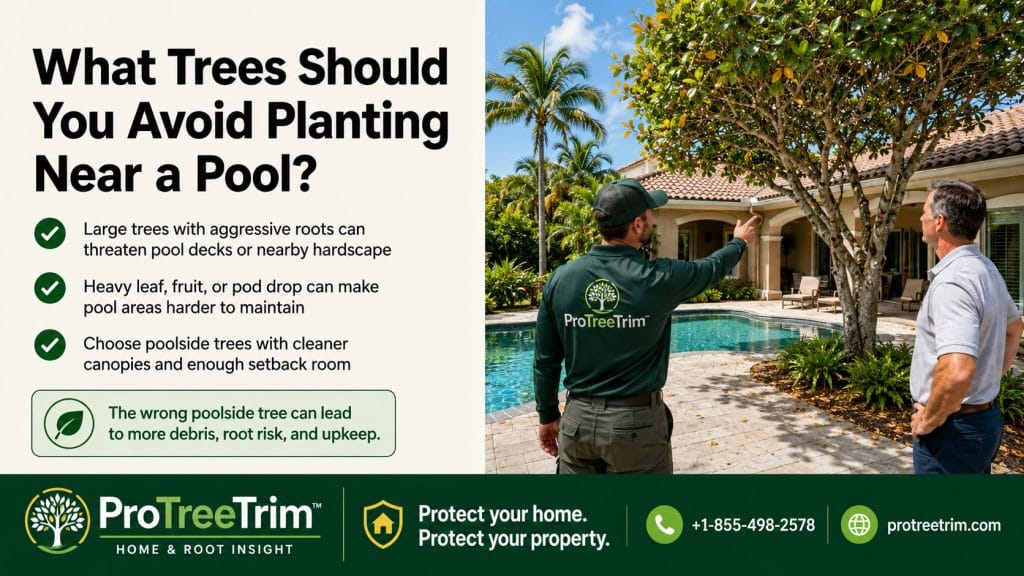
A tree near a pool can make the yard feel cooler, more private, and more finished. The wrong tree can turn the pool area into a constant cleanup job. Before planting, think beyond shade. A poolside tree has to work with pavers, screens, drainage, roots, debris, wind, and future maintenance access.
A Pool Tree Needs Stricter Rules Than a Yard Tree
A tree that works perfectly in the back corner of a yard may be a terrible choice beside a pool. Around a pool, every leaf, flower, seed pod, fruit, twig, palm frond, and sticky drip lands somewhere inconvenient: in the water, on the deck, inside the skimmer, on the screen enclosure, or across wet pavers.
That does not mean pools and trees cannot work together. They can. But the planting decision has to be more practical.
| Tree trait | Why it can become a pool problem |
|---|---|
| Heavy leaf drop | More skimmer, filter, and deck cleanup |
| Fruit or berries | Staining, slipping, pests, and mess |
| Large seed pods | Impact, staining, and repeated cleanup |
| Brittle branches | Limb drop near people and pool screens |
| Aggressive surface roots | Lifted pavers, coping, or deck edges |
| Sticky sap or honeydew | Mess on pavers, furniture, and screens |
| Large palm fronds | Screen damage and heavy debris |
| Fast growth | More pruning and future access issues |
Avoid Trees That Drop Heavy or Messy Debris
Every tree sheds something. The question is whether the debris is manageable around a pool.
Small leaves may be annoying but predictable. Large fruit, staining berries, heavy seed pods, sharp debris, or sticky residue can be much worse. If the tree drops something that stains concrete, clogs equipment, attracts insects, or becomes slippery when wet, think carefully before planting it near the pool deck.
Be cautious with trees known for:
- staining fruit or berries
- large seed pods
- heavy nuts or acorns
- sticky sap or honeydew issues
- brittle twigs
- sharp leaves or spines
- frequent flower drop
- messy seasonal shedding
A tree does not have to be “bad” to be wrong for a pool. It may simply belong farther away from the water.
Be Careful With Roots Near Pavers and Pool Decks
Pool areas often have hard surfaces close to planting beds: pavers, coping, concrete, drains, retaining edges, and screen enclosures. A tree with large surface roots may eventually compete with those surfaces.
The risk is not always dramatic at first. One paver lifts. A deck edge becomes uneven. Water starts collecting in a low spot. Roots appear at the edge of the bed. Over time, a small maintenance issue can become a bigger repair.
Before planting near a pool, ask:
- How close will roots be to pavers or coping?
- Is there enough open soil for the mature tree?
- Will roots grow under a narrow deck edge?
- Does water collect in this bed after rain?
- Is irrigation keeping the area too wet?
- Could future root repair damage the tree?
- Would a smaller tree or shrub fit better?
The best poolside planting gives roots room without forcing them under hardscape.
Palms Can Work, but Choose and Place Them Carefully
Palms are popular around pools because they look clean, tropical, and less leafy than many shade trees. But palms still need planning.
Some palms drop heavy fronds, seed clusters, fruit, or old boots. A palm planted too close to a pool cage can press fronds into the screen. A leaning palm near a deck can make buyers or homeowners nervous later. A tall palm in a tight corner may become expensive to trim or remove.
A poolside palm may work well when it is:
- placed with enough distance from the screen cage
- maintained before fronds rest on panels
- not dropping heavy fruit over the pool
- accessible for future trimming
- not leaning toward the house or enclosure
- planted where roots and trunk have room
- matched to the scale of the yard
Palms can be excellent pool trees. They just should not be planted as if they will never grow, shed, or need service.
Avoid Trees That Will Shade the Pool Too Much
Shade can be good. Too much shade can make a pool area feel damp, dark, and harder to maintain.
A broad canopy directly over the water may keep the deck cooler, but it may also increase leaf drop, limit sun on the pool, slow drying after rain, and make nearby plants struggle. In screened pools, heavy shade can make the enclosure feel more closed in.
Before planting for shade, think about timing:
- Do you want morning shade or afternoon shade?
- Will the tree block winter sun?
- Will leaves drop directly into the water?
- Will the tree shade a patio but not the pool?
- Will branches eventually touch the cage?
- Will the canopy block views from the house?
A tree placed slightly off to the side can often give comfort without creating a constant pool cleanup issue.
Think About Screen Enclosures Before You Plant
In many Florida-style yards, the pool cage is the real conflict point. A tree may be far enough from the pool water but too close to the screen structure.
Branches rubbing screen panels can cause tears. Palm fronds can lie across the top. Seed pods can collect in corners. A large limb over the enclosure may make storm season more stressful.
Before planting, imagine the mature tree during wind and rain. Will branches move into the screen? Will debris collect on top? Can a crew trim it later without damaging the frame or pavers?
A tree near a screen enclosure should have:
| Need | Why it matters |
|---|---|
| Good mature clearance | Prevents screen contact |
| Manageable debris | Reduces roof-of-cage buildup |
| Safe access | Makes future trimming easier |
| Strong branch structure | Reduces limb-drop concern |
| Proper spacing from frame | Avoids repeated pruning cycles |
Choose Trees That Match the Pool Area’s Use
Pool yards are not just landscapes. They are living spaces. People walk barefoot, sit on furniture, carry food, move umbrellas, clean filters, and use the deck after rain. That changes the tree decision.
Avoid trees that create hazards where people walk:
- slippery fruit
- hard seed pods
- thorny debris
- exposed roots across walk paths
- low limbs over seating areas
- branches that drop without warning
- heavy fronds near lounge areas
A pool tree should make the space more comfortable, not more annoying.
Future Maintenance Access Matters
Planting a tree is easy. Trimming or removing it later may be difficult.
Pool areas often have narrow gates, screen enclosures, pavers, fences, irrigation, lighting, and outdoor furniture. A tree that grows into that space may require careful rigging, hand-carrying debris, screen protection, or limited equipment access.
Before planting, ask:
- Can a crew reach this tree later?
- Is the side gate wide enough?
- Are pavers fragile or newly installed?
- Is irrigation under the planting bed?
- Would branches have to be lowered over the screen?
- Would stump grinding be possible if the tree is removed?
- Will the tree block access to pool equipment?
A good poolside tree is not only attractive. It is serviceable.
Better Traits for Poolside Trees
Instead of looking for a “perfect pool tree,” look for traits that fit the space.
Good poolside trees are often:
| Better trait | Why it helps |
|---|---|
| Moderate mature size | Easier to keep away from screens and roofs |
| Cleaner debris habit | Less skimmer and deck cleanup |
| Strong branch structure | Less limb-drop concern |
| Non-staining debris | Safer around pavers and furniture |
| Roots suited to the space | Less hardscape conflict |
| Canopy placed off the water | Shade without constant leaf drop |
| Accessible for pruning | Lower long-term maintenance headaches |
No tree is zero-maintenance. The goal is reasonable maintenance.
When No Tree Is the Better Choice
Sometimes the pool area is too tight for a tree. That is especially true when the only planting spot is between the pool cage, fence, house, and pavers. In that case, shrubs, palms in better positions, container plants, shade sails, pergolas, or smaller landscape features may be smarter.
Avoid planting a tree if the mature size will force constant cutting, screen contact, root conflicts, or future removal through a narrow access point.
A poolside planting should feel intentional. It should not become a tree problem waiting to happen.
Final Poolside Planting Test
Before planting, stand in the exact spot and picture the tree at full size.
Will it drop debris into the pool?
Will it touch the screen?
Will roots lift pavers?
Will it shade the right area?
Will it block access?
Will a crew be able to maintain it later?
If the mature tree creates more problems than comfort, choose a smaller tree, move it farther away, or use another landscape feature.
If you are unsure whether a tree is a good fit near your pool, patio, screen enclosure, pavers, or fence line, ProTreeTrim can help connect homeowners with local tree service support. Call +1-855-498-2578 or visit protreetrim.com.
FAQs
What makes a tree bad near a pool?
Heavy debris, staining fruit, sticky residue, brittle branches, large surface roots, frequent palm frond drop, and poor screen-cage clearance can all make a tree a poor poolside choice.
Are palm trees good near pools?
Some palms work well near pools, but placement matters. Watch for fronds, seed pods, fruit, lean, screen contact, and future trimming access.
Can tree roots damage pool pavers?
They can contribute to lifted pavers or uneven deck edges, especially when large trees are planted too close to hardscape.
Should a shade tree hang over the pool water?
Not usually. Shade is useful, but branches directly over the pool can increase debris, cleaning, and storm concerns. A tree placed off to the side is often better.
ProTreeTrim™ can help you take the next step.
If you are dealing with a damaged tree, fallen branch, stump, root issue, palm concern, or storm cleanup question in Florida, call ProTreeTrim for tree service support.