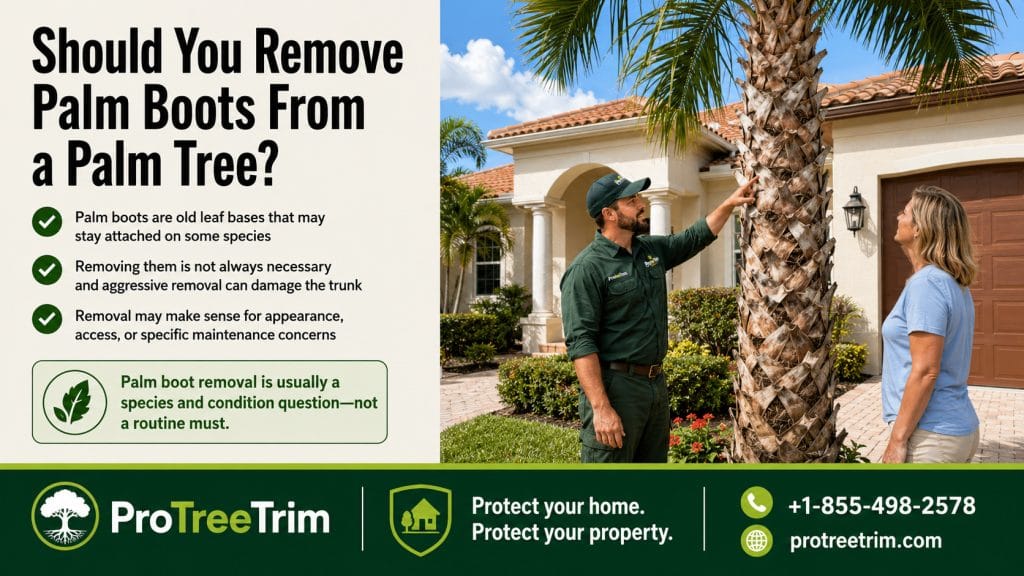
Palm boots are the old leaf bases left attached to the trunk after fronds are cut or shed. On some palms, they fall away naturally over time. On others, they remain attached for years, giving the trunk a rough, layered look. Removing them can improve appearance and reduce hiding places for debris or pests, but it is not always necessary—and aggressive removal can damage the palm.
What Are Palm Boots?
When a palm frond dies or is trimmed, part of the old leaf base may stay attached to the trunk. These attached bases are commonly called boots.
They may look like stacked, triangular, or rough plates along the trunk. Some homeowners like the natural look. Others prefer a smooth, cleaned trunk.
| What you see | What it may mean |
|---|---|
| Old leaf bases attached to trunk | Normal palm growth pattern |
| Boots falling off naturally | Palm may be self-cleaning or aging normally |
| Loose boots hanging near walkways | Cleanup or safety concern |
| Boots packed with leaves or debris | Pest or moisture hiding place may be possible |
| Trunk gouged after removal | Palm may have been cleaned too aggressively |
| Boots near roof or pool cage | Debris and access may matter more |
Palm boots are not automatically a health problem. The decision depends on palm type, location, appearance, and whether the boots are loose, messy, or interfering with property use.
Removing Boots Is Mostly an Appearance and Maintenance Decision
For many homeowners, boot removal is cosmetic. A cleaned trunk can make a palm look taller, neater, and more formal. This may matter near a front entry, driveway, pool area, patio, or home sale listing photos.
But appearance is not the only reason. Old boots can sometimes hold leaves, seed debris, moisture, insects, or small animals. They may also make it harder to see the trunk clearly.
Removal may make sense when boots are:
- loose and falling in high-use areas
- holding old debris
- making the front yard look neglected
- close to a roofline, pool cage, patio, or walkway
- hiding trunk wounds or pest activity
- part of a broader palm cleanup before selling a home
If the boots are tight, dry, stable, and not causing any problem, removal may not be urgent.
Do Not Rip Tight Boots Off the Trunk
This is the most important caution.
Palm boots should not be torn, hacked, or ripped off if they are still tightly attached. Aggressive removal can wound the trunk. Unlike many broadleaf trees, palms do not respond to trunk wounds in the same way. A cut, gouge, or puncture in the trunk can remain visible and may create a long-term weak or vulnerable area.
A clean palm trunk should not come at the cost of trunk damage.
Be cautious if a crew’s plan sounds like:
- “We’ll shave it smooth.”
- “We’ll strip everything off.”
- “We’ll cut the trunk clean.”
- “We’ll make it look like a pole.”
A better approach is conservative: remove loose or easily detachable boots without cutting into living trunk tissue.
Pool Areas and Patios May Justify More Cleanup
Palm boots near a pool, patio, lanai, or outdoor seating area may create more noticeable maintenance issues. Loose boots can fall, trap debris, or make the palm look unkempt in a highly visible space.
Around pools, the issue is often not only the boots. It may include dead fronds, seed pods, fruit clusters, and debris collecting on pavers or screen enclosures. Boot cleanup may be part of a larger palm maintenance visit.
A good pool-area palm service might include:
- removing dead fronds
- removing hanging seed pods
- clearing fronds from pool cage contact
- removing loose boots where appropriate
- hauling debris fully
- protecting pavers, screens, and furniture
The trunk should look cleaner, but not carved or damaged.
Boots Can Hide What Homeowners Need to See
One reason to remove loose boots is visibility. A trunk covered in old leaf bases can make it harder to notice wounds, cracks, soft areas, insect activity, or other changes.
That does not mean every palm trunk must be stripped smooth. It means that if there are concerns about palm health, old boots should not prevent a proper look.
Look more closely if you notice:
- sawdust-like material
- soft or dark trunk areas
- oozing
- foul smell
- insect activity
- loose boots falling suddenly
- trunk wounds after past trimming
- crown thinning
- new leaning
- fronds dying faster than normal
If the palm shows these signs, boot removal alone is not the real issue. The palm may need a broader evaluation.
Do Palm Boots Attract Pests?
Old boots can create protected spaces where debris, insects, lizards, frogs, or other small wildlife may hide. In many yards, that may not be a serious problem. In high-use areas near patios, pools, doors, garages, or outdoor kitchens, homeowners may prefer a cleaner trunk to reduce hiding places.
The key is not to overstate the issue. Boots are not automatically dangerous. They simply create texture and pockets where material can collect.
Removal may be more useful when boots are packed with:
- leaves
- palm seeds
- decaying debris
- moisture
- insects
- rodent nesting material
- old storm debris
If the palm is close to the home, cleanup may be more valuable than if it stands in open lawn.
Boot Removal Before Selling a Home
For sellers, palm boots can affect curb appeal. A palm with clean fronds but a messy trunk may still look neglected in photos. A palm near the entry, driveway, pool, or front yard can influence a buyer’s first impression.
That said, sellers should avoid rushed aggressive trimming before listing. A palm with a gouged trunk or overly stripped crown can look worse than one with natural boots.
Before selling, focus on practical, visible issues:
| Pre-sale palm issue | Better action |
|---|---|
| Loose boots near entry | Remove loose material carefully |
| Dead fronds over walkway | Trim dead fronds |
| Seed pods over driveway | Remove pods before they drop |
| Boots holding debris | Clean conservatively |
| Fronds touching roof or cage | Create careful clearance |
| Palm looks over-pruned | Avoid additional harsh cutting |
A natural but tidy palm usually reads better than a palm that looks freshly shaved and stressed.
When Boots Should Be Left Alone
Leaving boots alone may be reasonable when they are firmly attached, the palm is in open space, appearance is not a concern, and there is no debris, pest, or access issue.
Boots may also be part of the palm’s natural character. Some homeowners prefer that rough trunk look, especially in informal or tropical-style landscapes.
Leaving them alone is often better than damaging the trunk to force a smooth look.
When Removal Makes Sense
Removal may make sense when boots are loose, unsightly, trapping debris, hiding trunk concerns, or falling into high-use areas.
It is especially reasonable near:
- front entries
- driveways
- patios
- pool decks
- pool cages
- walkways
- outdoor kitchens
- garage doors
- listing-photo areas
The goal is controlled cleanup, not trunk shaving.
Do Not Combine Boot Removal With Hurricane Cutting
Palm maintenance sometimes goes wrong when several ideas get mixed together: dead frond removal, seed pod removal, boot removal, and hurricane cutting.
Removing boots from the trunk does not mean the crown should be stripped. Removing seed pods does not mean healthy green fronds should be removed. Cleaning a palm for appearance does not mean every natural feature needs to be cut away.
A healthy-looking palm should keep a full, natural crown. Maintenance should remove what is dead, loose, hanging, or creating a practical property problem.
Ask the Right Questions Before Hiring Help
Before approving palm boot removal, ask:
- Are the boots loose or tightly attached?
- Will the trunk be cut or gouged?
- Are only loose boots being removed?
- Are dead fronds or seed pods included?
- Is the palm near a roof, pool cage, or walkway?
- Will debris be hauled away?
- Is the crown being over-pruned?
- Are there any visible trunk or crown health concerns?
A good answer should sound careful, not aggressive.
Final Homeowner Takeaway
Palm boots do not always need to be removed. They are often a normal part of the palm’s appearance. Removal makes more sense when boots are loose, messy, trapping debris, affecting curb appeal, or located near pools, patios, walkways, driveways, and entries.
The most important rule is simple: do not damage the trunk for a cleaner look. A palm should be maintained, not shaved into injury.
If you are unsure whether palm boots, dead fronds, seed pods, or pool-cage palm debris should be removed, ProTreeTrim can help connect homeowners with local tree service support. Call +1-855-498-2578 or visit protreetrim.com.
FAQs
What are palm boots?
Palm boots are old leaf bases that remain attached to the trunk after fronds die, fall, or are trimmed.
Should palm boots be removed?
Sometimes. Removal may make sense if they are loose, messy, holding debris, affecting curb appeal, or falling near high-use areas.
Can removing palm boots hurt the palm?
Yes, if they are ripped, cut, or shaved aggressively. Tight boots should not be forced off in a way that damages the trunk.
Are palm boots a pest problem?
Not always, but they can hold leaves, moisture, insects, or nesting material. This matters more near patios, pools, garages, and entries.
ProTreeTrim™ can help you take the next step.
If you are dealing with a damaged tree, fallen branch, stump, root issue, palm concern, or storm cleanup question in Florida, call ProTreeTrim for tree service support.