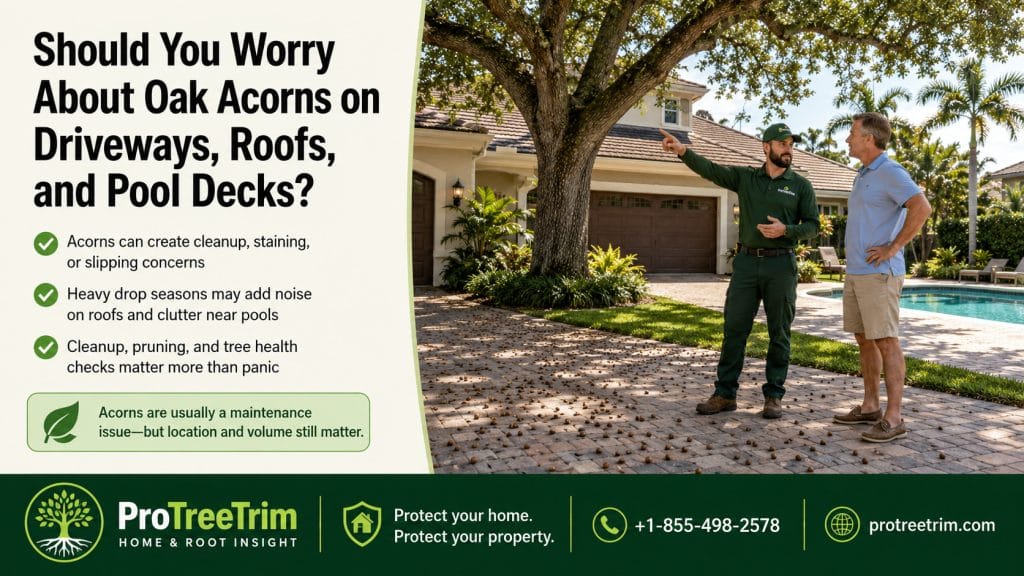
Oak acorns are usually a normal part of the tree’s cycle, not a warning sign by themselves. But where they fall can matter. Acorns on an open lawn are mostly a cleanup issue. Acorns on driveways, pool decks, patios, roofs, gutters, walkways, or pavers can create slipping, staining, drainage, pest, and maintenance concerns that homeowners should not ignore.
Acorn Drop Is Usually Normal
Oak trees produce acorns as part of their natural reproductive cycle. Some years may feel heavier than others. A yard that looks covered in acorns does not automatically mean the oak is sick, unstable, or about to fail.
The first question is not “Why is my oak dropping acorns?”
The better question is: Where are the acorns landing, and are they creating a property problem?
| Where acorns fall | Main concern |
|---|---|
| Open lawn | Usually routine cleanup |
| Driveway | Vehicle, tire, staining, and appearance issues |
| Walkway | Slipping or rolling underfoot |
| Pool deck | Barefoot discomfort, slipping, skimmer cleanup |
| Roof | Gutter buildup and roof-valley debris |
| Patio | Furniture, staining, pests, and cleanup |
| Pavers | Stains, rolling hazards, and trapped debris |
| Fence line | Debris buildup and neighbor-side cleanup |
A healthy oak can still create a messy yard. Mess does not always mean danger.
Driveways Can Become Annoying Fast
Acorns on a driveway may seem harmless until they build up. They can roll underfoot, crush under tires, stain pavement, collect along edges, and make the front of the home look less maintained.
If vehicles park under the oak, acorns may also bounce off hoods, roofs, or windshields. Most acorns are not heavy enough to cause major damage, but repeated debris can still be frustrating, especially when mixed with leaves, twigs, sap, or bird activity.
Driveway cleanup becomes more important when:
- acorns collect where people step out of cars
- crushed acorns stain concrete or pavers
- debris blocks driveway drains
- acorns roll onto walkways
- the driveway is part of listing photos
- vehicles park directly under the canopy
- heavy acorn drop combines with dead twigs or branch litter
The oak may not need pruning. The driveway may simply need more frequent seasonal cleanup.
Pool Decks Need More Attention Than Lawns
Acorns around a pool can become more than a visual mess. They may roll under bare feet, create slipping points when wet, stain pavers, collect in corners, or fall into the water.
If the oak canopy extends over a pool cage, acorns and small debris may also collect on screen panels, frame corners, gutters, or deck drains. That can make cleanup harder than sweeping open pavement.
Pay closer attention when acorns fall on:
- wet pavers
- pool steps
- deck drains
- skimmer areas
- screen enclosure edges
- lounge seating areas
- outdoor dining spaces
- barefoot walking paths
A large oak near a pool can still be valuable shade. But acorn drop should be part of the maintenance plan.
Roofs and Gutters Are a Different Issue
Acorns falling on a roof are usually less about the acorns themselves and more about where they collect. Roof valleys, gutters, downspouts, and flat debris pockets can hold acorns, leaves, twigs, and organic material.
If gutters are already clogged, acorns can add to the problem. If roof valleys collect debris, water movement may be affected. If branches touch the roof, the issue becomes more than seasonal acorn drop.
Look for:
| Roofline clue | What it may suggest |
|---|---|
| Acorns packed in gutters | Gutter cleaning may be needed |
| Leaves and acorns in roof valley | Debris may hold moisture or slow runoff |
| Branches touching shingles | Roofline pruning may be needed |
| Downspouts overflowing | Debris may be blocking drainage |
| Water stains under gutter | Overflow may already be happening |
| Oak limbs directly over roof | Future pruning or cleanup schedule matters |
A few acorns on a roof are normal. Packed gutters and branches touching shingles deserve more attention.
Acorns Can Attract Wildlife and Pests
Acorns are food for wildlife. Squirrels, birds, rodents, and other animals may visit areas where acorns collect. In many yards, that is just part of having mature trees. But if acorns build up near the house, garage, patio, pool equipment, crawlspace vents, or wood piles, the activity may become less welcome.
The goal is not to remove every acorn from the property. It is to avoid letting piles collect in high-use or structure-adjacent areas.
Clean up acorns more regularly near:
- garage doors
- outdoor furniture
- pool equipment
- AC units
- foundation-side beds
- shed entrances
- patio corners
- fence-line debris pockets
- roof and gutter discharge areas
Acorns plus moisture plus old leaves can also make beds look neglected and may hide other issues like exposed roots, soft soil, or drainage problems.
Acorn Drop Does Not Usually Mean the Oak Needs Removal
Homeowners sometimes worry that a messy oak is a problem oak. That is not necessarily true.
An oak may drop acorns heavily and still be healthy, valuable, and worth keeping. Removal should not be considered just because the tree creates seasonal debris.
Removal becomes a different conversation if acorn drop comes with more serious concerns:
- large dead limbs
- trunk cracks
- mushrooms at the base
- major hollow areas
- branches over the roof or driveway
- root lifting near hardscape
- new leaning after storms or heavy rain
- repeated large limb drop
- branches near utility lines
Acorns are usually cleanup. Dead limbs, cracks, decay, and root movement are tree-risk signals.
Should You Prune an Oak Because of Acorns?
Pruning usually does not solve acorn drop in a meaningful way. Removing a few branches may reduce debris in one small area, but it can also create unnecessary wounds if done only for cleanup.
Pruning may make sense if the oak has branches touching the roof, deadwood over the driveway, limbs hanging over a pool cage, or structural defects that need attention. It should not be done simply to stop acorns.
A better pruning goal might be:
- remove dead branches over the driveway
- clear roofline contact
- reduce a limb rubbing the gutter
- address cracked or hanging branches
- improve clearance over a walkway
- remove storm-damaged branches
A poor pruning goal would be:
- cut it back hard so fewer acorns fall
- top the oak
- strip the canopy over the driveway
- remove large healthy limbs only because of seasonal debris
The oak’s structure and health matter more than a cleaner surface for a few weeks.
What Homeowners Can Do Instead
For most acorn issues, maintenance is the better answer.
Practical steps include:
- sweeping walkways and pool decks often during heavy drop
- clearing driveway drains and gutters
- using a leaf blower carefully around pavers and pool areas
- keeping acorns away from garage doors and patio corners
- checking roof valleys and downspouts after heavy drop
- trimming only when branches create a real clearance or safety issue
- documenting tree work if the oak is near the roof or driveway
If acorns are becoming a constant problem in one area, look at the placement of outdoor furniture, parking, pool equipment, and drains. Sometimes moving a seating area or changing cleanup routines helps more than tree work.
Before Selling a Home With a Large Oak
If you are preparing a home for sale, acorns can affect presentation. A driveway, walkway, or pool deck covered in acorns may make the property look less maintained, even if the oak is healthy.
Before photos or showings, focus on high-visibility areas:
- front walkway
- driveway
- porch
- pool deck
- patio
- roofline debris visible from the ground
- gutters with obvious buildup
- fence-line piles
- outdoor seating areas
If the oak also has dead branches, roof contact, or visible damage, handle those separately. Buyers may forgive normal acorns. They may worry about dead limbs over the driveway.
When to Look Closer at the Oak
Acorn drop alone is usually not the concern. Look closer if the oak is also showing signs of stress or structural problems.
Pay attention to:
| Sign | Why it matters |
|---|---|
| Large dead limbs | Limb-drop risk may be present |
| Dead branches at the top | Can suggest stress or decline |
| Mushrooms near base | Decay or moisture may be involved |
| Bark cracking or peeling | Could indicate injury or stress |
| Hollow openings | Structural questions may arise |
| Roots lifting pavers | Hardscape and root conflict may exist |
| New lean | Root or soil movement may be involved |
| Repeated branch drop | Needs more attention than acorn cleanup |
If these signs appear, the issue is no longer just acorns.
Final Homeowner Takeaway
Oak acorns are usually normal. The main question is whether they are falling in places where they create cleanup, slipping, staining, drainage, pest, or curb-appeal problems.
Clean up high-use areas, keep gutters and drains clear, and avoid unnecessary pruning just to reduce acorn drop. If the oak also has dead limbs, cracks, mushrooms, leaning, root problems, or roof contact, then the tree deserves a closer look.
If you are unsure whether oak acorns are only a cleanup issue or part of a larger tree-maintenance concern, ProTreeTrim can help connect homeowners with local tree service support. Call +1-855-498-2578 or visit protreetrim.com.
FAQs
Are acorns on the ground a sign the oak tree is dying?
Usually no. Acorns are a normal part of an oak’s life cycle. Worry more if acorn drop appears alongside dead limbs, cracks, mushrooms, or major canopy decline.
Should I prune an oak tree to stop acorns from falling?
Usually no. Pruning should address structure, deadwood, clearance, or safety—not simply seasonal acorn drop.
Can acorns damage a pool deck or pavers?
They can create stains, slipping points, and cleanup issues, especially when crushed, wet, or left sitting for long periods.
Should I clean acorns out of gutters?
Yes, if they collect with leaves and twigs. Acorns in gutters or roof valleys can contribute to drainage problems if debris builds up.
ProTreeTrim™ can help you take the next step.
If you are dealing with a damaged tree, fallen branch, stump, root issue, palm concern, or storm cleanup question in Florida, call ProTreeTrim for tree service support.