
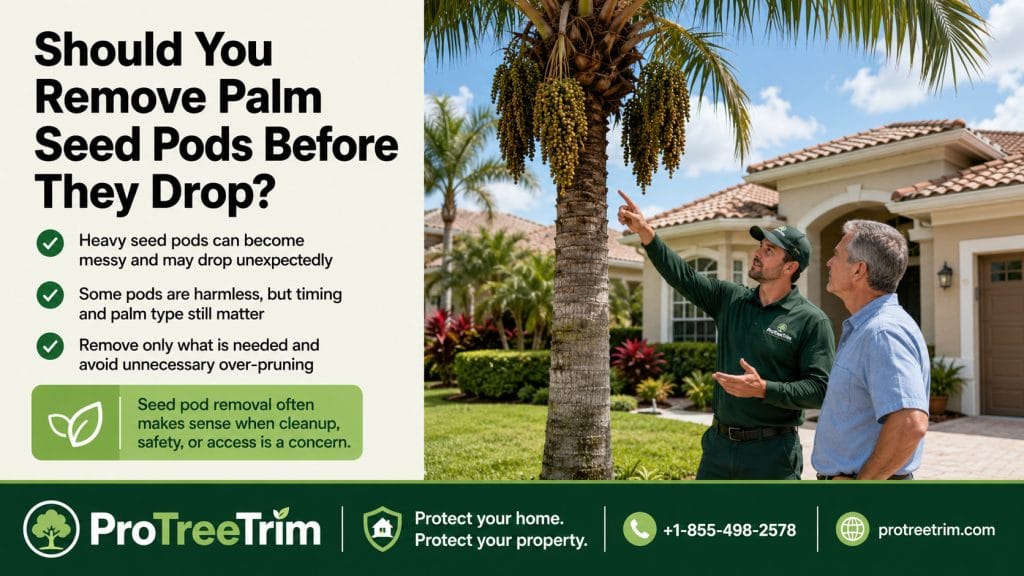
Palm seed pods are normal, but they can become a real nuisance when they hang over driveways, pool decks, patios, walkways, roofs, or front entries. In the right location, they may not matter much. In the wrong location, they can create stains, slippery debris, pest attraction, clogged gutters, pool cleanup, and extra maintenance right when homeowners want the yard to look clean.
Palm Seed Pods Are Not Automatically a Problem
Many palms produce flower stalks, seed pods, or fruit clusters as part of their normal growth cycle. Seeing seed pods does not automatically mean the palm is unhealthy.
The question is where those pods are hanging and what will happen when they dry, break apart, or fall.
| Where seed pods hang | Why removal may matter |
|---|---|
| Over open lawn | Often less urgent |
| Over driveway | Can drop on cars or stain pavement |
| Over pool deck | Can create cleanup and slipping issues |
| Over pool cage | May collect on screens or frame corners |
| Over patio furniture | Mess, stains, and pest attraction |
| Near front entry | Curb appeal and walkway cleanup |
| Over gutters | Debris may collect with leaves and fronds |
| Near neighbor’s yard | Boundary cleanup concerns may appear |
A palm in the back corner of the yard may drop seeds without much consequence. A palm over the pool or driveway is different.
Why Seed Pods Become Annoying
Palm seed pods can be messy in several ways. Some dry and scatter small seeds. Some drop fruit-like material. Some stain pavers or concrete. Some attract insects, birds, rodents, or other wildlife. Some simply make the yard look neglected once they start breaking apart.
The issue is not that palm seed pods are unusual. The issue is that they often fall into high-use areas.
Homeowners usually notice the problem when:
- seeds collect in pool skimmers
- fruit stains pavers
- debris gets tracked into the house
- insects gather around fallen material
- cars parked under the palm get messy
- the patio needs constant sweeping
- seed stalks hang low over walkways
- listing photos or curb appeal suffer
Removing seed pods before they fully drop can reduce that cleanup.
Pool Areas Need Extra Attention
Palm seed pods near pools are one of the most common maintenance complaints. Seeds and fruit can fall into the water, collect around drains, sit on pavers, or gather on top of a pool cage.
If a palm hangs over a screened enclosure, the pods may not fall neatly to the ground. They can collect on screen panels or in frame corners, where they are harder to remove. If they fall onto a pool deck, they may become slippery when wet or leave stains if ignored.
A palm near a pool does not always need aggressive trimming. But seed-pod removal can be a practical part of routine maintenance when the pods are directly over the pool area.
Driveways and Walkways Are Different From Open Lawn
Seed pods over open grass are usually less serious. Seed pods over a driveway or front walkway are more noticeable.
On driveways, pods can drop onto vehicles, stain concrete, get crushed by tires, or create a messy first impression. On walkways, fallen material can become slippery or make the entry look poorly maintained.
This matters especially before:
- home showings
- guests arriving
- storm season
- pressure washing
- pool maintenance
- driveway repair
- exterior photos
- seasonal yard cleanup
If the palm is in a visible or high-traffic location, removing seed pods early may be worth it.
Seed Pod Removal Is Not the Same as Over-Pruning
Removing seed pods does not mean the palm should be stripped of healthy green fronds.
A good palm maintenance scope is specific. It may include removing dead fronds, broken fronds, hanging seed pods, and material touching the roof or pool cage. It should not turn into a harsh hurricane cut where too many healthy fronds are removed.
A better scope sounds like:
- remove hanging seed pods over the driveway
- remove dead fronds above the walkway
- clear pods touching the pool cage
- remove fruit clusters before they drop on the patio
- preserve the healthy green crown
A poor scope sounds like:
- cut everything back hard
- leave only a small tuft at the top
- remove green fronds for a “clean” look
- strip the palm because storm season is coming
Seed pod removal should make the palm cleaner without weakening its natural shape.
When You Can Leave Seed Pods Alone
You do not need to remove every seed pod from every palm.
Leaving them alone may be reasonable when:
- the palm is in open lawn
- fallen seeds will not stain or create slipping issues
- the pods are not over a pool, roof, walkway, or driveway
- wildlife attraction is not a concern
- the palm is short and easy to monitor
- the yard use is low in that area
- cleanup is simple after they drop
Some homeowners also prefer a more natural palm look. That is fine when the location allows it.
When Removal Makes More Sense
Seed pod removal makes more sense when the palm is tall, the pods are heavy, the drop zone is important, or cleanup would be difficult after they fall.
Consider removal when pods hang over:
| Area | Why removal helps |
|---|---|
| Pool water | Reduces skimmer and water cleanup |
| Pool cage | Prevents debris from collecting on screens |
| Patio | Reduces stains, pests, and slipping |
| Driveway | Protects cars and keeps pavement cleaner |
| Front walkway | Improves safety and appearance |
| Roof edge | Reduces gutter and roofline debris |
| Outdoor furniture | Prevents stains and repeated cleaning |
| Neighbor-facing side | Reduces boundary cleanup issues |
The closer the palm is to daily-use areas, the stronger the case for removing pods before they fall.
Do Not Climb Tall Palms Yourself
Seed pods may look easier to remove than fronds, but tall palm work can still be risky. The pods may be high, heavy, awkward to cut, or close to structures. A ladder against or near a palm is not a safe casual project.
Avoid DIY removal when seed pods are:
- high in the crown
- over a roof
- above a pool cage
- near power or service lines
- over a driveway or walkway
- too heavy to control
- mixed with dead hanging fronds
- close to the neighbor’s property
If electrical lines are nearby, do not attempt the work. Utility safety comes first.
Seed Pods Can Signal a Maintenance Schedule
If a palm drops seed pods in the same problem area every year, it may be worth scheduling maintenance before the mess starts. Waiting until the pods drop may mean more cleanup, staining, pests, or pool maintenance.
A simple seasonal plan may include:
- checking palms before pods mature
- removing dead fronds at the same visit
- clearing roofline or pool-cage contact
- removing seed pods over high-use areas
- hauling debris away fully
- taking after photos if the palm is near structures
This is often easier than reacting after the driveway, pool deck, or patio is already covered.
Watch the Whole Palm While You Are There
Seed pods may be normal, but a palm inspection should not stop there.
While looking at the pods, also check:
- dead fronds
- broken hanging fronds
- crown thinning
- leaning
- trunk wounds
- soft or damaged crown area
- fronds touching the roof or cage
- signs that too many green fronds were removed previously
If the palm looks healthy and the only issue is messy seed pods, the decision is mostly maintenance. If the palm also shows decline, leaning, or crown problems, seed pod removal is only a small part of the larger question.
Keep the Cleanup Complete
If seed pods are removed, make sure the debris is handled. Leaving cut pods, fruit, and fronds around the base of the palm can still attract pests, stain hardscape, or make the yard look unfinished.
A good job should include:
- cutting the targeted seed pods
- removing dead or broken fronds if included
- protecting nearby screens, pavers, and furniture
- hauling debris away
- clearing the pool deck or driveway below
- checking for roofline or gutter debris if relevant
The finished area should look clean, not just cut.
Final Homeowner Takeaway
Palm seed pods do not always need to be removed. In open lawn, they may be harmless. Over pools, driveways, patios, walkways, rooflines, or pool cages, they can become a predictable maintenance problem.
Remove seed pods when they are likely to create mess, stains, pests, slipping, or property cleanup. Leave healthy green fronds unless there is a real reason to remove them. A well-maintained palm should look natural, not stripped.
If you are unsure whether palm seed pods, dead fronds, roofline contact, or pool-cage debris should be removed, ProTreeTrim can help connect homeowners with local tree service support. Call +1-855-498-2578 or visit protreetrim.com.
FAQs
Should palm seed pods be removed?
They do not always need removal, but it often makes sense when they hang over pools, driveways, patios, walkways, roofs, or pool cages.
Do palm seed pods mean the palm is unhealthy?
No. Seed pods are often part of normal palm growth. The concern is usually cleanup, stains, pests, or where the pods may fall.
Can palm seed pods stain pavers or driveways?
Some palm fruit or seed material can stain surfaces or create messy debris, especially if it sits on wet pavers or concrete.
Should seed pods be removed at the same time as dead fronds?
Often, yes. A palm maintenance visit can remove dead fronds, hanging pods, and problem debris while preserving healthy green fronds.
ProTreeTrim™ can help you take the next step.
If you are dealing with a damaged tree, fallen branch, stump, root issue, palm concern, or storm cleanup question in Florida, call ProTreeTrim for tree service support.