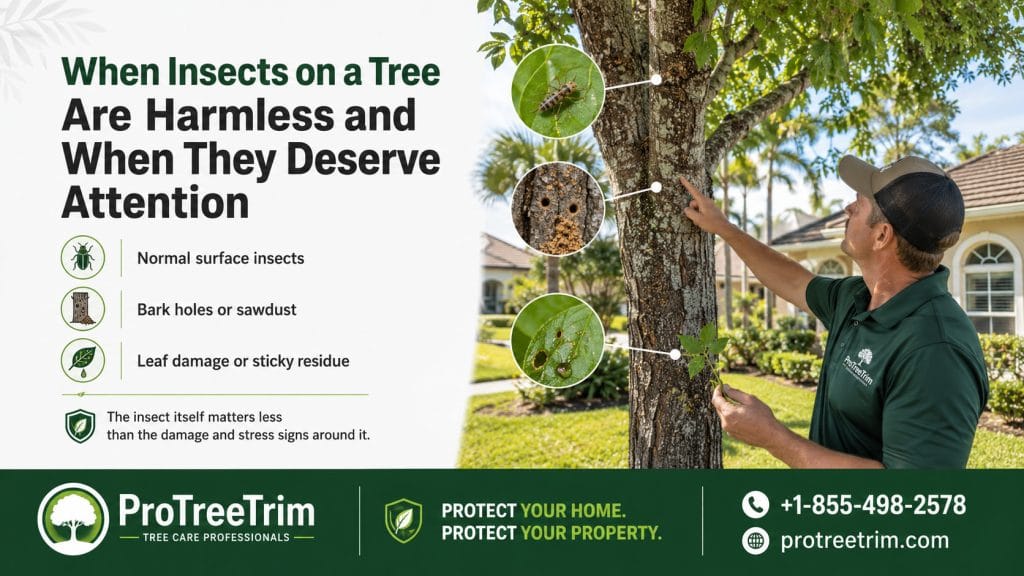
Seeing insects on a tree does not automatically mean the tree is in trouble. Many bugs are simply passing through, feeding on other pests, pollinating, or living in nearby mulch. The concern grows when insects appear with leaf damage, sticky residue, bark holes, sawdust-like material, branch dieback, or a tree that is already stressed.
Do Not Start With Spray
A common homeowner mistake is treating every insect as an enemy. That can backfire. Broad spraying may kill helpful insects along with the ones you are worried about, and it may not address the real cause of the tree’s decline.
UF/IFAS defines pest scouting as the process of identifying insects, diseases, and environmental problems before deciding what action is needed. That mindset is useful for homeowners: first observe, then identify, then decide.
Florida-Friendly Landscaping guidance also notes that beneficial insects such as lady beetles, lacewings, assassin bugs, spiders, parasitic wasps, and parasitic flies may already be helping manage pest populations in the landscape. It also advises tolerating some insect damage and leaf disease on plants rather than reacting to every mark.
| What you see | Usually less concerning | Worth a closer look |
|---|---|---|
| A few insects on leaves | Yes | Not by itself |
| Ladybugs, spiders, lacewings | Often beneficial | Avoid unnecessary spraying |
| Minor chewing on a few leaves | Often manageable | Watch for spreading damage |
| Sticky residue or black sooty coating | No | Could suggest sap-feeding insects |
| Small holes in trunk or branches | No | Check for boring insect signs |
| Sawdust-like material near bark | No | Deserves attention |
| Branch dieback with insects present | No | Look at tree stress and pests together |
Look for Damage Patterns, Not Just Bugs
The insect itself is only one clue. The tree’s response matters more.
Check the leaves first. Are they curled, yellowed, speckled, chewed, or dropping early? Are only a few leaves affected, or is one whole side of the canopy thinning? Sap-feeding insects can leave signs such as discoloration, drooping, stippling, honeydew, or a general lack of vitality, according to ISA’s TreesAreGood homeowner guidance.
Then check the trunk and branches. Tiny holes, loose bark, oozing sap, sawdust-like frass, or bark splitting near dead limbs may point to a more serious issue. Arbor Day’s arborist guidance also highlights borer holes, abnormal leaf size, sudden thinning, trunk holes, frass, and lifting roots as signs homeowners should notice when checking for pests.
The bigger picture matters. Insects often show up on trees that are already stressed by drought, overwatering, root damage, construction, bad pruning, storm wounds, or poor soil conditions. A pest may be the visible problem, while the underlying issue is a tree that has been weakened for months.
When Florida Conditions Make Insect Issues Worse
Warm, humid yards can support plenty of insect activity. That does not make every tree unsafe. But Florida homeowners should pay closer attention when insects appear on trees near roofs, driveways, pool cages, fences, pavers, or walkways, especially if the tree also has structural warning signs.
A declining live oak with dead limbs over a driveway is different from a healthy tree with a few chewed leaves. A palm with crown decline, trunk wounds, and repeated frond drop deserves a different response than one with harmless insects in the mulch bed below it.
Before taking action, take photos. Capture the full tree, close-ups of the insects or damage, leaves, trunk, root flare, and nearby yard conditions. Note whether irrigation has changed, mulch is piled against the trunk, soil stays wet, or recent digging happened near the roots.
Avoid cutting large limbs or applying random treatments just because insects are present. If the tree is dropping branches, leaning, showing trunk cracks, or losing canopy quickly, the concern is no longer just “bugs.” It is tree condition and property risk.
If you are unsure whether insects, tree decline, branch dieback, or root stress need professional attention, ProTreeTrim can help connect homeowners with local tree service support. Call +1-855-498-2578 or visit protreetrim.com.
FAQs
Are insects on a tree always bad?
No. Many insects are harmless or beneficial. The concern is insect activity paired with spreading damage, branch dieback, trunk holes, sticky residue, or tree stress.
Should I spray a tree as soon as I see bugs?
Not automatically. First identify what is present and whether it is actually damaging the tree. Unnecessary spraying can disrupt beneficial insects.
What are warning signs of boring insects?
Small holes in bark, sawdust-like material, oozing, dying branches, and sudden canopy thinning can all deserve closer attention.
Can insects make a tree fall?
Insects alone are not the whole story. But pests, decay, wounds, root stress, and structural weakness can overlap, especially in trees already under stress.
ProTreeTrim™ can help you take the next step.
If you are dealing with a damaged tree, fallen branch, stump, root issue, palm concern, or storm cleanup question in Florida, call ProTreeTrim for tree service support.