
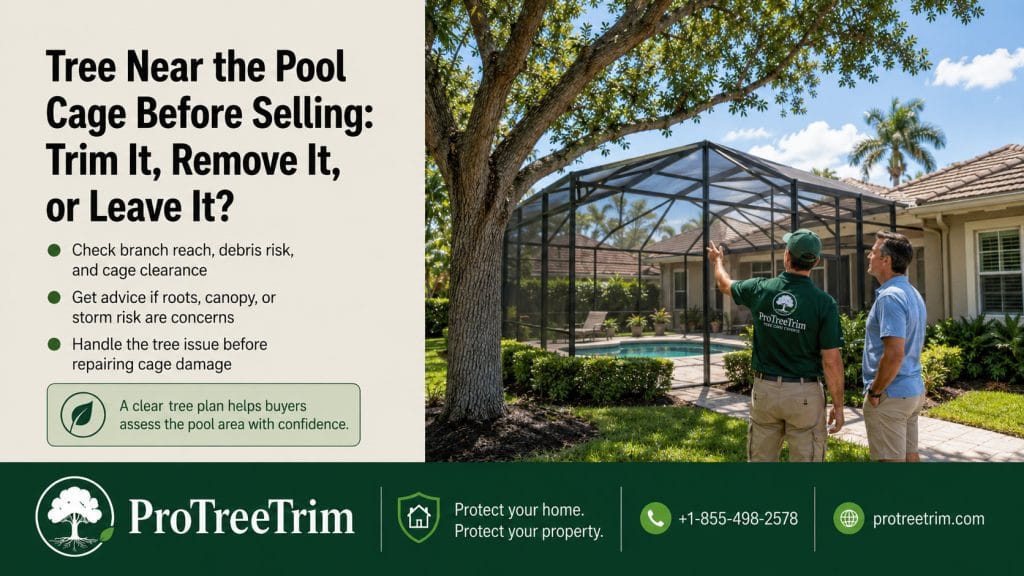
A tree near the pool cage can be a selling point or a buyer concern. Shade around a pool area feels great, but branches touching screens, palm fronds dropping onto panels, roots lifting pavers, or a leaning trunk near the enclosure can make buyers wonder what they will have to fix after closing.
Start With Contact and Clearance
A tree that simply grows near the pool cage is not always a problem. The concern begins when branches, palm fronds, seed pods, or heavy limbs touch or hang directly over the enclosure.
Pool cages are easy for buyers to inspect visually. Torn screens, bent frames, patched panels, leaf buildup, and branches resting on the structure can all suggest deferred maintenance. Even if the tree is healthy, the buyer may see future cost.
| What you see near the pool cage | What it may suggest before listing |
|---|---|
| Palm fronds resting on screen panels | Debris and screen-damage concern |
| Large limb over enclosure | Storm and impact concern |
| Branches rubbing the frame | Ongoing maintenance issue |
| Roots lifting pool-deck pavers | Hardscape and trip concern |
| Leaning tree aimed at cage | Higher buyer anxiety |
| Leaves or seed pods constantly collecting | Cleanup burden for buyer |
| Previous screen patches below tree | Buyer may ask what caused the damage |
Trim for a Clean Pool Area, Not a Stripped Tree
If the tree is otherwise healthy, selective trimming may be enough before listing. The goal is to create reasonable clearance, remove deadwood, reduce obvious debris over the screen, and make the pool area look cared for.
Do not over-prune just to make the space look open. A harshly cut tree can look like a rushed pre-sale fix. It may also create weak regrowth or make the canopy look unnatural in listing photos.
A good pre-listing plan may include:
- removing dead limbs over the enclosure
- trimming branches physically touching screens or frames
- addressing heavy palm fronds or seed pods above the pool area
- clearing roofline and gutter contact nearby
- cleaning debris from the pool deck before photos
- checking whether pavers or deck edges are lifting near roots
The tree should still look intentional after the work. A buyer should see a maintained yard, not a panic trim.
Check the Pool Cage and Deck Too
Tree work may solve the branch issue, but it does not automatically fix screen or frame damage.
Before listing, walk the pool area slowly. Look for torn screen panels, bent aluminum, loose spline, cracked pavers, lifted coping, clogged drains, or root-related uneven spots. If branches have been touching the enclosure for months, a buyer may ask whether the cage needs repair.
If repairs are made, keep records. A clean invoice and before-and-after photos can help if the issue comes up during inspection.
| Record to keep | Why it helps |
|---|---|
| Before photo of tree contact | Shows the original issue |
| Tree trimming invoice | Shows the work was handled |
| Pool screen repair receipt | Documents related repair |
| After photo of clearance | Shows finished condition |
| Debris hauling note | Confirms cleanup was completed |
| Paver or deck repair invoice | Helps explain root or settling work |
When Removal May Be Worth Discussing
Removal may make sense if the tree is dead, newly leaning, repeatedly damaging the screen, growing too close to the enclosure, or lifting the pool deck in a way that keeps getting worse.
Palm trees deserve their own judgment. A palm near a pool cage may be fine if it is stable and maintained. But a leaning palm dropping heavy fronds or seed clusters over a screen enclosure can become a recurring concern.
Large shade trees are different. A heavy limb over the cage may need careful pruning, while roots near pavers may require a separate hardscape decision. Removing the tree may solve one issue but create another: stump grinding, root decay, settling, bare soil, or pool-deck repair.
Do not remove a tree only because it is near the pool cage. Remove or trim because there is a clear problem.
What Buyers Are Really Asking
A buyer is not only asking, “Is that tree healthy?” They are asking:
Will it tear the screen?
Will it drop debris into the pool?
Will the pavers keep lifting?
Will I need tree work right after closing?
Is this outdoor space easy to maintain?
That is why the best pre-sale approach is practical. Handle visible contact, remove obvious deadwood, clean the pool area, repair existing screen damage, and document the work. Leave the tree if it adds shade and has no clear conflict. Address it if it makes the pool area look risky or unfinished.
If you are unsure whether a tree, palm, root issue, or pool-cage limb should be handled before listing your home, ProTreeTrim can help connect homeowners with local tree service support. Call +1-855-498-2578 or visit protreetrim.com.
FAQs
Should I trim trees around the pool cage before selling?
Often, yes, if branches, palm fronds, or seed pods touch the screen, frame, or pool deck. Selective trimming can improve appearance and reduce buyer concern.
Does every tree near a pool enclosure need removal?
No. A healthy tree with proper clearance may add shade and appeal. Removal makes more sense if the tree is leaning, damaged, repeatedly dropping heavy debris, or affecting pavers and screens.
Should I repair screen damage before listing photos?
Usually, yes. Torn or patched screens near tree branches can make buyers wonder whether the problem is still active.
What should I document after tree work near a pool cage?
Keep before-and-after photos, tree service invoices, screen repair receipts, debris hauling notes, and any paver or deck repair records.
ProTreeTrim™ can help you take the next step.
If you are dealing with a damaged tree, fallen branch, stump, root issue, palm concern, or storm cleanup question in Florida, call ProTreeTrim for tree service support.