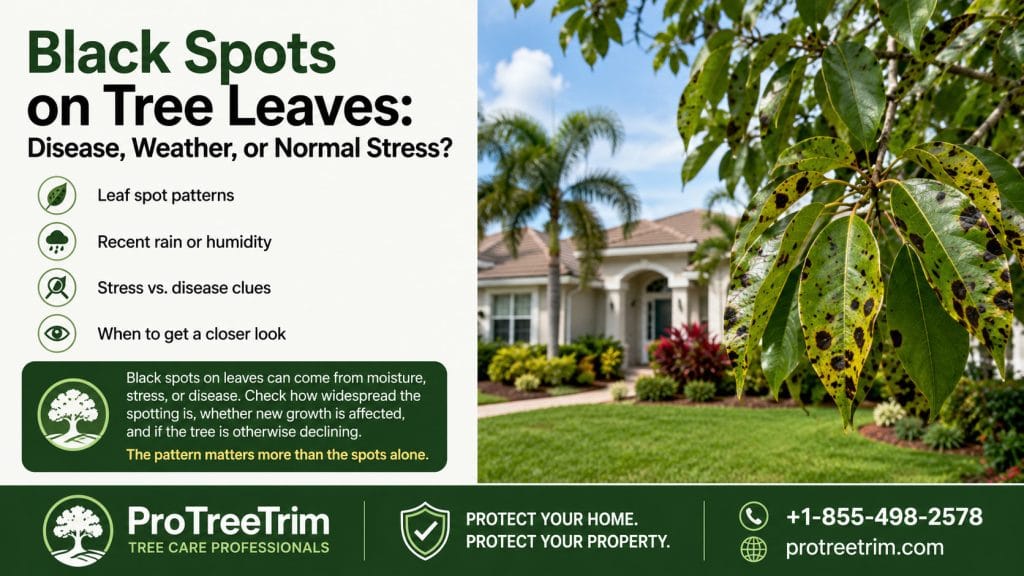
Black spots on tree leaves can look alarming, but they do not always mean the tree is in serious decline. Wet weather, fungal leaf spots, insects, old stress, irrigation patterns, and normal seasonal leaf aging can all leave marks. The better first step is to check the pattern, not reach for spray or pruning tools.
Start With Where the Spots Are Showing Up
A few spotted leaves on the lower or older part of the canopy may not mean much by themselves. A fast-spreading pattern across new leaves, one entire side of the tree, or a tree that is also dropping leaves early deserves more attention.
Wet leaves can make some fungal problems easier to develop. UF/IFAS explains that with anthracnose disease, leaf surfaces that remain wet for several hours after rain or irrigation can allow fungal activity to damage plant tissue, and dew can extend that wet period. That does not mean every black spot is anthracnose; it simply shows why weather and leaf wetness matter when leaf spots appear.
| What you notice | What to check before assuming disease |
|---|---|
| A few spots on older leaves | Seasonal aging, minor stress, old damage |
| Spots after repeated rain | Leaf wetness, air flow, dense canopy |
| Spots mostly on one side | Irrigation spray, roof runoff, root stress |
| Spots plus sticky residue | Sap-feeding insects may be involved |
| Spots plus early leaf drop | Disease, stress, or pest pressure may be stronger |
| Spots plus dead limbs | Look beyond leaves; check roots and structure |
Do Not Treat Every Leaf Spot the Same
Leaf spots can be symptoms, not proof of one cause. UF/IFAS plant pathology material makes a useful distinction: symptoms are how the plant expresses a problem, while signs are physical evidence of a pathogen, such as fungal growth, spores, mushrooms, bacterial ooze, or other visible disease structures.
That distinction matters for homeowners. A black spot is not enough to diagnose the tree. Look for the full picture: leaf yellowing, curling, early drop, branch dieback, trunk cracks, root exposure, mushrooms near the base, or insects under the leaves.
Also check the irrigation. A sprinkler repeatedly wetting one side of the canopy can make spots worse or at least make that side look different. Dense hedges, tight side yards, and trees close to walls or pool cages may also dry more slowly after rain.
Before spraying, take photos. Photograph the full tree, the affected leaves, both sides of the leaf if safe, the trunk base, nearby irrigation heads, mulch depth, and drainage path. If the spots are spreading quickly or the tree is losing leaves heavily, those photos help show the timeline.
When Leaf Spots Become a Bigger Tree Concern
Leaf spots alone are often less urgent than homeowners fear. They become more concerning when the tree is also showing decline: thinning canopy, dead branches, bark damage, soft wood, mushrooms near the trunk, or a new lean after rain.
ISA’s TreesAreGood homeowner guidance notes that discolored leaves, dead branches, and early leaf drop can be symptoms that deserve arborist attention; the cause may be minor, but it can also involve several underlying problems.
The practical question is not “What is the name of this spot?” It is “Is the tree otherwise stable and improving, or are more warning signs showing up?”
If you are unsure whether leaf spots, early leaf drop, pest activity, or tree decline needs professional attention, ProTreeTrim can help connect homeowners with local tree service support. Call +1-855-498-2578 or visit protreetrim.com.
FAQs
Do black spots on leaves mean my tree has a disease?
Not always. Spots can come from fungal issues, weather, insects, leaf age, irrigation patterns, or stress. Check the pattern before assuming.
Should I spray a tree with black spots?
Not right away. First identify whether the spots are spreading, whether insects are present, and whether the tree has other stress signs.
Can heavy rain cause black spots on leaves?
Wet weather can encourage some leaf spot problems, especially when leaves stay wet for long periods after rain, irrigation, or dew.
When should I worry about leaf spots?
Worry more if spots spread quickly, new leaves are affected, leaves drop early, or the tree also has dead limbs, trunk damage, mushrooms, or leaning.
ProTreeTrim™ can help you take the next step.
If you are dealing with a damaged tree, fallen branch, stump, root issue, palm concern, or storm cleanup question in Florida, call ProTreeTrim for tree service support.