
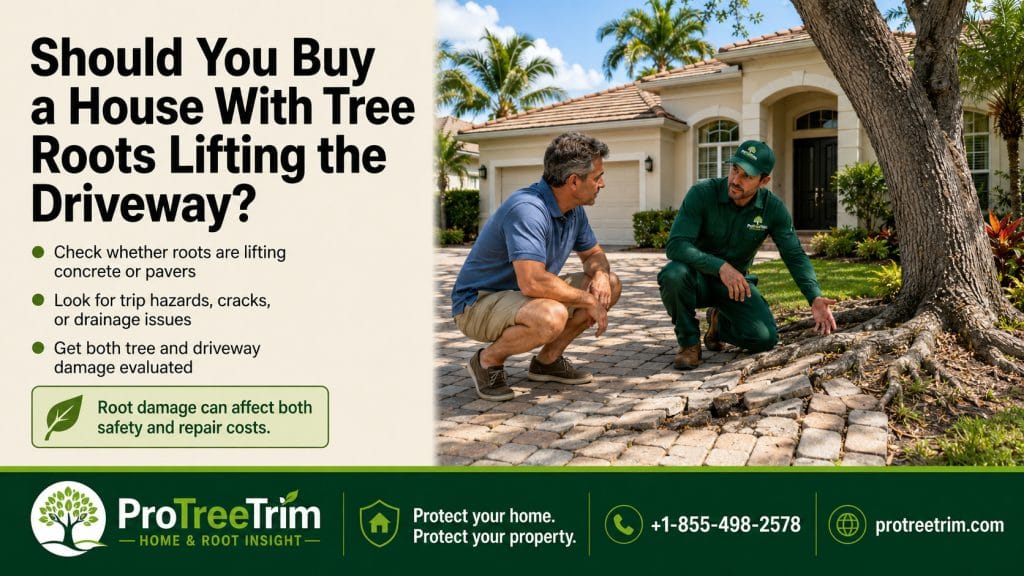
Tree roots lifting a driveway do not automatically mean you should walk away from a house. But they do mean you should slow down and understand what you are buying. The issue may be a manageable paver repair, a drainage problem, an old root from a removed tree, or a sign that the tree and driveway are now competing for the same space.
Look at the Driveway Like a Daily-Use Area
A driveway is not just a surface. It is where cars park, guests walk, trash bins roll, deliveries arrive, and tree crews may need access later. If roots are lifting the driveway, the concern is partly cosmetic, partly practical.
A small raised paver near the edge may be a simple maintenance item. A large lifted section near the garage, front walkway, or parking area is different. It may create a trip hazard, affect vehicle clearance, or signal a repair that could return after closing.
| What you see | Why it matters as a buyer |
|---|---|
| Slight lift at the driveway edge | May be manageable, but worth noting |
| Pavers raised near the trunk | Roots and hardscape may be in active conflict |
| Concrete cracked upward | Root pressure or soil movement may be involved |
| Driveway sinking near an old stump | Decaying roots or poor backfill may be settling |
| Water pooling near the cracked area | Drainage may be making the problem worse |
| Roots plus low limbs over parking area | Repair and pruning concerns may overlap |
Do Not Blame Every Crack on the Tree
Tree roots may be part of the problem, but they are not always the whole problem. Driveways can crack or shift because of age, poor base preparation, heavy vehicles, water movement, soil settling, or past repairs.
Look at the pattern. Is the surface lifting where large roots are visible? Is one edge rising while another section is sinking? Does water run from the roof, yard, or street toward the damaged area? Has the driveway been patched before?
A buyer should avoid two quick assumptions: “The tree is destroying the driveway” and “This is only cosmetic.” Either could be wrong.
A better question is: Will this need repair soon, and will the tree make that repair more complicated?
Check the Tree Before You Price the Repair
Repairing the driveway is only part of the decision. You also need to look at the tree.
Is it healthy and valuable shade, or is it already a problem tree? Does it have dead limbs over the driveway? Is it leaning toward the house or garage? Are there mushrooms near the base, trunk cracks, bark loss, or signs of past storm damage?
If the tree is healthy and well placed, the future plan may be driveway repair that works around roots where possible. If the tree is too close, declining, or repeatedly damaging the driveway, the post-closing cost may include tree removal, stump grinding, root cleanup, and driveway repair.
That sequence matters. Fixing the driveway first and removing the tree later may mean paying twice.
Ask the Seller for the History
Roots lifting a driveway usually did not happen overnight. Ask what the seller knows.
Useful questions include:
- Has this section been repaired before?
- Was a tree removed near this area?
- Was stump grinding done?
- Did the driveway lift gradually or after heavy rain?
- Were any roots cut during a repair?
- Has a tree service evaluated the tree?
- Are there invoices or photos from past work?
The answers may be simple. Maybe a paver section was lifted by an old root and never reset. Maybe a stump was removed years ago and the area settled. Maybe the tree is still actively pushing into the driveway.
You are not trying to create conflict. You are trying to avoid a surprise project after closing.
Think About the Full Cost, Not Just the Surface
A lifted driveway may involve more than resetting pavers or patching concrete. Depending on the site, the future work could include:
| Possible work | Why it may matter |
|---|---|
| Paver reset or concrete repair | Fixes the visible surface |
| Drainage correction | Helps prevent repeat movement |
| Root-sensitive repair planning | Avoids unnecessary tree stress |
| Tree pruning | Handles limbs over parking areas |
| Tree removal | May be needed if the tree is poorly placed or declining |
| Stump grinding | Needed if removal happens |
| Backfill, sod, or mulch | Finishes the area after tree work |
| Irrigation repair | Roots and driveway work may expose lines |
This is why a buyer should not estimate the issue from the driveway alone. The tree, roots, drainage, and access all belong in the same conversation.
When It May Be Manageable
The issue may be manageable if the tree is healthy, the driveway lift is minor, the area is not a main walking path, and there is no sign of ongoing drainage or structural tree trouble. In that case, you may simply budget for future repair and maintenance.
It may also be manageable if the seller has already completed the work and can show records: tree service invoice, stump grinding details, paver repair receipt, before-and-after photos, or drainage correction notes.
When to Take It More Seriously
Take it more seriously if the driveway is severely uneven, the tree is close to the garage or house, large roots are exposed, the tree is leaning, dead limbs hang over parking areas, or repairs appear to have failed before.
Also pay attention if the tree is near power lines, a pool cage, a neighbor’s fence, or a narrow side yard. Those details can make future tree work more complicated.
If you are unsure whether roots lifting a driveway, a nearby stump, or a driveway tree should be handled before or after buying a home, ProTreeTrim can help connect homeowners with local tree service support. Call +1-855-498-2578 or visit protreetrim.com.
FAQs
Should tree roots lifting a driveway stop me from buying a house?
Not automatically. The issue may be manageable, but you should understand the repair cost, tree condition, drainage pattern, and whether the problem is likely to continue.
Can the driveway be repaired without removing the tree?
Sometimes. It depends on root size, tree condition, driveway type, drainage, and how close the roots are to the trunk.
Should I ask the seller to fix it before closing?
If the lifted area is visible, unsafe, or likely to affect daily use, it is reasonable to ask for repair records, a credit, or further evaluation during the inspection period.
What should I photograph during the inspection period?
Photograph the full tree, visible roots, lifted driveway section, garage area, drainage path, nearby pavers or walkway, and any limbs over the parking area.
ProTreeTrim™ can help you take the next step.
If you are dealing with a damaged tree, fallen branch, stump, root issue, palm concern, or storm cleanup question in Florida, call ProTreeTrim for tree service support.