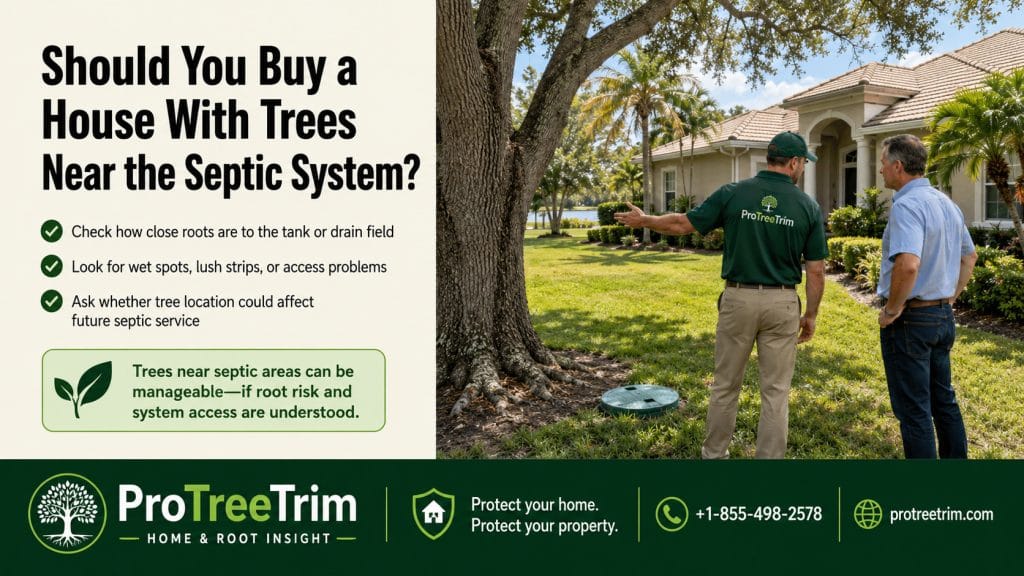
Trees near a septic system are not automatically a dealbreaker, but they deserve attention before you buy the home. The issue is not simply whether a tree is nearby. The real questions are where the tank and drain field are, how large the tree is, whether roots are already causing trouble, and whether future septic access could be blocked.
First, Find Out Where the Septic System Actually Is
Many buyers know a home has a septic system but do not know where the tank, drain field, access lids, and reserve area are located. That makes it hard to judge whether nearby trees are a real concern or just part of the landscape.
Do not rely only on visible clues. A lid, cleanout, inspection pipe, or low grassy area may show part of the system, but not necessarily the whole layout. Ask for septic records, permits, inspection notes, service invoices, or a site drawing if available.
| What to locate | Why it matters |
|---|---|
| Septic tank | Trees and roots should not block service access |
| Drain field | Roots and soil disturbance can create bigger concerns |
| Access lids | Pumping and inspection need clear access |
| Reserve area | Future system work may depend on this space |
| Large nearby trees | Mature roots and canopy size affect future planning |
| Old stumps or roots | Past removals may still affect soil and access |
A tree that looks “near” the septic system may be less concerning once the actual drain field is located. Or the opposite may happen: a harmless-looking tree may sit closer to the drain field than you expected.
Check for Signs of Root or Drainage Trouble
You are not trying to inspect the septic system yourself. That belongs to the right septic professional. But you can notice visible clues that deserve questions.
Walk the area carefully. Look for unusually wet or soft ground, strong odors, sunken spots, standing water after rain, uneven grass growth, or areas where tree roots are visibly close to service access points. Also check whether the tree is large, fast-growing, or located where roots may follow moisture.
Tree roots do not need to “attack” anything. Roots grow where water, oxygen, and space are available. A drain field or damp soil area can become attractive to roots over time, especially if the tree is poorly placed.
| What you notice | Why it matters as a buyer |
|---|---|
| Large tree close to drain field area | Future root conflict may be possible |
| Old stump near septic area | Roots, decay, and settling may still be present |
| Wet or soft soil nearby | Drainage or septic condition should be checked |
| Access lid blocked by roots or shrubs | Future service may be harder |
| Tree recently removed near system | Ask whether stump grinding or root work was done |
| Heavy equipment path over drain field | Soil compaction may be a concern |
Ask the Seller for Septic and Tree History
A tree near a septic system may be manageable if the seller has good records and there are no symptoms. It becomes more concerning when nobody can explain the layout, a tree was recently removed, or septic repairs have happened near the root area.
Useful questions include:
- Where are the tank and drain field located?
- When was the septic system last inspected or pumped?
- Has any tree root issue been reported?
- Was a tree removed near the septic area?
- Was stump grinding done, or only the trunk removed?
- Has the drain field ever needed repair?
- Are large trees, shrubs, or roots blocking service access?
- Did any contractor drive over the drain field during tree work or yard work?
You are not looking for perfect landscaping. You are looking for hidden future cost.
Do Not Assume Removal Is Simple
If a large tree is too close to the septic system, you may think, “We can just remove it after closing.” Maybe. But tree removal near septic components can require more planning.
A crew may need to avoid driving equipment over sensitive areas. Stump grinding may be limited if underground lines or system components are nearby. Old roots may decay and settle after removal. Replanting in the same area may not be smart. If a tree is close to a fence, pool cage, driveway, or narrow side gate, access can become more complicated.
Before closing, think through the full project:
| Possible future task | Buyer should consider |
|---|---|
| Tree removal | Can equipment access the tree safely? |
| Stump grinding | Is the stump near septic components or lines? |
| Root cleanup | Could roots be close to drain field pipes? |
| Backfill or leveling | Will the area settle after wood decays? |
| Replanting | Should a new tree go somewhere else? |
| Septic inspection | Is a septic professional needed before tree decisions? |
The worst assumption is that septic-area tree work will be the same as tree work in open lawn.
When It May Be Manageable
Trees near a septic system may be manageable when the system layout is clear, trees are not planted over the drain field, service access is open, there are no wet or soft areas, and the trees are not showing signs of decline or root conflict.
A mature tree elsewhere in the yard is not automatically a septic threat. The key is placement, species, size, roots, and access.
When to Slow Down Before Buying
Take the issue more seriously if large trees are growing directly over or very close to the drain field, the seller cannot locate the system, the ground is wet or uneven, access lids are blocked, old stumps remain in the septic area, or there is a history of septic repair.
Also slow down if the same tree has other concerns: leaning, dead limbs, trunk cracks, mushrooms, or roots lifting nearby pavers or walkways. Then the issue becomes both a septic-access question and a tree-risk question.
If you are unsure whether trees, stumps, or roots near a septic area should be handled before or after buying a home, ProTreeTrim can help connect homeowners with local tree service support. Call +1-855-498-2578 or visit protreetrim.com.
FAQs
Is it bad to buy a house with trees near a septic system?
Not automatically. The concern depends on where the tank and drain field are, how large the trees are, whether roots are causing problems, and whether access is clear.
Should I ask for septic records before buying?
Yes. Septic layout, inspection, pumping, and repair records can help you understand whether nearby trees are a real concern.
Can tree roots damage a septic drain field?
They can contribute to problems if trees are planted too close and roots grow into areas where moisture and oxygen are available. A septic professional should evaluate suspected system problems.
Should I remove a tree near the septic system after closing?
Not without understanding the system layout first. Removal, stump grinding, and equipment access near septic components need careful planning.
ProTreeTrim™ can help you take the next step.
If you are dealing with a damaged tree, fallen branch, stump, root issue, palm concern, or storm cleanup question in Florida, call ProTreeTrim for tree service support.