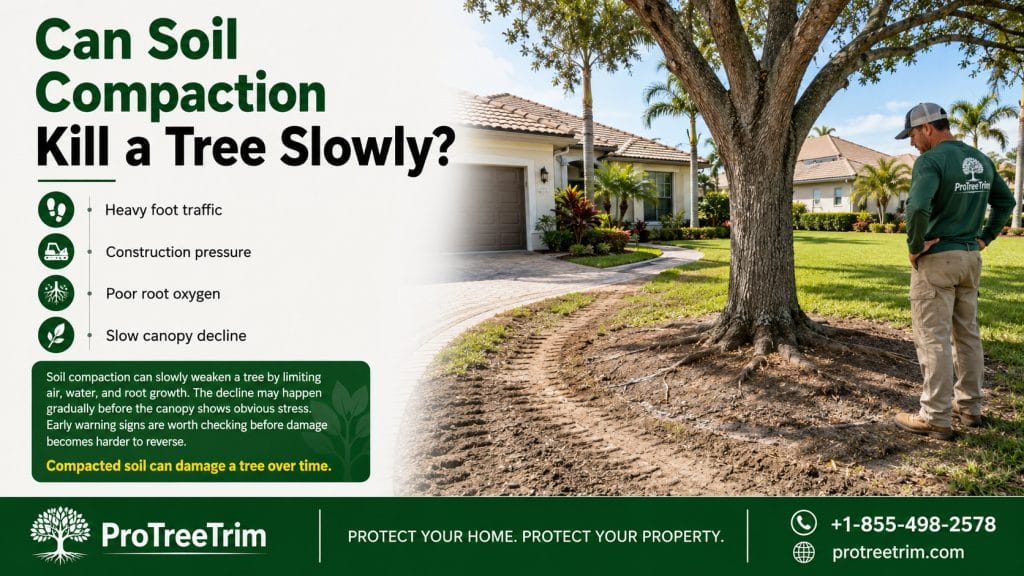
Yes, soil compaction can weaken a tree slowly. The tree may not fall over or turn brown right away. Instead, roots struggle for air, water movement changes, and the canopy may thin over time. Homeowners often notice the damage months later as smaller leaves, dead branch tips, early leaf drop, or one-sided decline.
Why Compacted Soil Hurts Roots
Tree roots need more than dirt and water. They need oxygen in the soil. When soil is pressed down by vehicles, heavy equipment, repeated foot traffic, stored materials, or construction activity, the pore spaces in the soil shrink. University of Minnesota Extension explains that compacted soil has reduced pore space, less large-pore volume, and slower water infiltration and drainage.
That is why compaction can be sneaky. The tree may still look alive. The lawn may still be green. But the roots may be working in soil that has become harder, wetter in some spots, drier in others, and less breathable.
Around homes, compaction often happens during ordinary projects:
| What happened in the yard | Why it matters to the tree |
|---|---|
| Paver or patio installation | Equipment and base prep may compact the root zone |
| Driveway repair or expansion | Roots near hardscape may lose air and water movement |
| Dumpster or material storage under a tree | Weight can press soil down for days or weeks |
| Fence, pool, or irrigation work | Foot traffic and trenching may disturb roots |
| Vehicles parked on lawn | Repeated pressure can compact soil over roots |
| Storm cleanup with heavy equipment | Wet soil compacts more easily during cleanup |
The Tree May React Late
Compaction is not always followed by instant decline. ISA’s TreesAreGood construction guidance lists soil compaction in the root zone, severed roots, smothered roots from added fill, and drainage changes among common construction-related tree injuries. Those injuries can show up gradually rather than immediately.
A tree may leaf out normally the first season after yard work, then look thinner later. Branch tips may die back. Leaves may be smaller than usual. One side of the canopy may decline first if the compaction happened along a driveway, walkway, pool deck, or construction path.
Do not assume the tree is diseased just because the canopy looks weak. The real issue may be underfoot.
What Homeowners Should Check
Start by walking the area around the tree, not by pruning the canopy. Look for hard, bare soil where grass no longer grows well. Check whether water runs off instead of soaking in. Notice low spots where rain sits after storms. Look for roots exposed near compacted paths or hardscape edges.
Penn State Extension notes that compaction can directly affect root growth and reduce oxygen in the soil, making it harder for roots to function normally.
Useful signs to document include:
- smaller leaves than last year
- early leaf drop
- dead branch tips
- thinning on the side facing construction or traffic
- soil that stays hard, bare, or puddled
- exposed roots near driveways or pavers
- mushrooms or soft areas near the trunk
- new lean after heavy rain
Avoid trying to “fix” compaction by digging aggressively around major roots. That can create more root injury. Also avoid adding thick soil over the root zone, which can smother roots further.
When Compaction Becomes a Safety Question
Compacted soil is mostly a tree-health issue at first. It becomes a property-risk question when decline overlaps with structure.
A thinning tree in an open corner may be monitored. A tree with dead limbs over a roof, driveway, pool cage, walkway, or fence deserves more caution. If compacted soil is paired with root damage, a new lean, trunk cracks, large dead branches, or mushrooms near the base, waiting too long may make the next decision harder.
Mulch can help protect soil when used correctly. Penn State Extension notes that mulch around landscape trees can reduce compaction by limiting foot and vehicle traffic and allowing roots to “breathe.” Keep mulch off the trunk and do not mound it over the root flare.
If you are unsure whether compacted soil, root stress, construction damage, or dead limbs point to a larger tree problem, ProTreeTrim can help connect homeowners with local tree service support. Call +1-855-498-2578 or visit protreetrim.com.
FAQs
Can compacted soil really kill a tree?
Yes, over time. Compaction can reduce oxygen, slow water movement, restrict root growth, and weaken the tree gradually.
How do I know if soil around a tree is compacted?
Look for hard bare ground, poor water infiltration, puddling, weak grass growth, exposed roots, and canopy stress after traffic or construction.
Should I aerate compacted soil around a tree myself?
Be careful. Aggressive digging or deep mechanical work can damage roots. The safest approach depends on tree size, root location, soil, and site conditions.
Can mulch help compacted soil?
Mulch can help protect the root zone from traffic and moisture swings, but it should be spread properly and kept away from the trunk.
ProTreeTrim™ can help you take the next step.
If you are dealing with a damaged tree, fallen branch, stump, root issue, palm concern, or storm cleanup question in Florida, call ProTreeTrim for tree service support.