
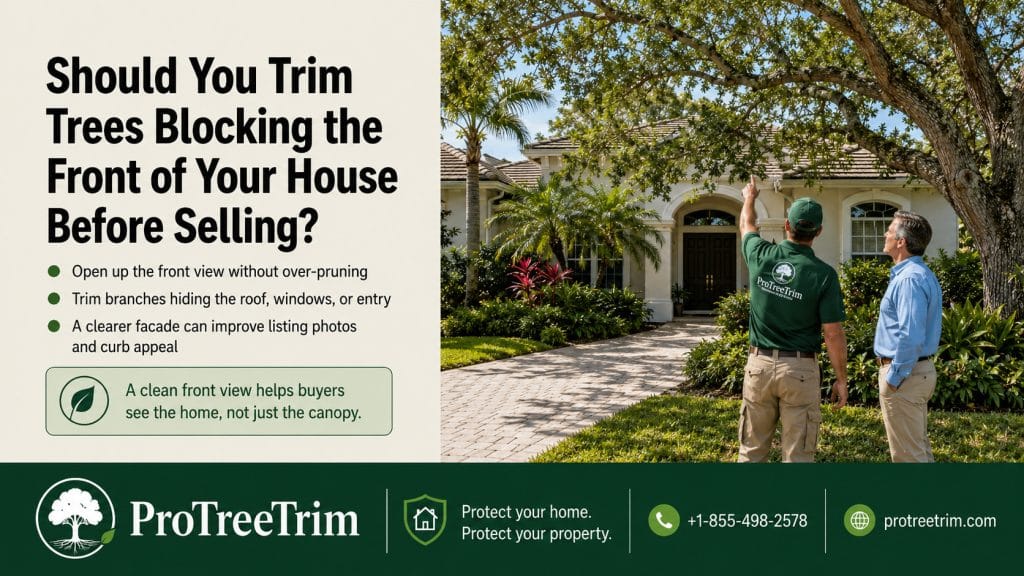
Trees that block the front of a house can quietly hurt buyer perception before anyone walks inside. A shaded entry can feel inviting, but overgrown limbs hiding windows, rooflines, walkways, address numbers, gutters, or the front door can make a property look darker, smaller, or less maintained than it really is.
First, Look at the House From the Street
Before trimming anything, stand where a buyer, photographer, delivery driver, or inspector would first see the home. The question is not whether the tree is “too big.” The question is what the tree is hiding.
If the canopy frames the house, adds shade, and keeps the front elevation attractive, heavy pruning may not be needed. If branches block the entry, scrape the roofline, hide windows, or make the home look closed off, selective trimming may help before listing photos.
| What the tree is blocking | Why it matters before listing |
|---|---|
| Front door | Buyers may feel the entry is hidden or uninviting |
| Windows | The home may look darker from outside and inside |
| Roofline | Branch contact or debris concerns may come up |
| Address numbers | Visibility and access can become practical issues |
| Walkway | Overgrowth can make the entry feel neglected |
| Driveway view | Buyers may worry about parking and clearance |
| Exterior lighting | Night showings or curb appeal may suffer |
Trim for Visibility, Not a Harsh Makeover
The goal is not to strip the front yard bare. Mature trees can be a selling feature. Shade, privacy, and a well-placed canopy can make a property feel established and comfortable.
The better goal is selective visibility.
A good pre-listing trim may open the view to the front door, clear small limbs away from the roofline, remove deadwood, lift branches away from the walkway, or make the home’s shape easier to see. That is different from topping the tree, cutting it into an unnatural shape, or removing a large amount of live canopy right before photos.
A tree that looks freshly hacked can raise its own buyer questions. It may suggest deferred maintenance, storm damage, or a rushed fix before listing.
Check Inside the House Too
Overgrown trees affect more than curb appeal. They can change how rooms feel during showings.
If branches block front windows, the living room may feel darker than it should. If limbs rub the exterior wall, buyers may hear scraping during wind. If leaves and small debris collect in gutters, the home may look harder to maintain.
Walk inside during the day and look out from the main rooms. Are branches pressed against windows? Is the view completely blocked? Does the tree make the room feel private in a good way, or dark and crowded?
The answer may guide how much trimming makes sense.
Do Not Ignore Roof, Gutter, and Access Issues
A front-yard tree can be both a curb appeal issue and a maintenance issue. If branches touch shingles, scrape gutters, hang over the driveway, or block the path to the front door, trimming becomes more practical than cosmetic.
Before listing, pay attention to:
- branches physically touching the roof
- dead limbs over the driveway or walkway
- palm fronds hanging over the entry
- limbs blocking exterior lights or cameras
- roots lifting the front path
- branches near service lines or overhead wires
- debris collecting in gutters or roof valleys
If wires are involved, do not treat the work as normal trimming. Utility coordination may be needed first.
What to Document After Trimming
If tree work is done before listing, keep it simple but organized. Save the invoice, before-and-after photos, and any notes about what was trimmed or removed.
This can help if a buyer later asks why a tree looks freshly pruned or whether roofline branches were handled. A clear answer sounds better than a vague one.
For example: “Branches touching the roofline were trimmed back, deadwood over the entry was removed, and debris was hauled away.”
That kind of record shows maintenance without overselling the tree’s condition.
If you are unsure whether front-yard branches, roofline limbs, deadwood, or overgrown trees should be trimmed before listing your home, ProTreeTrim can help connect homeowners with local tree service support. Call +1-855-498-2578 or visit protreetrim.com.
FAQs
Should I trim trees before real estate photos?
Often, yes, if branches block the front door, windows, roofline, driveway, or main walkway. Selective trimming can help the house show better.
Can trimming too much hurt curb appeal?
Yes. Harsh pruning can make a tree look damaged or rushed. The goal should be visibility, clearance, and clean structure—not stripping the canopy.
Should I remove a tree that blocks the front of the house?
Not automatically. A healthy tree may add shade and value. Removal makes more sense if the tree is poorly placed, damaged, leaning, or creating recurring property problems.
What should I save after pre-listing tree trimming?
Keep the invoice, before-and-after photos, debris hauling notes, and any written scope explaining what branches were trimmed or removed.
ProTreeTrim™ can help you take the next step.
If you are dealing with a damaged tree, fallen branch, stump, root issue, palm concern, or storm cleanup question in Florida, call ProTreeTrim for tree service support.