
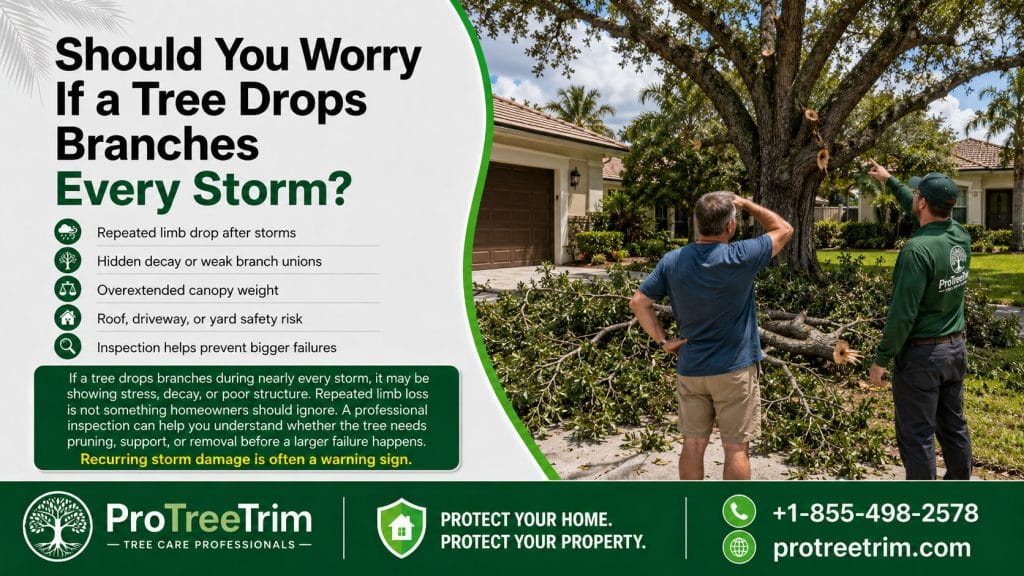
A few small twigs after a storm are usually not alarming. But if the same tree drops large branches every time Florida gets wind or heavy rain, it deserves a closer look. Repeated limb loss can indicate weak branch structure, decay, old storm wounds, canopy imbalance, or a tree struggling in its location.
Small Debris Is Different From Repeated Limb Failure
Florida yards collect plenty of storm debris: palm fronds, leaves, Spanish moss, pine needles, and small twigs. That kind of cleanup is normal after rough weather.
The concern grows when the debris becomes heavier, more frequent, or more targeted. A large oak limb landing near the driveway may once have been a warning. The same tree dropping branches over the pool cage, fence, roof edge, or walkway after several storms is harder to dismiss.
Look at where the branches are coming from. Are they dead limbs from the outer canopy? Are they breaking from the same side of the tree? Do they show dark, hollow, or soft-looking wood inside? Is bark tearing down the trunk when a limb falls? Those details can help separate routine storm litter from a structural issue.
| What you see after storms | What it may suggest |
|---|---|
| Small twigs and leaves only | Usually routine debris |
| Repeated large branches | Tree structure should be checked |
| Broken limbs from one side | Canopy imbalance or weak area |
| Hollow or dark wood inside break | Possible decay or old damage |
| Branches landing near roof or pool cage | Higher property risk |
| New cracks after each storm | Worsening structural stress |
Look at the Tree and the Target Area
A branch that falls into open grass is not the same as a branch that lands on pavers, a parked car, a screened lanai, or a fence line. Risk depends on both the tree and what sits beneath it.
Walk the yard after storms only when conditions are safe. Take photos of fallen limbs before cleanup, especially if they damaged gutters, pavers, screens, irrigation, or landscaping. Then photograph the full tree from several angles, including the trunk, base, and canopy.
Do not keep cutting random limbs off the tree to “lighten it up.” Poor pruning can make the structure worse. Over-pruning may leave the tree unbalanced or encourage weak regrowth. The better question is which limbs are actually defective, overextended, dead, cracked, or poorly attached.
Repeated limb drop does not always mean the whole tree must be removed. Some trees may need selective pruning, deadwood removal, or monitoring. Others may be too compromised, especially if the trunk is cracked, roots are lifting, or large limbs hang over high-use areas.
If you are unsure whether repeated branch drop, storm damage, or a risky limb needs professional attention, ProTreeTrim can help connect Florida homeowners with local tree service support. Call +1-855-498-2578 or visit protreetrim.com.
FAQs
Is it normal for trees to drop branches after storms?
Small debris is common. Repeated large limb drop, especially from the same tree, should be checked more carefully.
Does dropping branches mean the tree is dying?
Not always. Branch failure can come from structure, weight, decay, old wounds, or storm stress even if the tree still has green leaves.
Should I remove a tree that keeps dropping limbs?
Not automatically. The tree’s structure, location, damage history, and nearby targets should be evaluated before deciding.
ProTreeTrim™ can help you take the next step.
If you are dealing with a damaged tree, fallen branch, stump, root issue, palm concern, or storm cleanup question in Florida, call ProTreeTrim for tree service support.