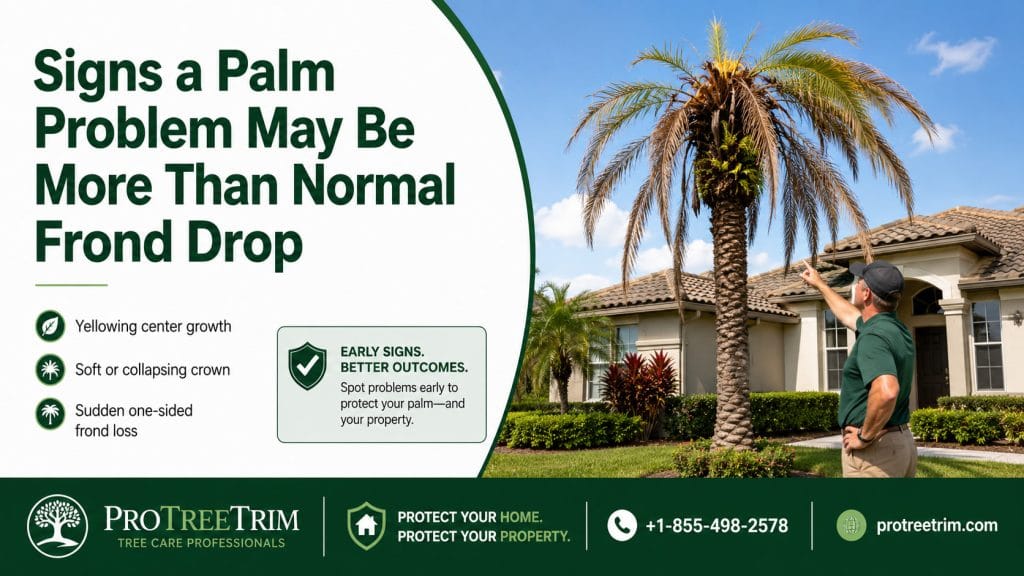
Palm fronds fall in Florida yards all the time. One brown frond on the lawn is usually not a crisis. The concern starts when fronds drop frequently, green fronds fall suddenly, the crown looks weak, the trunk shows damage, or the palm begins to lean after rain or wind. Normal shedding is one thing. Patterned decline is another.
Normal Palm Mess or a Warning Pattern?
A palm is not supposed to look frozen in place. Older fronds age, brown, and eventually come down. Seed pods, flower stalks, and dry debris can also collect around the crown. Around driveways, pool cages, front walks, and rental entrances, even normal palm debris can feel like a problem because it lands where people walk or park.
But a homeowner should look twice when the pattern changes.
A large green frond falling without warning is different from an old brown frond dropping after months of decline. Several fronds falling in a short period is different from routine cleanup. A palm that suddenly looks thin at the top, uneven, or stalled may need more attention than one simply shedding older growth.
UF/IFAS notes that yellowing older palm fronds can be associated with magnesium or potassium deficiency, and it points homeowners toward appropriate palm nutrition rather than guessing from appearance alone. UF/IFAS also cautions that nutrient deficiencies can be more damaging to landscape palms than some leaf-spot diseases, which is a good reminder not to assume every spot or yellow frond means “disease.”
| What you notice | More likely routine | Worth a closer look |
|---|---|---|
| One dry brown frond falls | Yes | Usually not urgent |
| Several green fronds drop | No | Yes |
| Crown looks thin or collapsed | No | Yes |
| Older fronds yellow repeatedly | Sometimes | Check nutrition and care |
| Fronds fall onto pool cage or driveway | Can be normal debris | Property risk may justify action |
| Trunk has cracks, wounds, or soft areas | No | Yes |
| Palm leans after heavy rain | No | Yes |
Look at the Crown, Trunk, and Base Together
The crown tells part of the story. If new growth is emerging normally and the palm is only dropping older fronds, the issue may be routine maintenance. If the spear leaf or newest growth looks discolored, limp, collapsed, or absent, that is a different kind of concern.
Do not climb the palm or pull at the spear leaf yourself. Take photos from the ground. Photograph the full palm, the crown, the trunk, fallen fronds, and anything nearby: roof edge, pool screen, driveway, fence, walkway, or power service line.
Then check the trunk and base. Fresh trunk wounds, leaning, lifted soil, exposed roots, or a soft wet bed around the palm can shift the question from “messy palm” to “is this palm stable?” In Florida yards, irrigation, sandy soil, mulch, and summer rain can hide what is happening at ground level.
Also think about placement. A palm dropping fronds into an open corner of the yard is annoying. A palm dropping heavy fronds onto a screened enclosure, front entry, parked car area, or narrow side walkway is a property and safety concern even if the palm is not dying.
What Homeowners Should Avoid
Do not respond to palm trouble by stripping the crown. Aggressive pruning can make a palm look tidy while removing fronds the palm may still be using. UF/IFAS guidance on palm leaf spots also warns that pruning diseased-looking leaves in the landscape is not always recommended, especially if nutrient deficiencies are present.
Avoid random treatments, too. A palm with frond yellowing, crown decline, trunk injury, irrigation stress, or root movement may need different next steps. Guessing can waste time and hide the real issue.
A practical homeowner approach is better: document the pattern, check irrigation and drainage, avoid over-pruning, and get help if the palm is near something it could damage.
If you are unsure whether palm frond drop, crown decline, trunk damage, or a leaning palm needs professional attention, ProTreeTrim can help connect homeowners with local tree service support. Call +1-855-498-2578 or visit protreetrim.com.
FAQs
Is it normal for palm fronds to fall?
Yes. Older brown fronds naturally age and fall. Frequent green frond drop or sudden crown changes deserve more attention.
Does yellowing mean my palm has a disease?
Not necessarily. Yellowing may be related to nutrition, water, soil conditions, frond age, or other stresses. Avoid diagnosing based on one symptom.
Should I remove all yellow or spotted palm fronds?
Not automatically. Removing too many fronds can stress the palm, especially if nutrient deficiency is part of the problem.
ProTreeTrim™ can help you take the next step.
If you are dealing with a damaged tree, fallen branch, stump, root issue, palm concern, or storm cleanup question in Florida, call ProTreeTrim for tree service support.