
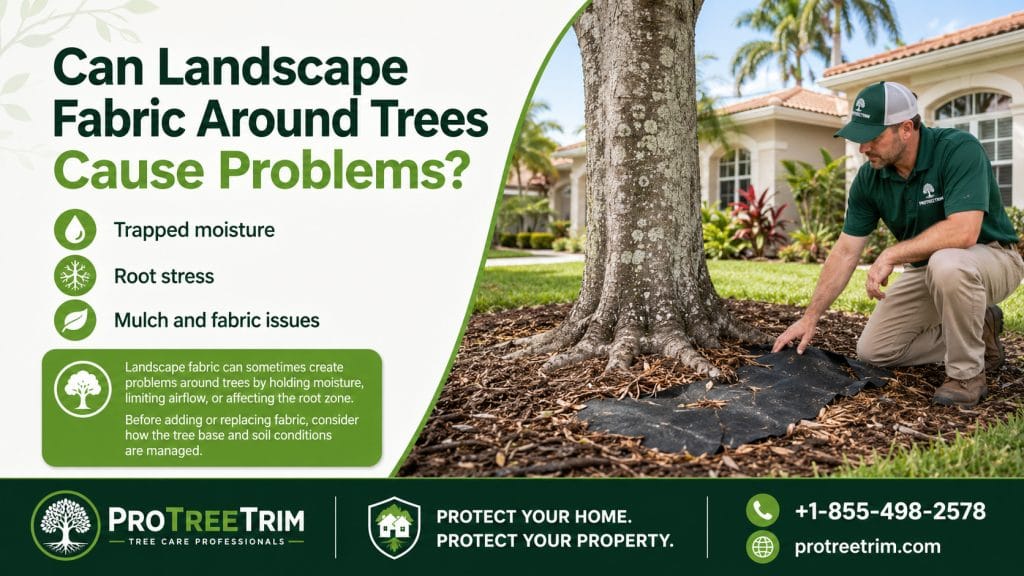
Landscape fabric around trees can look like a clean, low-maintenance solution at first. The trouble usually shows up later: weeds grow on top, mulch breaks down, roots interact with the fabric, and the tree’s base becomes harder to inspect. Around trees, a simple mulch ring often works better than fabric hidden under layers of material.
Why Landscape Fabric Feels Like a Good Idea
The appeal is obvious. A homeowner wants fewer weeds, cleaner mulch beds, and less yard work. Landscape fabric promises a neat barrier between soil and mulch. For a new front yard bed or a tree near a driveway, that can sound practical.
But permanent tree beds are not static. Roots grow. Mulch decomposes. Leaves and soil collect on top of the fabric. Irrigation patterns change. In Florida yards, heavy rain, sandy soil, ants, mulch breakdown, and fast weed growth can turn a once-clean fabric layer into a hidden maintenance problem.
Penn State Extension warns that landscape fabrics are not effective long-term weed control solutions for permanent landscapes and can create maintenance problems involving appearance, weed control, and plant health. It also notes that organic mulches are preferred for permanent landscape installations.
| What homeowners expect | What may happen later |
|---|---|
| Fewer weeds forever | Weeds root into mulch and debris above the fabric |
| Cleaner tree bed | Fabric becomes hidden under old mulch and soil |
| Less maintenance | Pulling weeds can become harder once roots tangle in fabric |
| Protected soil | Soil improvement from organic mulch may be limited |
| Neat trunk area | Root flare and base problems may be harder to see |
| Easy future planting | Cutting fabric around roots can become awkward |
The Tree Base Still Needs to Breathe and Stay Visible
A tree’s trunk base should not be buried under fabric, mulch, soil, or rock. Homeowners need to see the root flare, the area where the trunk widens into major roots. That spot tells you a lot: whether mulch is too deep, whether bark is staying wet, whether roots are circling, or whether mushrooms, insects, cracks, or soft wood are appearing.
University of Maryland Extension recommends keeping mulch shallow, about one to three inches, and keeping it about three inches away from the tree trunk. It also warns that excess mulch can cause problems and that plants can decline or even die from too much mulch piled on root systems.
Landscape fabric can make that harder because it often gets covered and forgotten. A tree bed may look tidy while the fabric edge, mulch depth, and root flare are all hidden. If weeds start growing on top, homeowners may add more mulch, more rock, or another layer of fabric. That stacks the problem instead of solving it.
Fabric Under Mulch Is Not the Same as a Healthy Mulch Ring
Organic mulch is useful because it breaks down and contributes to the soil over time. Fabric can interrupt that natural cycle. University of Minnesota Extension says plastic sheeting prevents water from reaching tree roots and that landscape fabric or weed barriers are not recommended under organic mulch such as shredded wood. It notes fabric may have a place under non-organic mulches like rock or shredded rubber to keep those materials from mixing into soil.
For tree beds, that distinction matters. A fabric-and-rock bed around a tree may stay visually sharp longer, but it can also heat up, collect debris, and make root-zone changes harder to notice. A wood-mulch ring without fabric is often easier to adjust, refresh, pull back from the trunk, and inspect.
Before adding fabric, ask:
- Will this bed need future root inspection?
- Is the tree still young and expanding?
- Will mulch be added every year?
- Is irrigation already keeping the bed wet?
- Are roots visible near pavers, sidewalks, or driveway edges?
- Will the fabric be cut tightly around the trunk?
- Will weeds be easier to manage, or just harder to pull later?
If Fabric Is Already Around the Tree
Do not yank it out aggressively if roots have grown into it. Pulling fabric can tear small roots, disturb the bed, or expose soil suddenly. Start by checking the trunk base. If the fabric is tight around the trunk, buried under deep mulch, or hiding the root flare, that deserves attention.
You can gently pull mulch or debris back from the trunk to see what is happening. Avoid cutting major roots. If the fabric is old, tangled, or buried beneath roots, removal may need to be gradual or handled as part of a broader tree-bed cleanup.
Pay closer attention if the tree also has smaller leaves, thinning canopy, mushrooms near the base, ants, sawdust-like material, bark problems, or dead branch tips. Fabric may not be the main cause, but it can hide the signs that tell you what is really happening.
If you are unsure whether landscape fabric, buried root flare, mulch buildup, or root stress is affecting a tree on your property, ProTreeTrim can help connect homeowners with local tree service support. Call +1-855-498-2578 or visit protreetrim.com.
FAQs
Is landscape fabric always bad around trees?
Not always, but it is often a poor fit for permanent tree beds with organic mulch. It can create maintenance problems and make root and trunk-base inspection harder.
Should I remove old landscape fabric from around a tree?
Maybe, but do it carefully. If roots have grown into the fabric, pulling it out aggressively can damage roots. Start by exposing the trunk base and checking how tangled the fabric is.
Can I put mulch over landscape fabric?
You can, but extension guidance generally does not recommend weed barrier fabric under organic mulch. A shallow mulch layer without fabric is often easier to maintain around trees.
What is better than fabric around a tree?
A wide, shallow mulch ring that stays off the trunk is usually a better long-term choice. Keep the root flare visible and refresh mulch without building it higher every year.
ProTreeTrim™ can help you take the next step.
If you are dealing with a damaged tree, fallen branch, stump, root issue, palm concern, or storm cleanup question in Florida, call ProTreeTrim for tree service support.