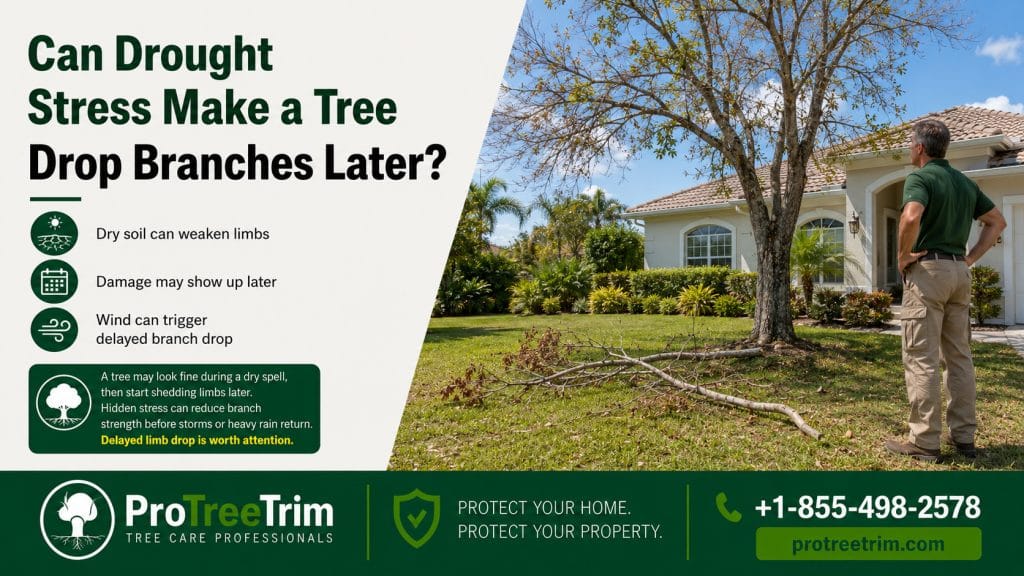
Drought stress can make a tree more likely to develop dead tips, weak limbs, thinning canopy, and root problems later. The tree may not drop branches during the dry spell itself. The warning signs often appear after the weather changes, when heat, rain, wind, or old damage exposes what the tree has been carrying quietly.
Drought Damage Is Often Delayed
A tree does not always react to dry weather in an obvious way. It may stay green while using stored energy, dropping some leaves, or slowing new growth. Weeks or months later, a homeowner may notice dead branch tips, smaller leaves, thinning at the top, or limbs that look dry and brittle.
Mississippi State Extension notes that prolonged drought stress can lead to leaf scorch, branch dieback, and root problems. UF/IFAS also warns against pruning live branches during severe drought because it removes living tissue and reduces the tree’s ability to recover once rain returns.
That delayed reaction is what makes drought-stressed trees tricky. The tree may look “fine enough” during the dry period, then start dropping limbs after summer rain, wind, or storm season returns.
| What you notice after dry weather | What it may suggest |
|---|---|
| Smaller leaves than usual | Tree may be conserving resources |
| Dead branch tips | Drought stress or root stress may be showing |
| Early leaf drop | Tree may be reducing water demand |
| Canopy thinning at the top | Roots may not be supporting normal growth |
| Brittle dead limbs | Branches may need attention before wind |
| Mushrooms after rain returns | Moisture and decay may be entering the picture |
| New lean after rain | Root or soil stability should be checked |
Why Branches May Fall After the Dry Spell Ends
A dry period can weaken parts of a tree, but the actual branch drop may happen later. Dead wood becomes more likely to break. A limb that lost strength during drought may hang on until wind, rain, or added weight finishes the job.
This does not mean every drought-stressed tree is dangerous. It means homeowners should watch the transition period. A dry spring followed by heavy summer rain can create a confusing yard: soil softens, leaves flush out, and old deadwood gets hidden inside new growth.
Oregon State Extension describes drought stress as something that may not be obvious until later, and notes that it can be difficult for homeowners to connect tree decline back to an earlier lack of water.
The risk depends heavily on location. A dead limb over open lawn is one concern. A dead limb over a driveway, roof, pool cage, fence, walkway, parked car, or service line deserves faster attention.
What to Check Before Storms Return
Start with the canopy, but do not stop there. Look for dead tips, thinning at the top, branches without leaves, bark peeling on limbs, and areas where the tree looks uneven compared with older photos.
Then check the base. Drought-stressed roots may be followed by problems when rain returns. Soil can wash away from exposed roots, mulch can hide the root flare, and water may collect in low areas near the trunk.
UF/IFAS drought guidance says the best course during extended drought is preventive watering before canopy foliage is lost, while also following local watering restrictions. It also advises not fertilizing trees during extended drought because fertilizing can add stress.
A practical homeowner check includes:
- Is the soil dry several inches down, or has rain made it soggy?
- Are dead limbs hanging over places people use?
- Did leaves drop early during the dry spell?
- Are branch tips dying back on one side?
- Did irrigation miss the tree’s root zone?
- Is mulch piled against the trunk?
- Are roots exposed, cut, compacted, or buried?
- Did construction, pavers, or driveway work happen during the dry period?
Do Not “Fix” Drought Stress With Heavy Pruning
The instinct to clean up a stressed tree is understandable. A thin canopy looks bad. Dead tips make the yard feel neglected. But heavy pruning is not always helpful.
During or after drought stress, live canopy still matters. Cutting too much healthy growth can make recovery harder. Dead, cracked, hanging, or roofline limbs are different; those may need careful removal because they create a safety or property concern.
A good decision separates cosmetic cleanup from risk reduction. Removing a dead limb over the driveway is not the same as thinning the whole canopy because the tree looks tired.
If the tree has dead limbs, trunk cracks, mushrooms near the base, sawdust-like material, a new lean, or repeated limb drop, do not treat the issue as simple drought stress. The tree may need a broader look.
If you are unsure whether drought stress, dead limbs, root problems, or branch drop point to a larger tree issue, ProTreeTrim can help connect homeowners with local tree service support. Call +1-855-498-2578 or visit protreetrim.com.
FAQs
Can a tree recover from drought stress?
Sometimes. Recovery depends on tree species, age, root condition, site conditions, and how long the drought stress lasted.
Why would branches fall after rain returns?
Dead or weakened limbs may remain in the canopy during dry weather, then break later during wind, rain, or normal movement.
Should I prune a drought-stressed tree?
Avoid heavy live pruning. Dead, cracked, or hazardous limbs may need attention, but cutting healthy canopy can add stress.
What is the biggest warning sign after drought?
Large dead limbs over a roof, driveway, pool cage, walkway, or fence should be taken more seriously than minor leaf drop.
ProTreeTrim™ can help you take the next step.
If you are dealing with a damaged tree, fallen branch, stump, root issue, palm concern, or storm cleanup question in Florida, call ProTreeTrim for tree service support.