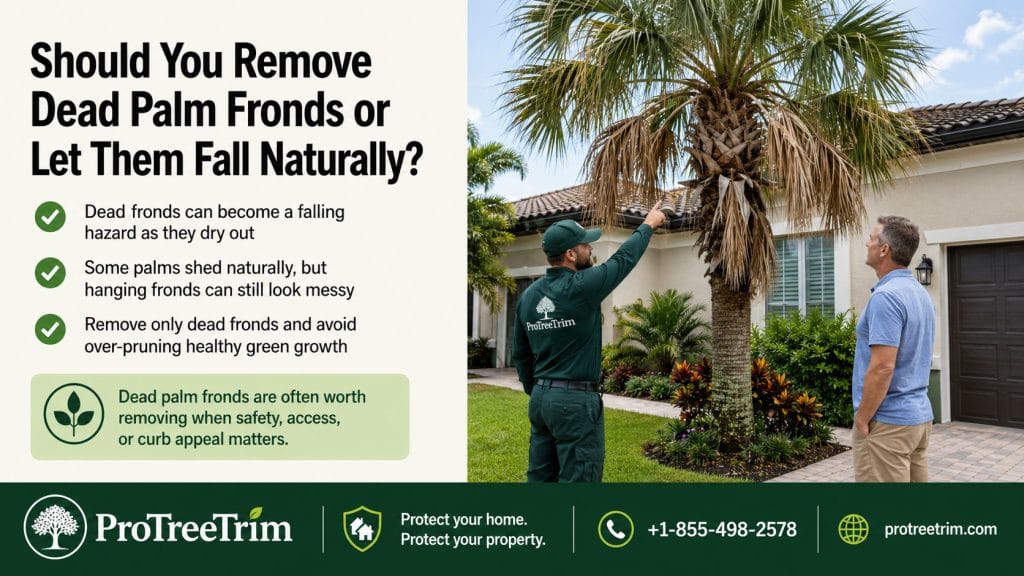
Dead palm fronds are normal, but that does not mean they should always be left alone. In open areas, a few brown fronds may simply be part of the palm’s natural cycle. Near a roof, driveway, pool cage, sidewalk, patio, or front entry, dead fronds can become a cleanup, safety, or property-maintenance issue.
Continue reading Should You Remove Dead Palm Fronds or Let Them Fall Naturally?Category: Palm & Oak
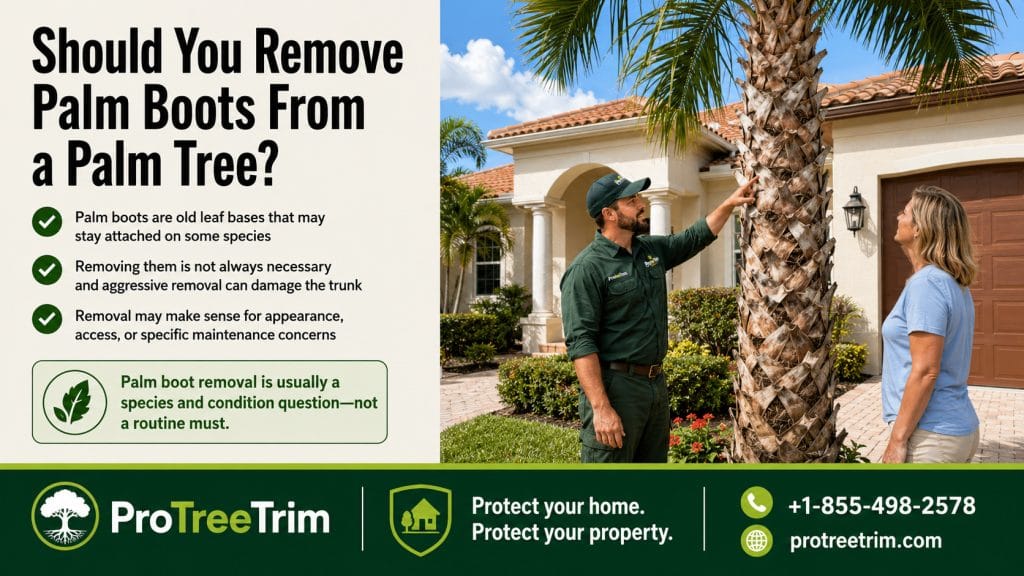
Should You Remove Palm Boots From a Palm Tree?
Palm boots are the old leaf bases left attached to the trunk after fronds are cut or shed. On some palms, they fall away naturally over time. On others, they remain attached for years, giving the trunk a rough, layered look. Removing them can improve appearance and reduce hiding places for debris or pests, but it is not always necessary—and aggressive removal can damage the palm.
Continue reading Should You Remove Palm Boots From a Palm Tree?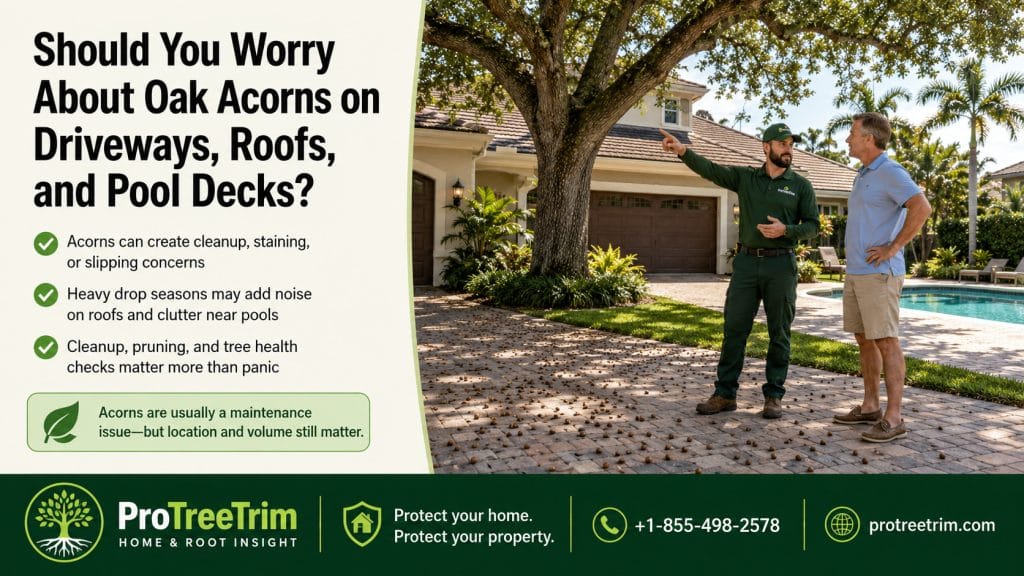
Should You Worry About Oak Acorns on Driveways, Roofs, and Pool Decks?
Oak acorns are usually a normal part of the tree’s cycle, not a warning sign by themselves. But where they fall can matter. Acorns on an open lawn are mostly a cleanup issue. Acorns on driveways, pool decks, patios, roofs, gutters, walkways, or pavers can create slipping, staining, drainage, pest, and maintenance concerns that homeowners should not ignore.
Continue reading Should You Worry About Oak Acorns on Driveways, Roofs, and Pool Decks?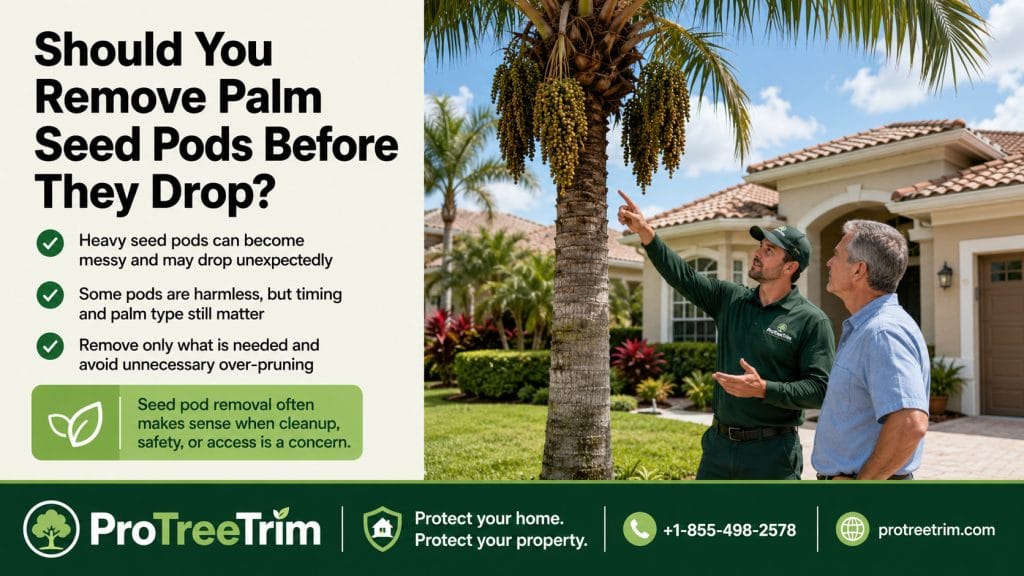
Should You Remove Palm Seed Pods Before They Drop?
Palm seed pods are normal, but they can become a real nuisance when they hang over driveways, pool decks, patios, walkways, roofs, or front entries. In the right location, they may not matter much. In the wrong location, they can create stains, slippery debris, pest attraction, clogged gutters, pool cleanup, and extra maintenance right when homeowners want the yard to look clean.
Continue reading Should You Remove Palm Seed Pods Before They Drop?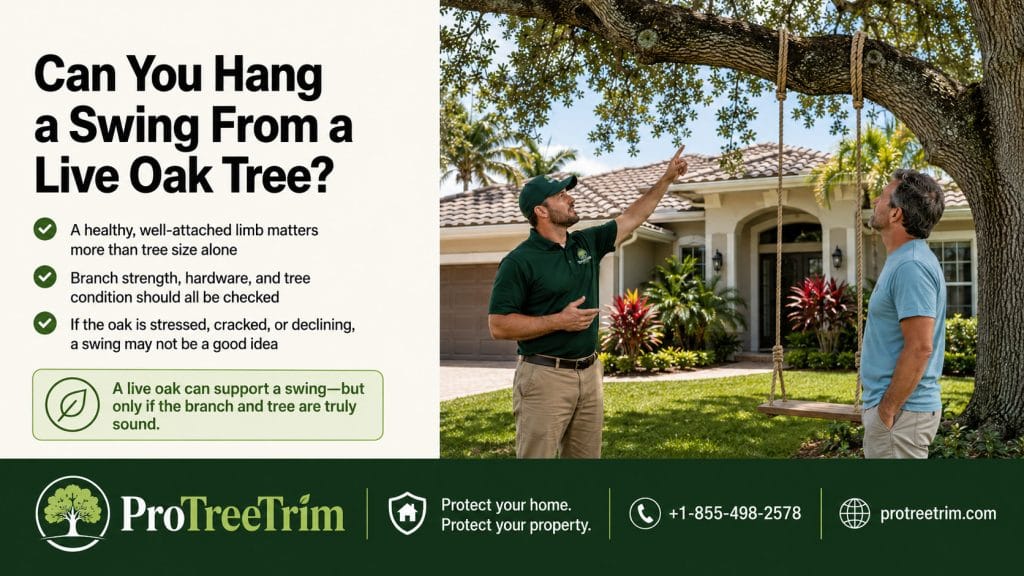
Can You Hang a Swing From a Live Oak Tree?
A mature live oak can look like the perfect place for a swing. The broad limbs, deep shade, and strong character make it tempting. But hanging a swing from an oak is not just a backyard design decision. The branch, attachment method, tree health, and landing area all matter. A poor setup can damage the tree, create a fall hazard, or hide a branch problem that should have been checked first.
Continue reading Can You Hang a Swing From a Live Oak Tree?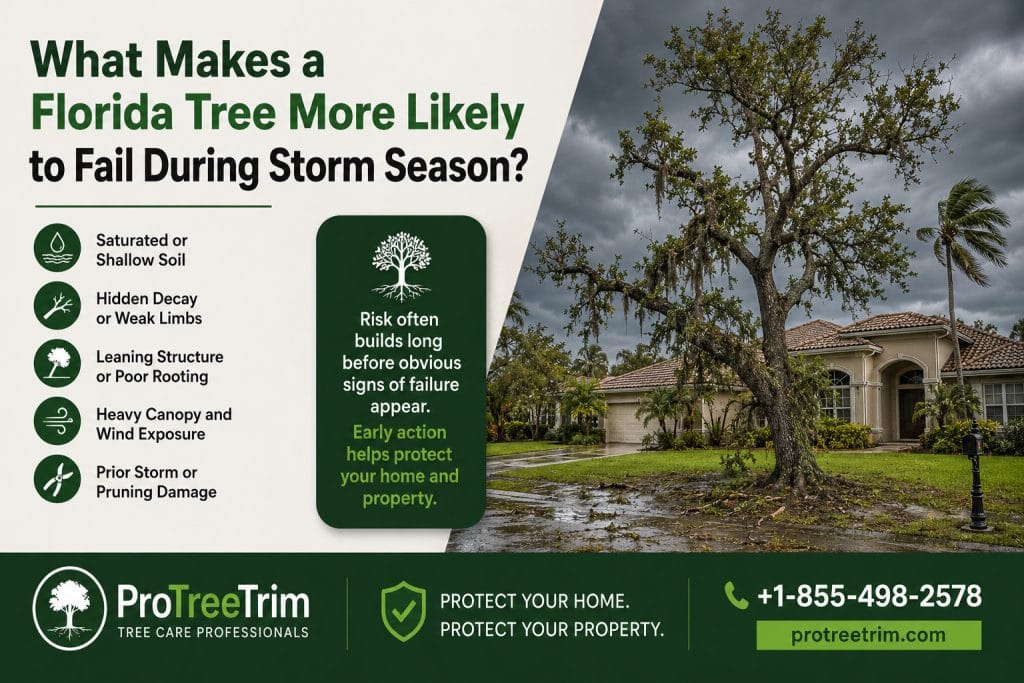
What Makes a Florida Tree More Likely to Fail During Storm Season?
A Florida tree is more likely to fail during storm season when structural problems, root stress, heavy canopy weight, saturated soil, or poor placement all stack up. A tree does not have to look dead to become a concern. Homeowners should look for recent changes, weak points, and what the tree could hit if wind or rain exposes the problem.
Continue reading What Makes a Florida Tree More Likely to Fail During Storm Season?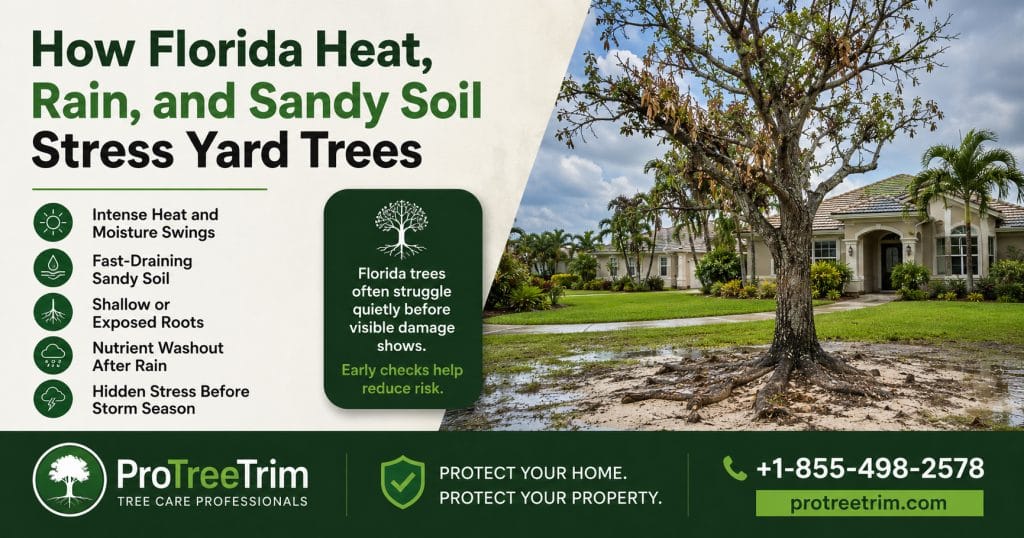
How Florida Heat, Rain, and Sandy Soil Stress Yard Trees
Florida trees face a difficult mix: intense heat, sudden downpours, sandy soil, irrigation swings, and storm-season winds. A tree may look fine from the street while its roots, trunk, or canopy are under stress. Homeowners should watch for changes in soil, drainage, leaf condition, limb weight, and root exposure before small issues become harder to manage.
Continue reading How Florida Heat, Rain, and Sandy Soil Stress Yard Trees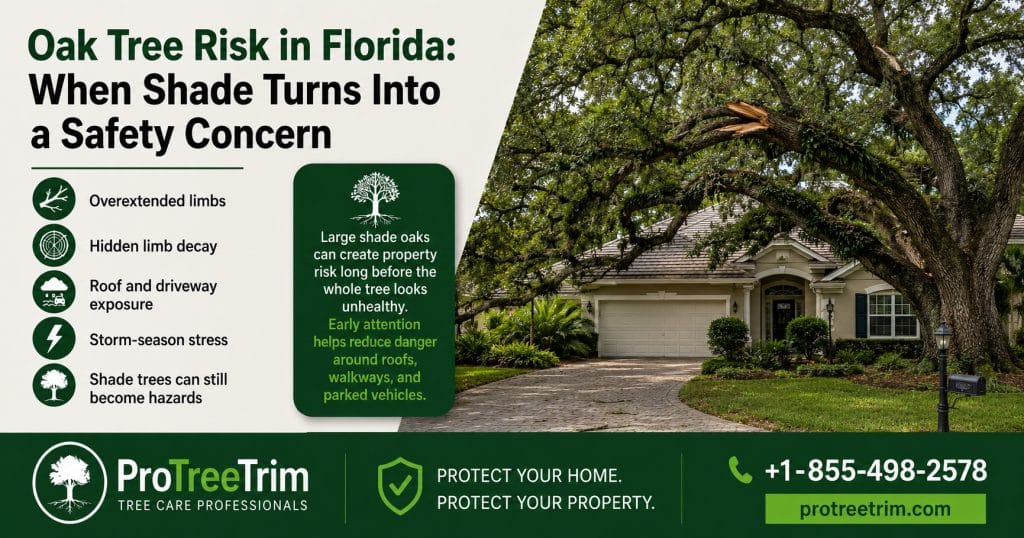
Oak Tree Risk in Florida: When Shade Turns Into a Safety Concern
A mature oak can be one of the best features in a Florida yard, but shade alone does not make it safe. Homeowners should pay attention when heavy limbs hang over the roof, roots shift near hardscape, the trunk shows cracks or decay, or the tree changes after heavy rain, wind, construction, or soil disturbance.
Continue reading Oak Tree Risk in Florida: When Shade Turns Into a Safety Concern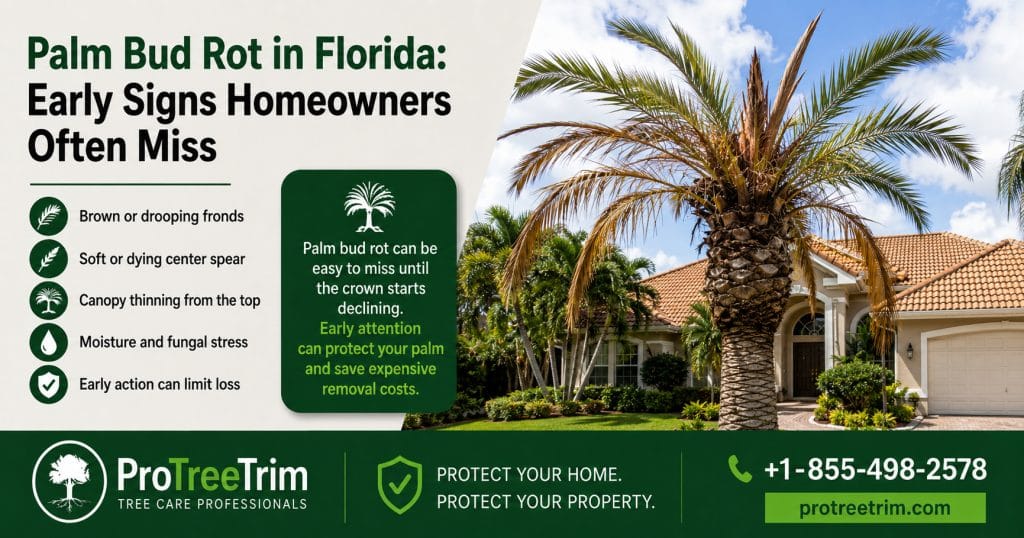
Palm Bud Rot in Florida: Early Signs Homeowners Often Miss
Palm bud rot can be hard for Florida homeowners to spot early because the rest of the palm may still look fairly normal. The first clues often appear in the spear leaf, the newest unopened frond at the center of the crown. If that area changes color, wilts, collapses, or stops producing new growth, the palm deserves attention.
Continue reading Palm Bud Rot in Florida: Early Signs Homeowners Often Miss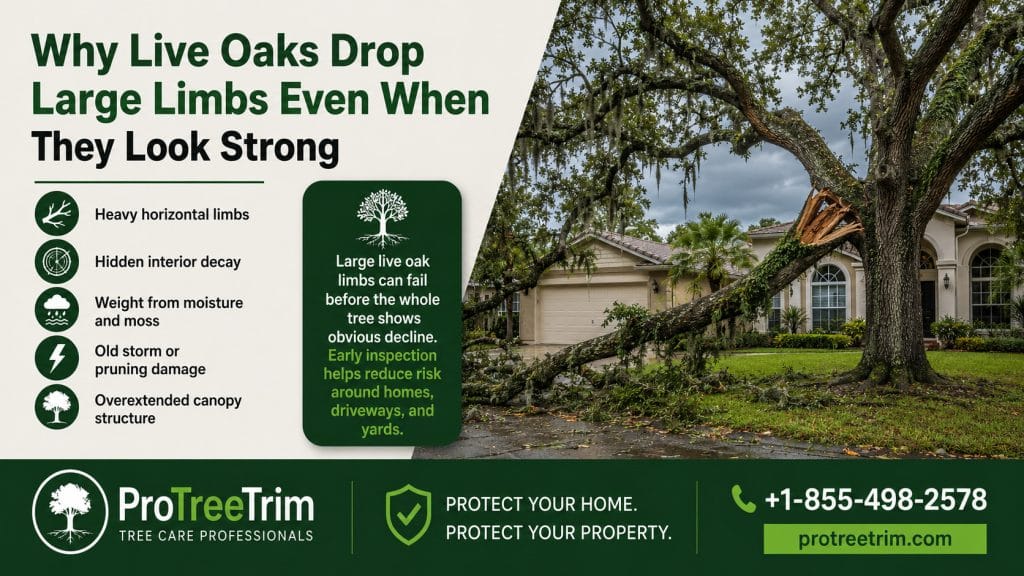
Why Live Oaks Drop Large Limbs Even When They Look Strong
A live oak can look solid, green, and beautiful while still carrying limb risks that are easy to miss from the ground. Florida homeowners should pay attention to heavy horizontal branches, old wounds, cracks, decay, uneven canopy weight, and limbs hanging over roofs, driveways, pool cages, fences, or walkways.
Continue reading Why Live Oaks Drop Large Limbs Even When They Look Strong