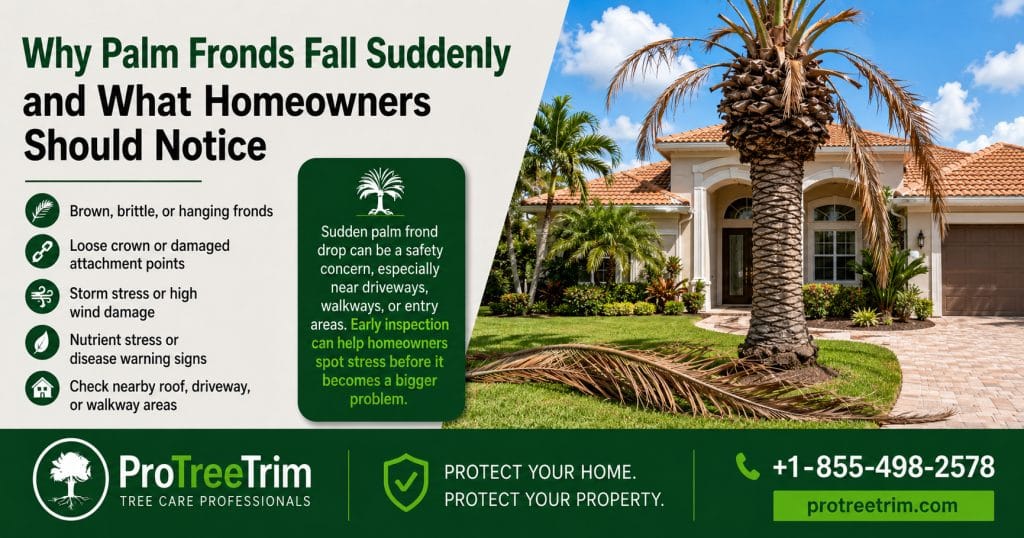
Palm fronds can fall suddenly even when the palm looks mostly healthy from the ground. In Florida yards, wind, heavy rain, natural shedding, old fronds, crown stress, or delayed storm damage can all play a role. Homeowners should pay attention to where the fronds are falling, how often it happens, and what they could hit on the way down.
Continue reading Why Palm Fronds Fall Suddenly and What Homeowners Should NoticeCategory: Palm & Oak
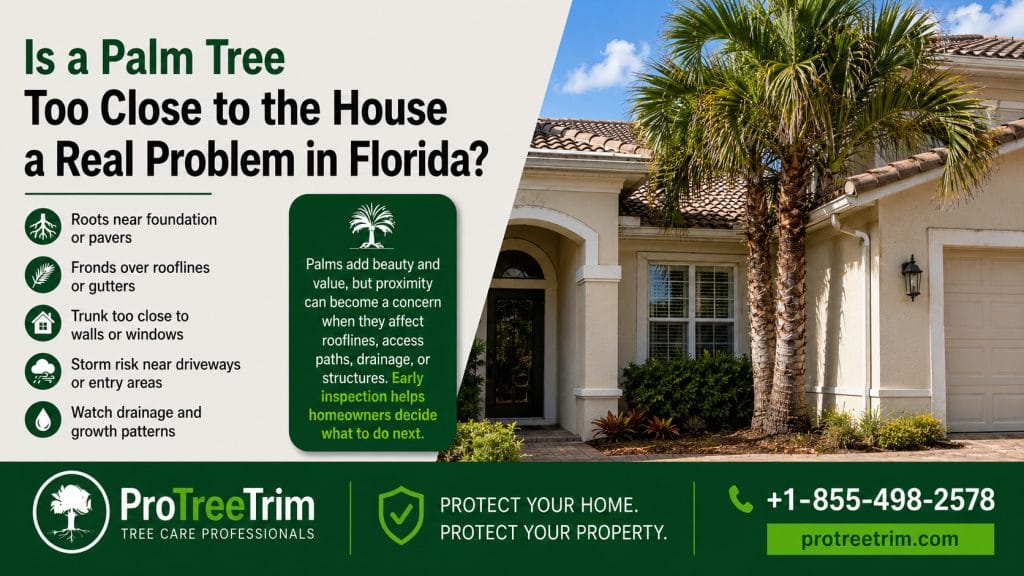
Is a Palm Tree Too Close to the House a Real Problem in Florida?
A palm tree close to the house is not automatically a problem, but it can become one depending on the palm’s size, lean, crown position, and what it touches. Florida homeowners should pay attention to fronds over the roof, trunks near walls, falling debris, tight access, pool cages, gutters, and whether the palm could create trouble during storm season.
Continue reading Is a Palm Tree Too Close to the House a Real Problem in Florida?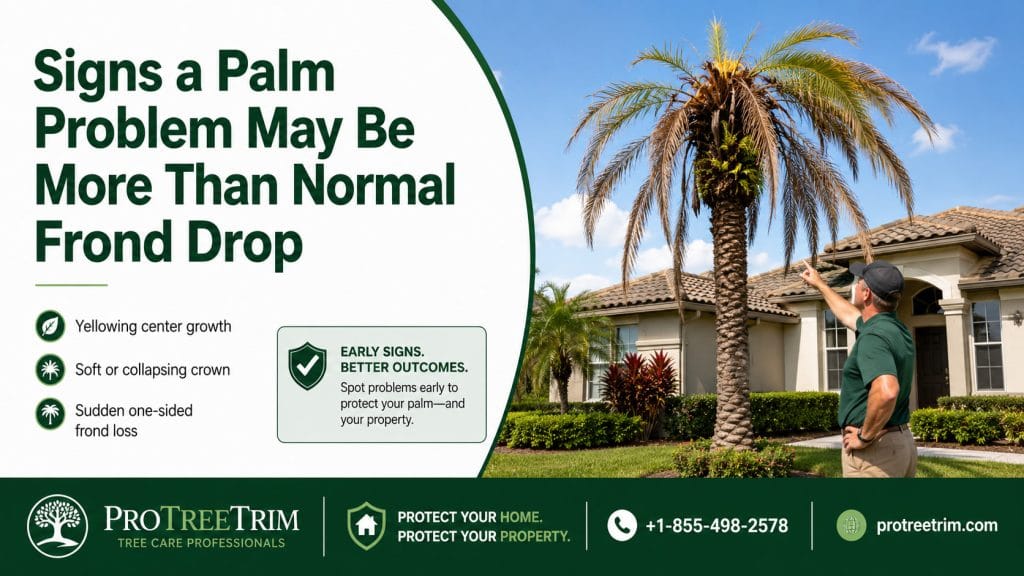
Signs a Palm Problem May Be More Than Normal Frond Drop
Palm fronds fall in Florida yards all the time. One brown frond on the lawn is usually not a crisis. The concern starts when fronds drop frequently, green fronds fall suddenly, the crown looks weak, the trunk shows damage, or the palm begins to lean after rain or wind. Normal shedding is one thing. Patterned decline is another.
Continue reading Signs a Palm Problem May Be More Than Normal Frond Drop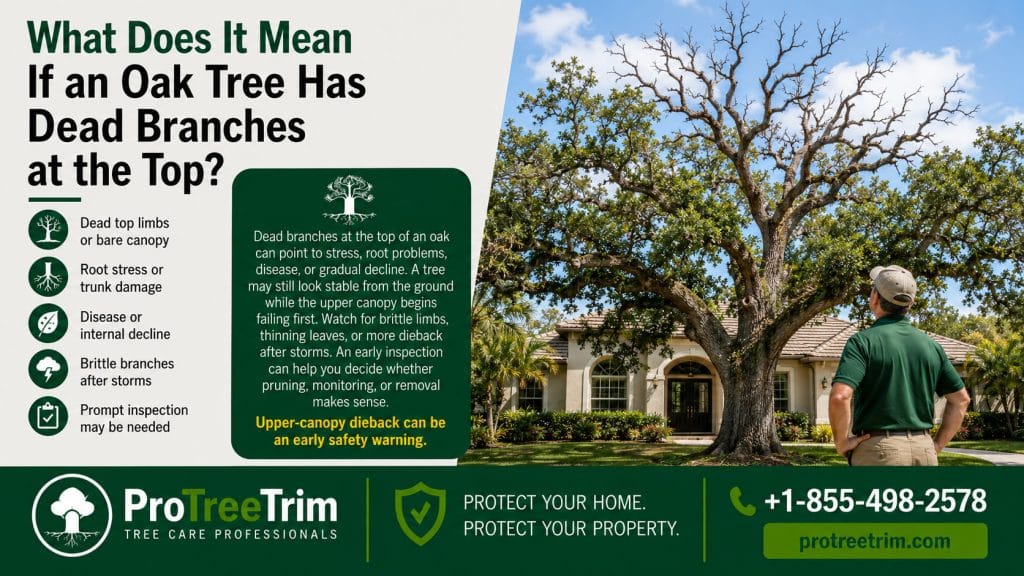
What Does It Mean If an Oak Tree Has Dead Branches at the Top?
Dead branches at the top of an oak tree can be a sign of stress, but the cause is not always obvious from the ground. In Florida yards, canopy dieback may be connected to root problems, drought stress, drainage changes, construction damage, decay, pests, or old storm injury. The key is to notice whether the problem is spreading.
Continue reading What Does It Mean If an Oak Tree Has Dead Branches at the Top?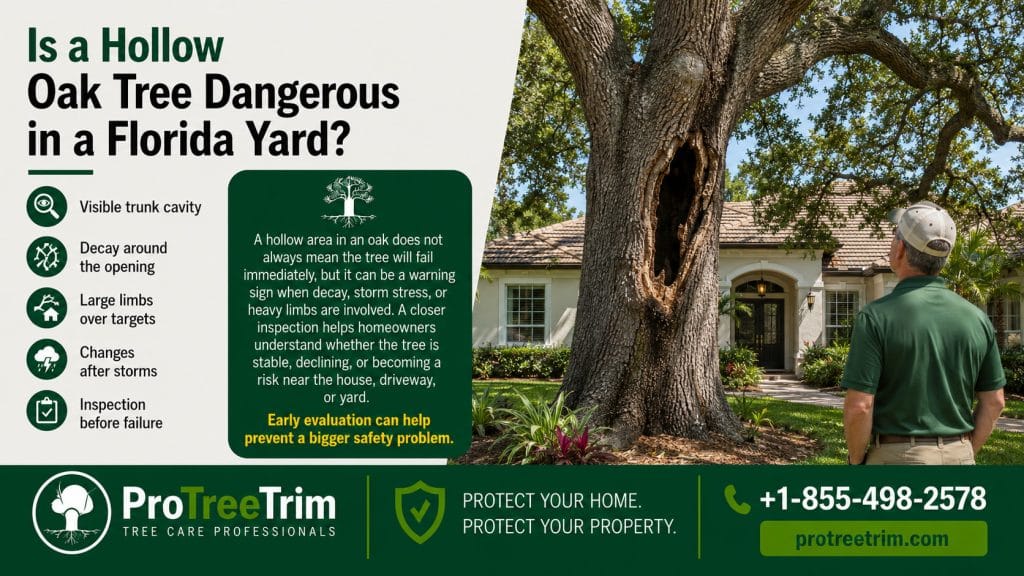
Is a Hollow Oak Tree Dangerous in a Florida Yard?
A hollow oak tree is not always dangerous, but it should be taken seriously. Some older oaks can live for years with cavities, while others may have decay, cracks, weak limbs, or root problems that make them risky. In Florida yards, the concern depends on how much structure is affected and what the tree could hit if it fails.
Continue reading Is a Hollow Oak Tree Dangerous in a Florida Yard?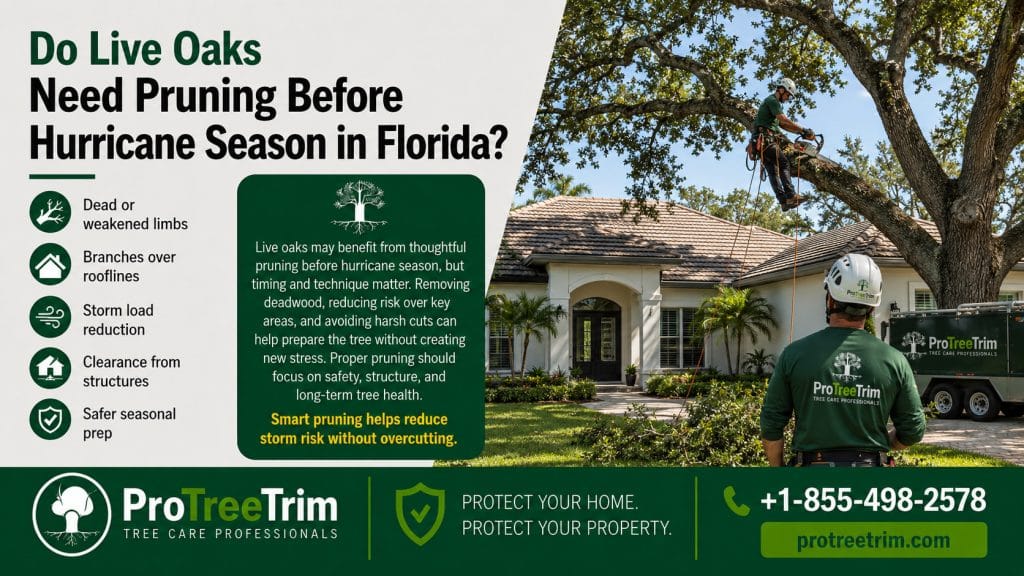
Do Live Oaks Need Pruning Before Hurricane Season in Florida?
Live oaks do not automatically need heavy pruning before hurricane season, but they should be checked for dead limbs, weak branch unions, overextended branches, roof contact, and canopy imbalance. In Florida yards, the goal is not to make an oak “smaller.” The goal is to reduce specific risks without damaging the tree’s structure.
Continue reading Do Live Oaks Need Pruning Before Hurricane Season in Florida?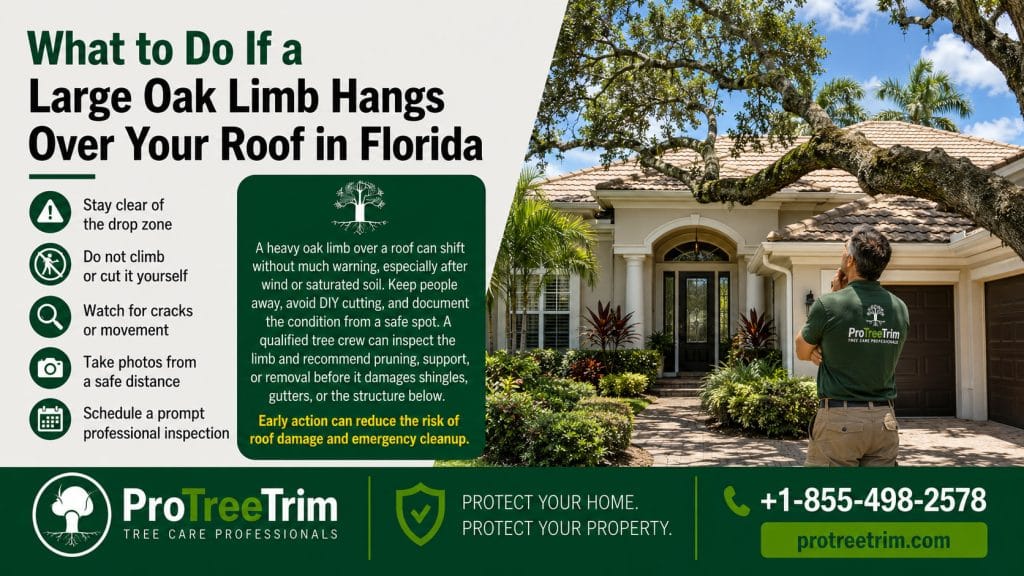
What to Do If a Large Oak Limb Hangs Over Your Roof in Florida
A large oak limb hanging over your roof is not automatically an emergency, but it should not be ignored. In Florida, heavy limbs, summer storms, saturated soil, and older pruning wounds can turn a roofline branch into a real property concern. The next right step depends on the limb’s condition, weight, attachment point, and what lies below it.
Continue reading What to Do If a Large Oak Limb Hangs Over Your Roof in Florida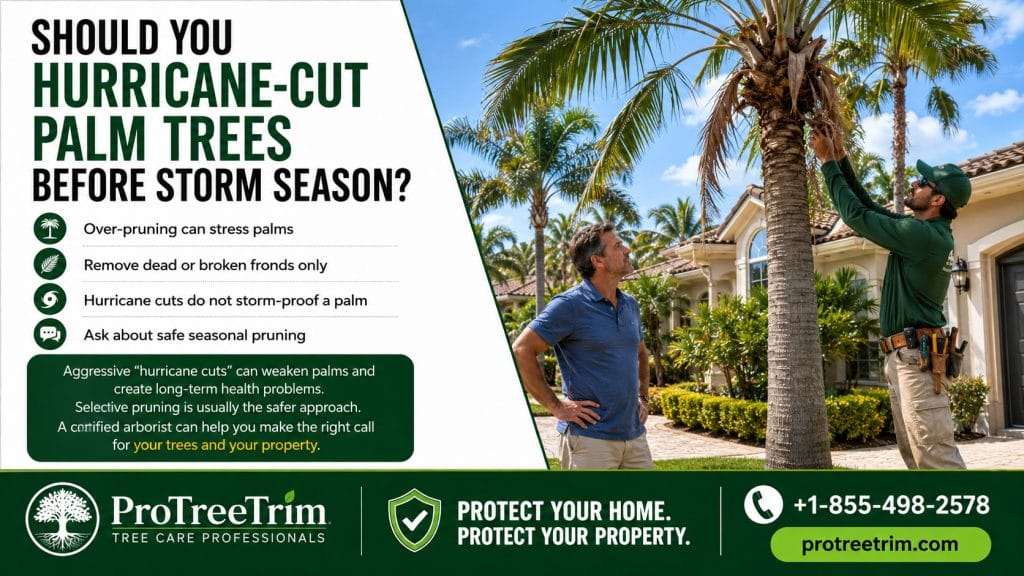
Should You Hurricane-Cut Palm Trees Before Storm Season?
No, Florida homeowners should not assume a “hurricane cut” makes palm trees safer. Removing too many green fronds can stress the palm and may create long-term weakness. Before storm season, the better approach is careful maintenance: remove dead or broken fronds, watch for heavy seed pods, and avoid aggressive cuts that strip the crown.
Continue reading Should You Hurricane-Cut Palm Trees Before Storm Season?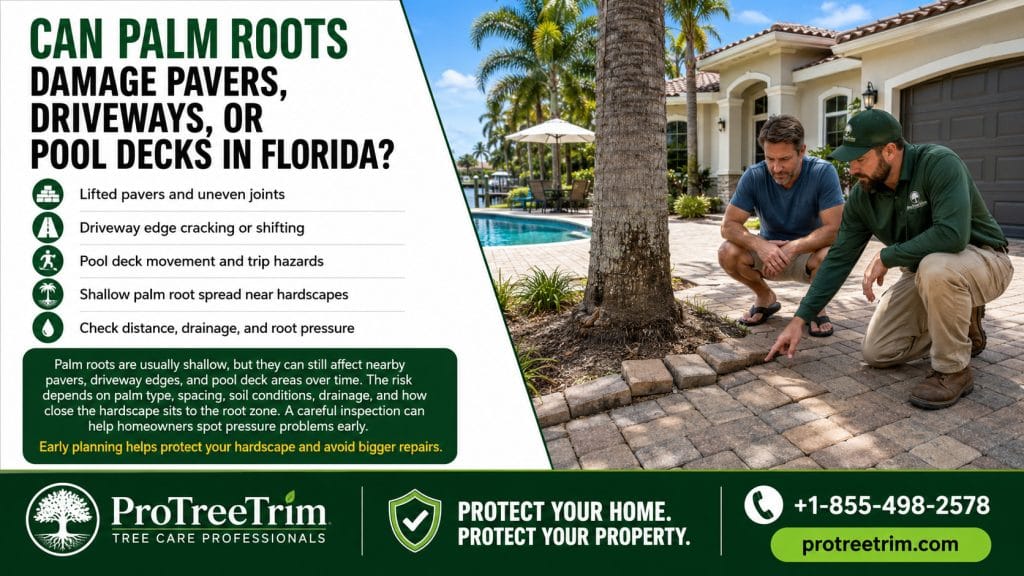
Can Palm Roots Damage Pavers, Driveways, or Pool Decks in Florida?
Palm roots are usually different from large shade-tree roots, but they can still create problems in the wrong spot. In Florida yards, palms planted close to pavers, driveways, pool decks, irrigation, or screen enclosures may contribute to lifting, settling, moisture issues, or difficult repairs over time.
Continue reading Can Palm Roots Damage Pavers, Driveways, or Pool Decks in Florida?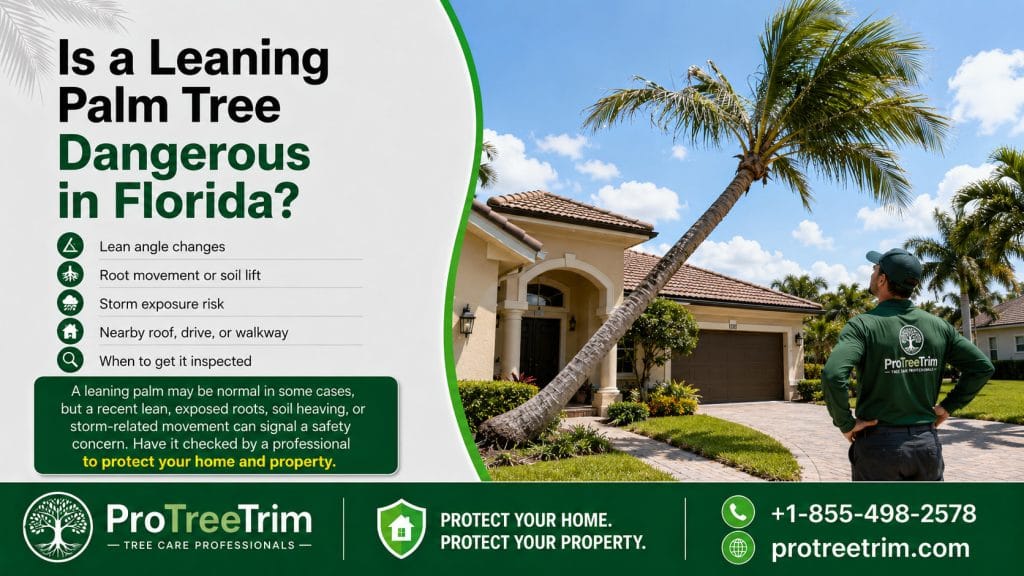
Is a Leaning Palm Tree Dangerous in Florida?
A leaning palm tree is not always dangerous, but a new lean should be taken seriously. Some palms grow at an angle for years. Others shift after heavy rain, root disturbance, soil washout, or storm wind. In Florida yards, the concern depends on what changed, what the palm could hit, and whether the base shows signs of movement.
Continue reading Is a Leaning Palm Tree Dangerous in Florida?