
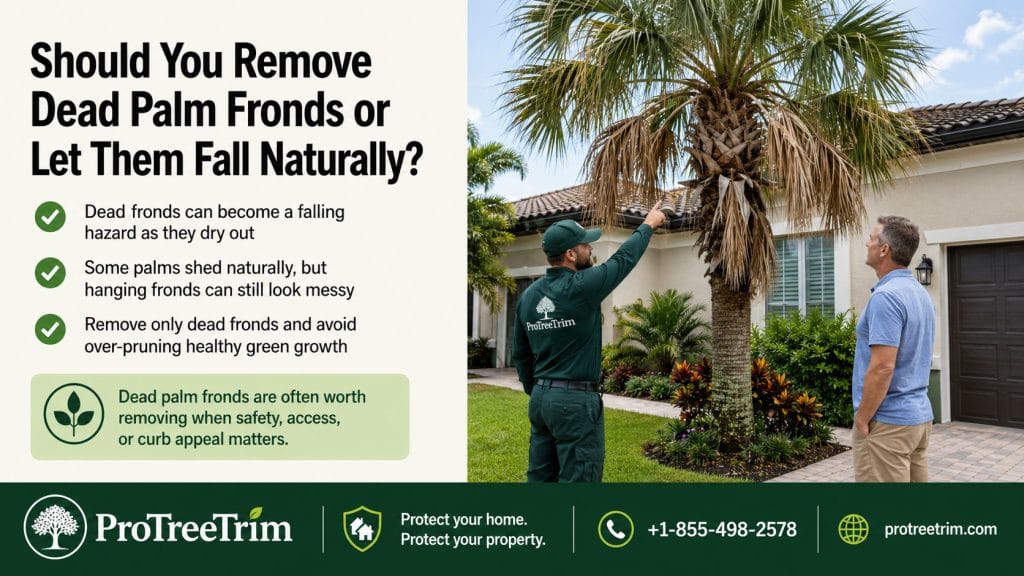
Dead palm fronds are normal, but that does not mean they should always be left alone. In open areas, a few brown fronds may simply be part of the palm’s natural cycle. Near a roof, driveway, pool cage, sidewalk, patio, or front entry, dead fronds can become a cleanup, safety, or property-maintenance issue.
Brown Fronds Are Not Always a Sign of Trouble
Palms naturally shed older fronds as new growth appears from the crown. A lower frond turning brown does not automatically mean the palm is dying. In many cases, it is just aging out.
The concern changes when dead fronds remain hanging, collect near structures, or drop where people walk, park, or sit.
| What you see | What it may mean |
|---|---|
| One or two lower brown fronds | Often normal aging |
| Many fronds dying at once | Palm health may need closer review |
| Dead fronds hanging over a walkway | Removal may be practical |
| Fronds touching roof or gutters | Roofline clearance may be needed |
| Fronds resting on pool cage | Screen damage and debris concern |
| Heavy seed pods with dead fronds | Cleanup and falling-debris concern |
| Crown looks thin or collapsing | More than routine trimming may be involved |
The key is to separate normal palm shedding from a palm that is creating property risk or showing decline.
Location Matters More Than Appearance
A dead palm frond in an open yard is usually less urgent than a dead frond above a front walkway. The same frond can be harmless in one place and a problem in another.
Pay closer attention when dead fronds hang over:
- driveways
- parked vehicles
- pool cages
- patios
- sidewalks
- front entries
- rooflines
- gutters
- fences
- outdoor seating areas
- neighbor-facing property lines
If a frond could fall onto something people use every day, removal becomes more practical.
Do Not Over-Prune the Palm
Removing dead fronds is different from stripping the palm too aggressively.
A common mistake is cutting off too many green fronds because the palm looks “cleaner” afterward. That can make the crown look thin, unnatural, or hurricane-cut. A palm does not need to be shaved into a tiny tuft at the top to be maintained.
A better palm trim focuses on:
- fully dead fronds
- broken fronds
- hanging fronds over targets
- heavy seed pods where appropriate
- fronds physically touching structures
- cleanup that keeps the palm’s natural crown shape
Green fronds should not be removed casually just because they point downward or make the palm look less tidy.
Pool Cages Need Extra Attention
Palm fronds near pool cages are a common Florida-style problem. A dead frond can rest on the screen, tear a panel, collect debris, or become difficult to remove after it falls.
If the palm is close to a pool enclosure, look at the top and sides of the cage. Are fronds touching the screen? Are seed pods hanging over the frame? Are old fronds already lying across panels?
A palm near a pool cage does not always need removal. It may simply need routine, careful trimming. But if the palm repeatedly drops heavy fronds onto the enclosure, the long-term placement may deserve a closer look.
Rooflines and Gutters Are Another Priority
Dead palm fronds near a roof can create several issues at once. They may drop onto shingles, collect in gutters, block drainage, or make the home look poorly maintained from the street.
If fronds are touching the roofline, trimming should be specific. The goal is clearance and cleanup, not removing half the crown.
A useful scope might sound like:
- remove dead fronds over roof edge
- clear fronds touching gutter line
- remove hanging seed pod over driveway
- clean palm debris from pool cage area
- preserve healthy green crown
That is very different from “cut it back hard.”
When Falling Fronds Become a Safety Issue
Palm fronds can be heavier than they look, especially from tall palms. A dry frond falling on open lawn may not matter much. A frond falling on a person, vehicle, pool cage, outdoor table, or walkway can be more serious.
Be more cautious when:
- the palm is tall
- fronds hang over daily-use areas
- the palm is near a front entry
- children or guests use the area below
- vehicles park under the crown
- the palm drops large seed clusters
- storms or wind loosen old fronds
In those locations, waiting for fronds to fall naturally may not be the best plan.
Do Not Climb or Pole-Saw Tall Palms Yourself
Trimming a small, reachable palm from the ground may seem simple. Tall palms are different. Fronds can fall unpredictably, tools can slip, and ladders near palms can be dangerous.
Avoid DIY palm trimming when the fronds are high, heavy, near a roof, near a pool cage, close to electrical lines, or over a driveway or walkway.
If utility lines are involved, stop. That is not ordinary palm trimming.
Seed Pods Can Be Part of the Same Decision
Palm maintenance is not only about fronds. Seed pods and fruit clusters can create mess, staining, slipping, pests, and falling-debris concerns.
Removing seed pods may make sense when they hang over:
- patios
- driveways
- pool decks
- walkways
- gutters
- outdoor furniture
- high-use lawn areas
Again, the goal is practical maintenance, not over-cutting the palm.
When Dead Fronds May Signal a Bigger Palm Problem
A few lower dead fronds are normal. A sudden pattern of decline is different.
Look more carefully if you see:
- many fronds browning quickly
- new central spear leaf damaged or loose
- crown thinning
- trunk wounds
- soft or wet crown area
- fungal-looking growth
- leaning that appears recent
- fronds dying on one side
- repeated storm damage
In those cases, trimming dead fronds may improve appearance but not answer the health question.
Keep Records for Larger Palm Work
If palm trimming is done near a roof, pool cage, driveway, or property line, keep the invoice and take before-and-after photos. That can help if you later sell the home, answer buyer questions, or document storm-season maintenance.
Useful records include:
- palm trimming invoice
- photos of fronds before removal
- after photos showing clearance
- pool screen or gutter repair receipts
- debris hauling notes
- any comments about palm health or access issues
Good records are especially useful when the palm was close to structures.
Final Homeowner Takeaway
Dead palm fronds do not always need urgent removal. But they should not be ignored when they hang over roofs, gutters, pool cages, driveways, walkways, patios, or places where people gather.
Remove what is dead, broken, hanging, or creating a clear property concern. Avoid stripping healthy green fronds just to make the palm look tidy. A well-maintained palm should look clean, natural, and safe—not over-cut.
If you are unsure whether dead palm fronds, seed pods, roofline contact, or pool-cage debris should be handled now, ProTreeTrim can help connect homeowners with local tree service support. Call +1-855-498-2578 or visit protreetrim.com.
FAQs
Should dead palm fronds be removed?
Often, yes, especially if they hang over a roof, pool cage, driveway, walkway, patio, or entry area. In open areas, a few dead lower fronds may be less urgent.
Is it bad to remove green palm fronds?
Removing too many green fronds can leave the palm over-pruned and unnatural. Palm trimming should focus mainly on dead, broken, or problem fronds.
Can dead palm fronds damage a pool cage?
Yes. Heavy fronds can rest on screens, tear panels, collect debris, or damage the enclosure during wind.
Should homeowners trim tall palms themselves?
Usually no. Tall palms, heavy fronds, roofline work, pool cage work, and anything near utility lines should be handled with proper help.
ProTreeTrim™ can help you take the next step.
If you are dealing with a damaged tree, fallen branch, stump, root issue, palm concern, or storm cleanup question in Florida, call ProTreeTrim for tree service support.