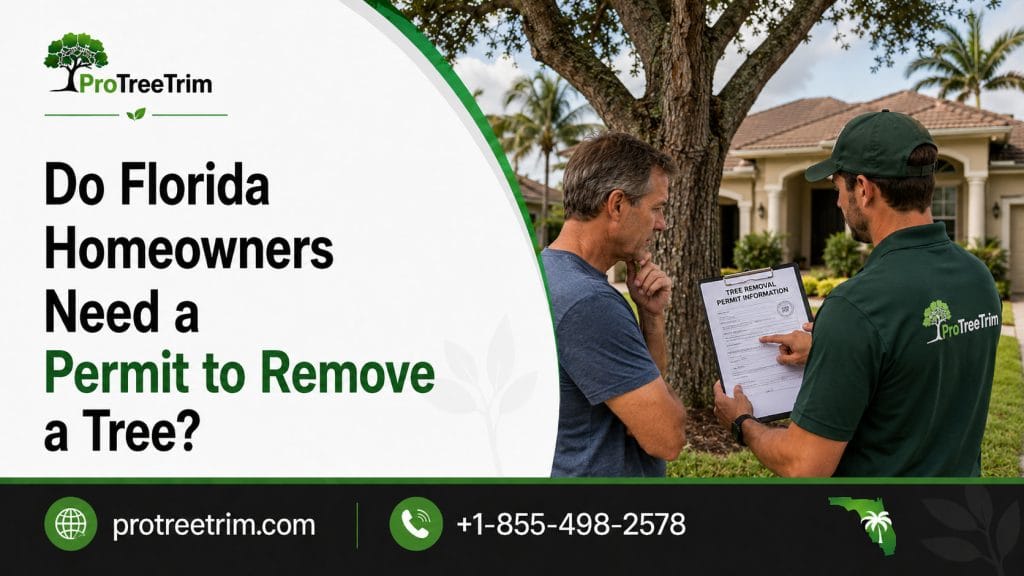
Florida homeowners may need a permit to remove a tree, but the answer depends on where the property is, what kind of tree it is, whether it is protected, and whether the tree poses a documented risk. Do not assume “it’s my yard” means removal is automatically allowed.
Continue reading Do Florida Homeowners Need a Permit to Remove a Tree?Guides
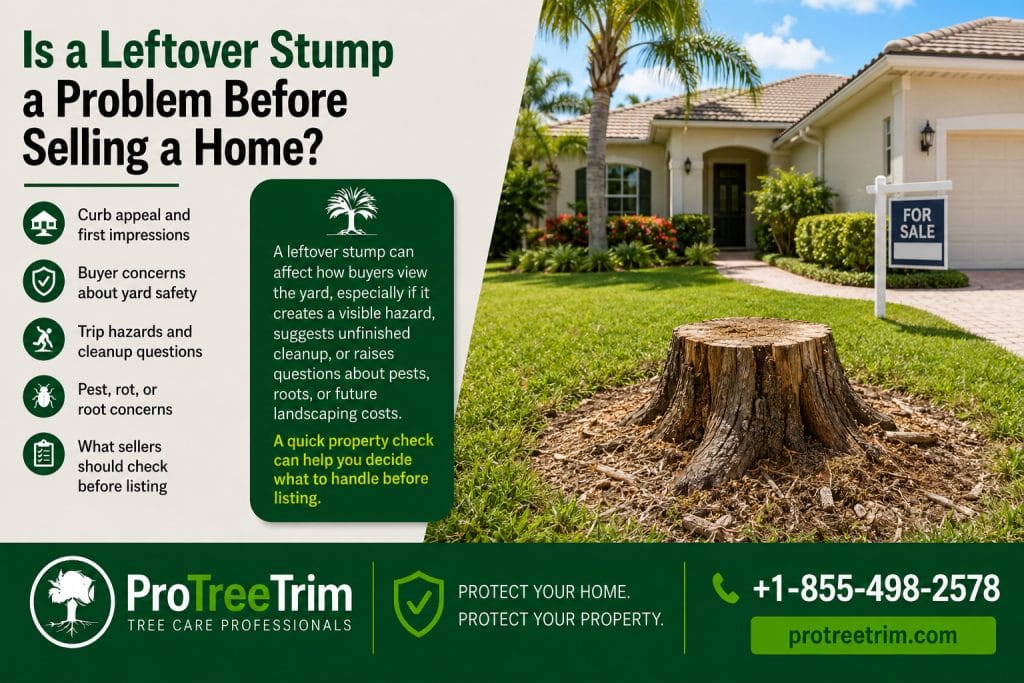
Is a Leftover Stump a Problem Before Selling a Home?
A leftover stump is not always a deal-breaker before selling a Florida home, but it can raise questions for buyers. It may affect curb appeal, lawn safety, pest concerns, paver repairs, drainage, or how well the yard photographs. Before listing, homeowners should look at where the stump is, what condition it is in, and whether it makes the property feel unfinished.
Continue reading Is a Leftover Stump a Problem Before Selling a Home?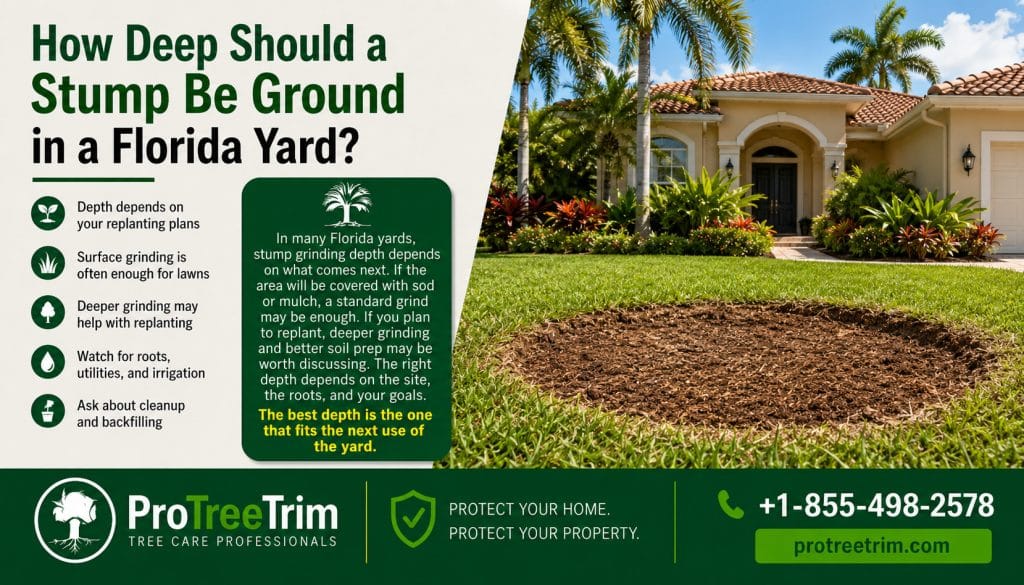
How Deep Should a Stump Be Ground in a Florida Yard?
A stump should be ground deep enough for the way you plan to use the area afterward. A shallow grind may be fine under mulch, but sod, pavers, irrigation repairs, or replanting usually need more clearance. In Florida yards, soil settling, leftover roots, drainage, and buried utilities can all affect how deep the job should go.
Continue reading How Deep Should a Stump Be Ground in a Florida Yard?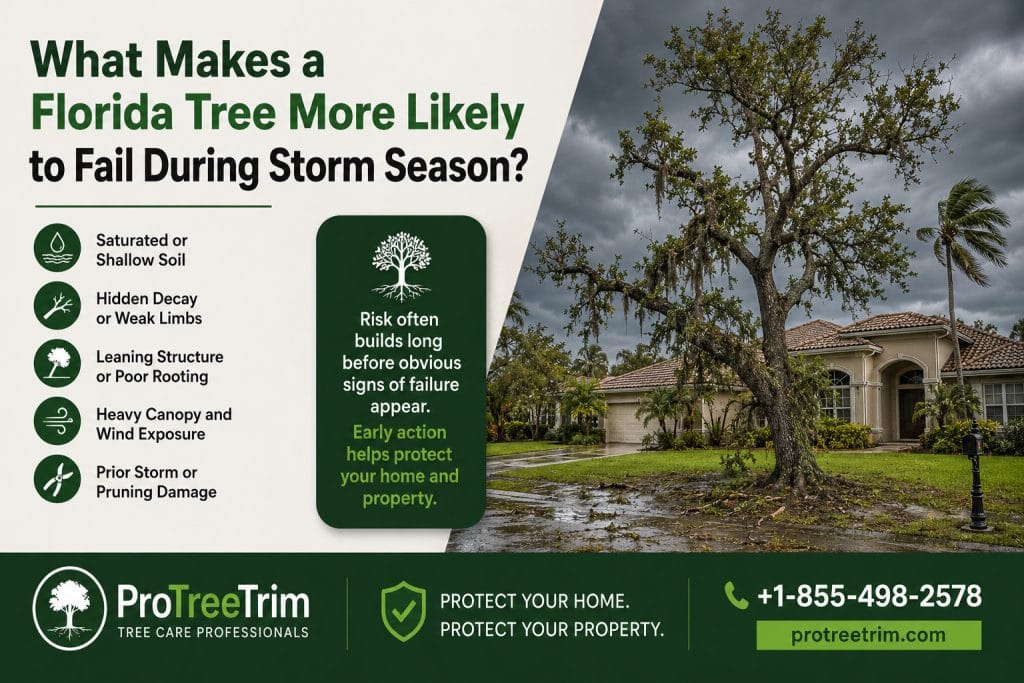
What Makes a Florida Tree More Likely to Fail During Storm Season?
A Florida tree is more likely to fail during storm season when structural problems, root stress, heavy canopy weight, saturated soil, or poor placement all stack up. A tree does not have to look dead to become a concern. Homeowners should look for recent changes, weak points, and what the tree could hit if wind or rain exposes the problem.
Continue reading What Makes a Florida Tree More Likely to Fail During Storm Season?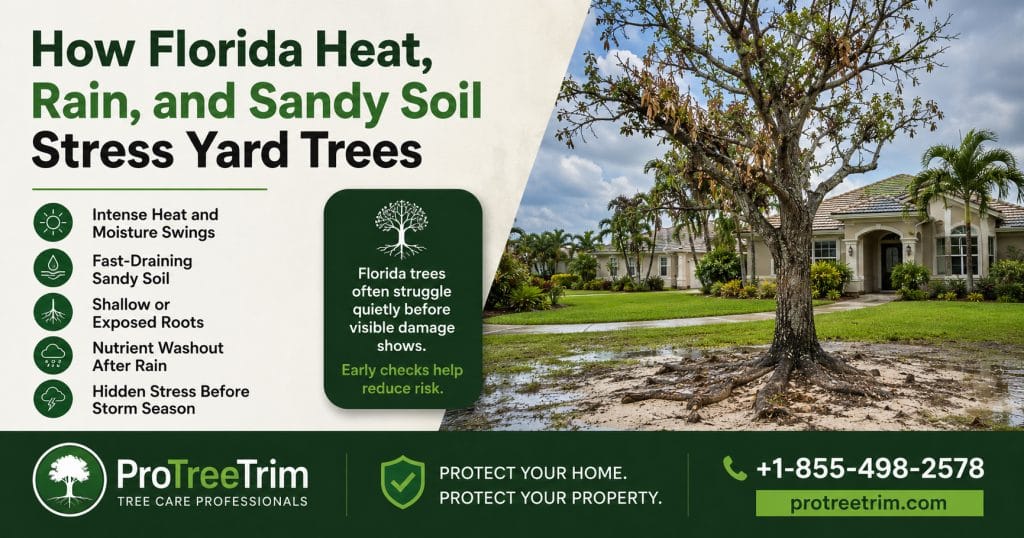
How Florida Heat, Rain, and Sandy Soil Stress Yard Trees
Florida trees face a difficult mix: intense heat, sudden downpours, sandy soil, irrigation swings, and storm-season winds. A tree may look fine from the street while its roots, trunk, or canopy are under stress. Homeowners should watch for changes in soil, drainage, leaf condition, limb weight, and root exposure before small issues become harder to manage.
Continue reading How Florida Heat, Rain, and Sandy Soil Stress Yard Trees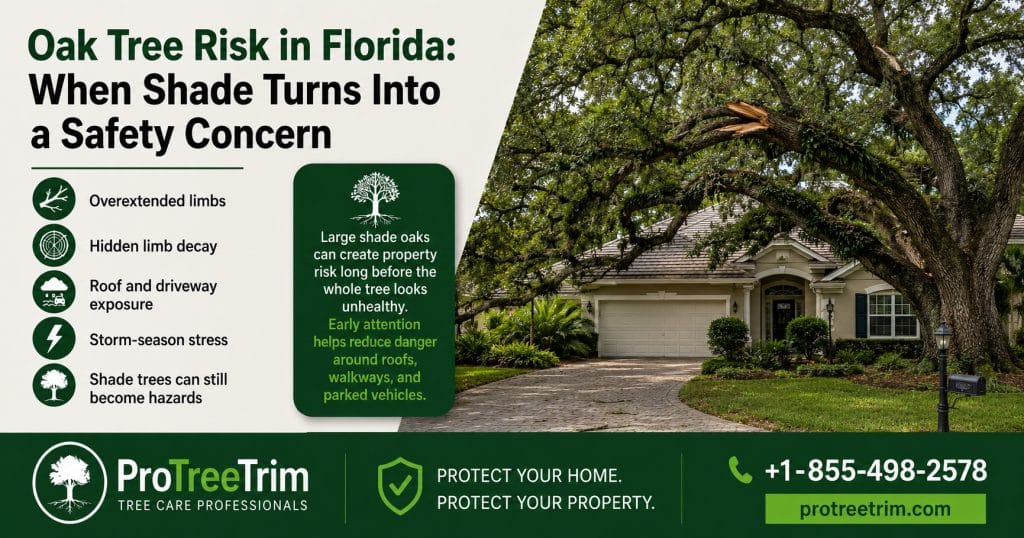
Oak Tree Risk in Florida: When Shade Turns Into a Safety Concern
A mature oak can be one of the best features in a Florida yard, but shade alone does not make it safe. Homeowners should pay attention when heavy limbs hang over the roof, roots shift near hardscape, the trunk shows cracks or decay, or the tree changes after heavy rain, wind, construction, or soil disturbance.
Continue reading Oak Tree Risk in Florida: When Shade Turns Into a Safety Concern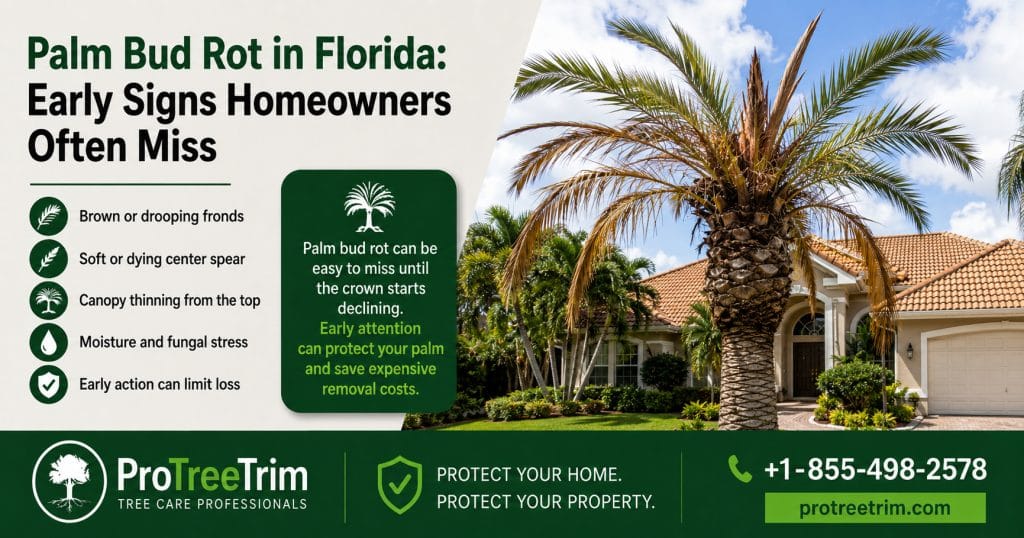
Palm Bud Rot in Florida: Early Signs Homeowners Often Miss
Palm bud rot can be hard for Florida homeowners to spot early because the rest of the palm may still look fairly normal. The first clues often appear in the spear leaf, the newest unopened frond at the center of the crown. If that area changes color, wilts, collapses, or stops producing new growth, the palm deserves attention.
Continue reading Palm Bud Rot in Florida: Early Signs Homeowners Often Miss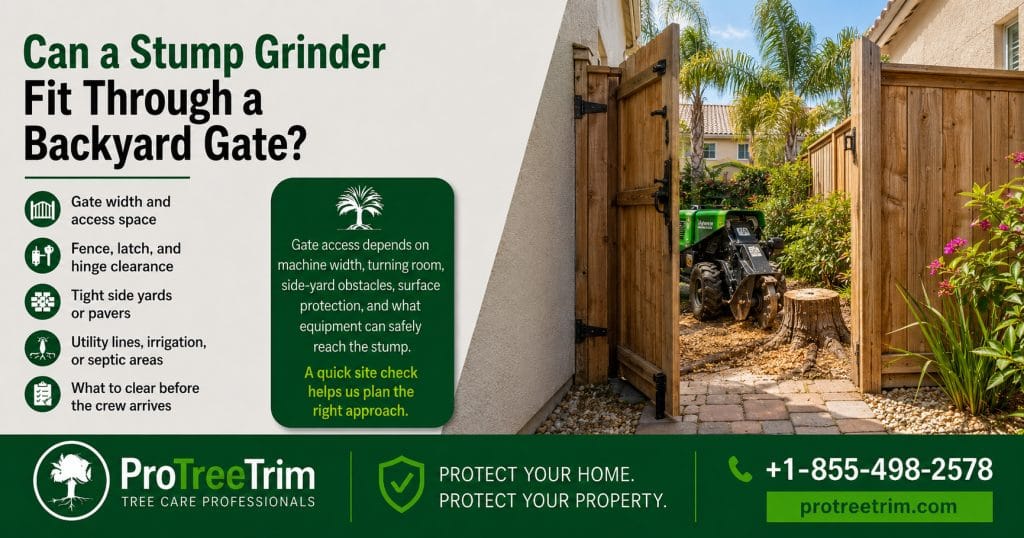
Can a Stump Grinder Fit Through a Backyard Gate?
A stump grinder may fit through a backyard gate, but access depends on more than the gate opening. Florida homeowners should check the width, turns, slope, pavers, soft soil, pool equipment, irrigation, and how close the stump sits to fences or structures. A tight yard does not always make grinding impossible, but it can change the plan.
Continue reading Can a Stump Grinder Fit Through a Backyard Gate?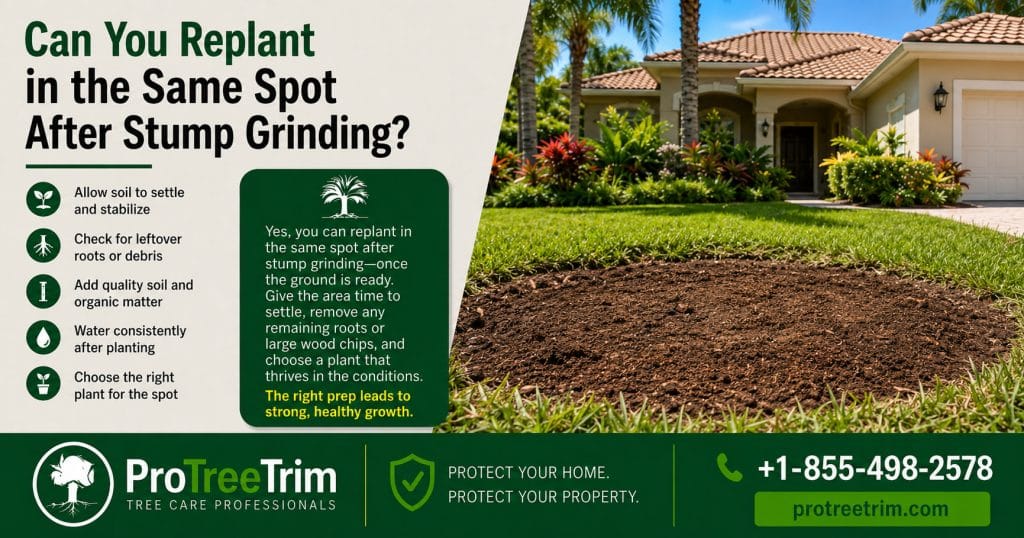
Can You Replant in the Same Spot After Stump Grinding?
You can sometimes replant in the same spot after stump grinding, but it is not always the best first choice. The old stump area may still contain roots, wood chips, loose soil, and decaying organic material. In Florida yards, drainage, sandy soil, irrigation, and nearby pavers or fences can all affect whether a new tree will establish well.
Continue reading Can You Replant in the Same Spot After Stump Grinding?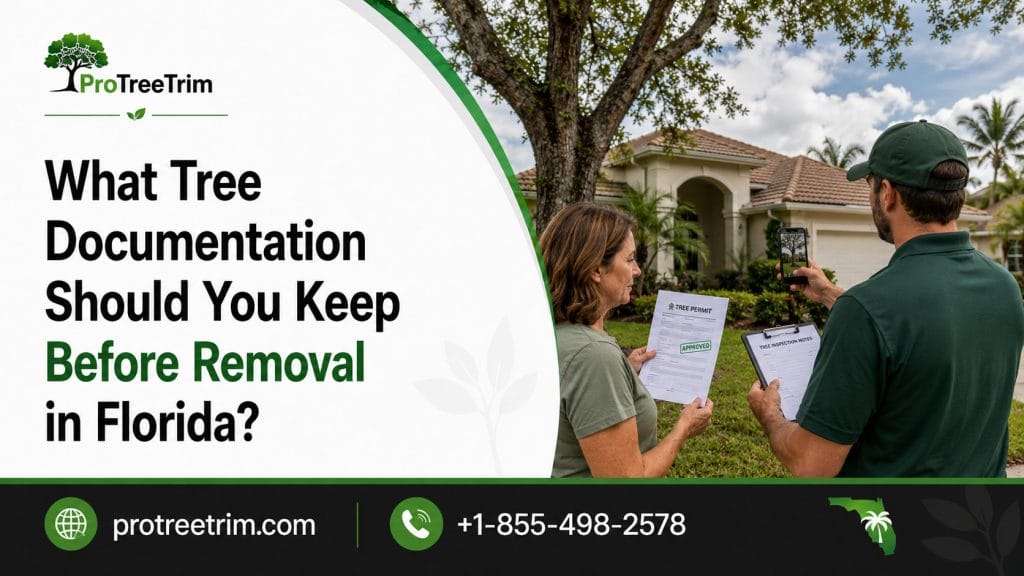
What Tree Documentation Should You Keep Before Removal in Florida?
Before tree removal in Florida, keep clear photos, written notes, professional assessments, local permit records, HOA messages, and cleanup invoices in one place. This matters most when the tree is near a home, roof, driveway, pool cage, fence, utility line, septic area, or neighbor’s property.
Continue reading What Tree Documentation Should You Keep Before Removal in Florida?