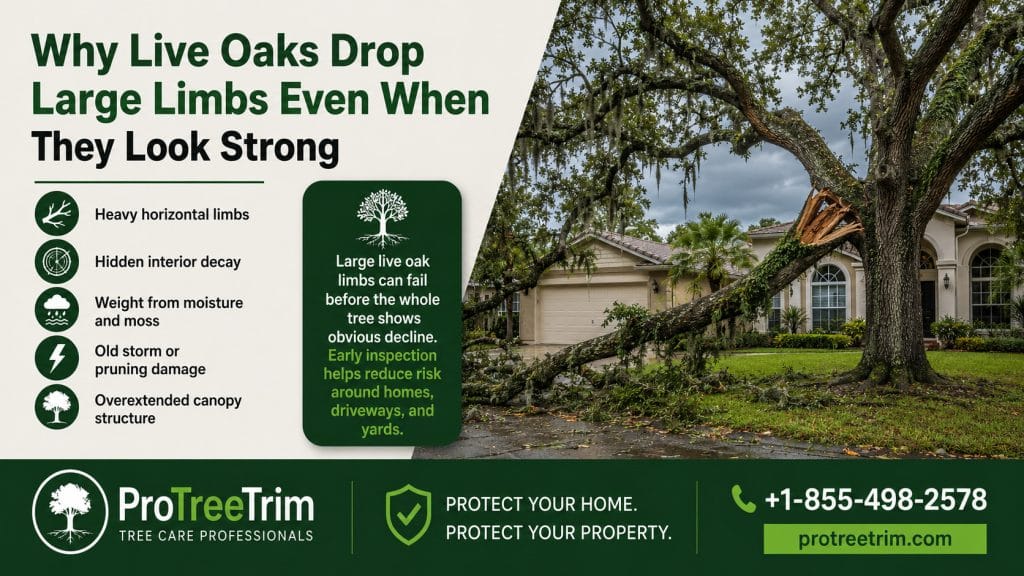
A live oak can look solid, green, and beautiful while still carrying limb risks that are easy to miss from the ground. Florida homeowners should pay attention to heavy horizontal branches, old wounds, cracks, decay, uneven canopy weight, and limbs hanging over roofs, driveways, pool cages, fences, or walkways.
Continue reading Why Live Oaks Drop Large Limbs Even When They Look StrongGuides
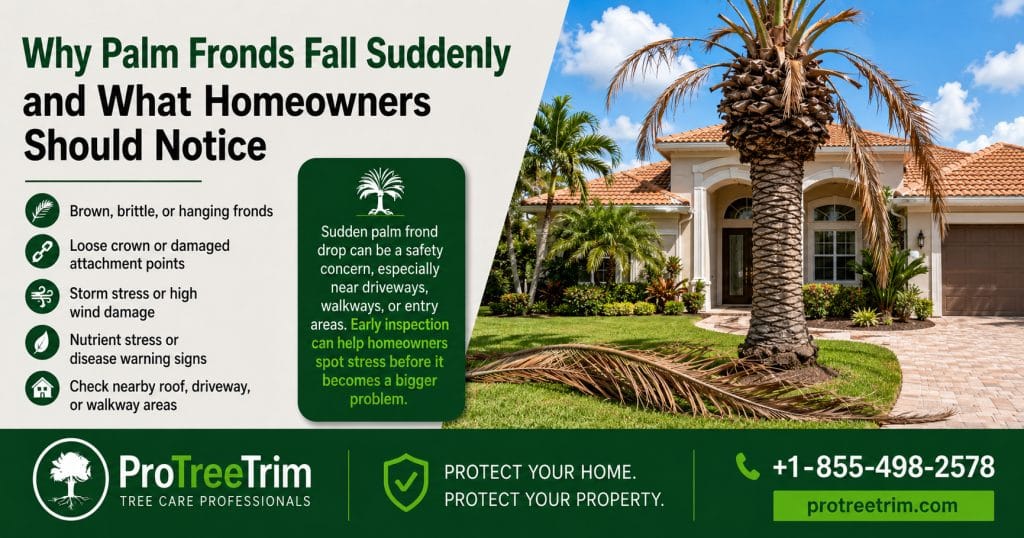
Why Palm Fronds Fall Suddenly and What Homeowners Should Notice
Palm fronds can fall suddenly even when the palm looks mostly healthy from the ground. In Florida yards, wind, heavy rain, natural shedding, old fronds, crown stress, or delayed storm damage can all play a role. Homeowners should pay attention to where the fronds are falling, how often it happens, and what they could hit on the way down.
Continue reading Why Palm Fronds Fall Suddenly and What Homeowners Should Notice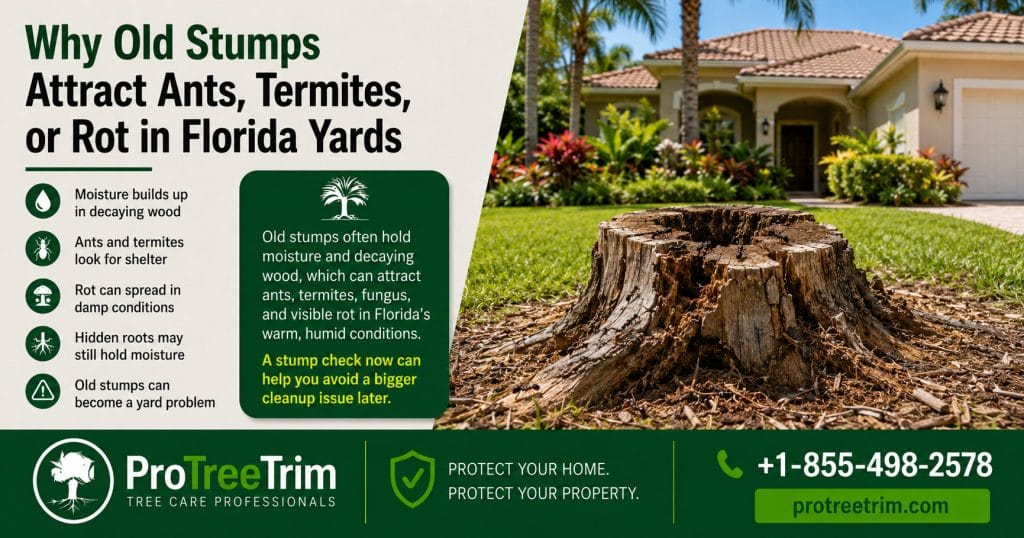
Why Old Stumps Attract Ants, Termites, or Rot in Florida Yards
Old stumps attract ants, termites, fungi, and rot because they are dead wood sitting in warm, humid conditions. In Florida yards, moisture, mulch, irrigation, sandy soil, and shade can speed up decay. Not every stump is an emergency, but one close to the house, deck, fence, pool area, or pavers deserves a closer look.
Continue reading Why Old Stumps Attract Ants, Termites, or Rot in Florida Yards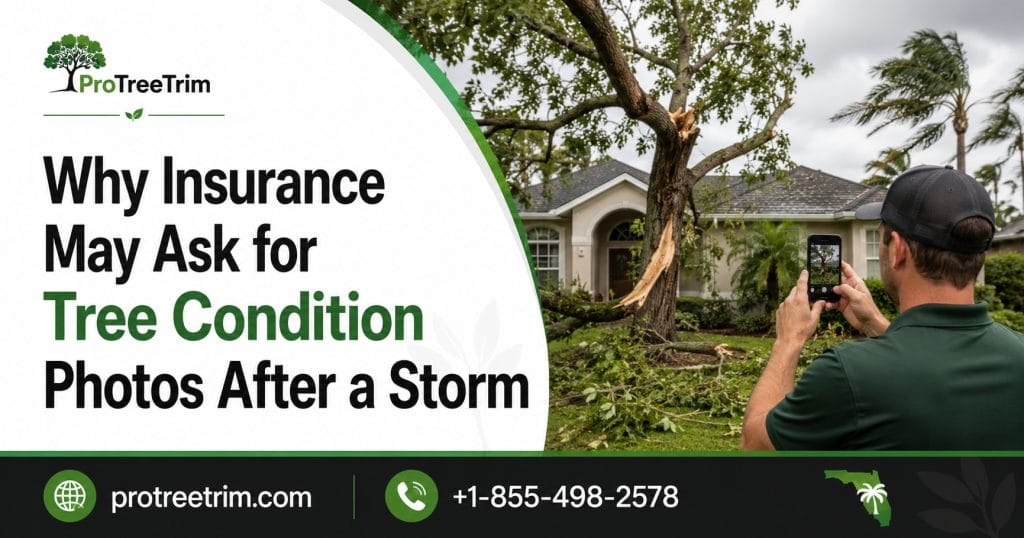
Why Insurance May Ask for Tree Condition Photos After a Storm
Insurance may ask for tree condition photos after a storm because photos help show what happened before cleanup changed the scene. In a Florida yard, tree debris can be moved quickly for safety, but the original damage still matters. Clear photos can help document fallen limbs, roof impact, fence damage, pool screen damage, and emergency repairs.
Continue reading Why Insurance May Ask for Tree Condition Photos After a Storm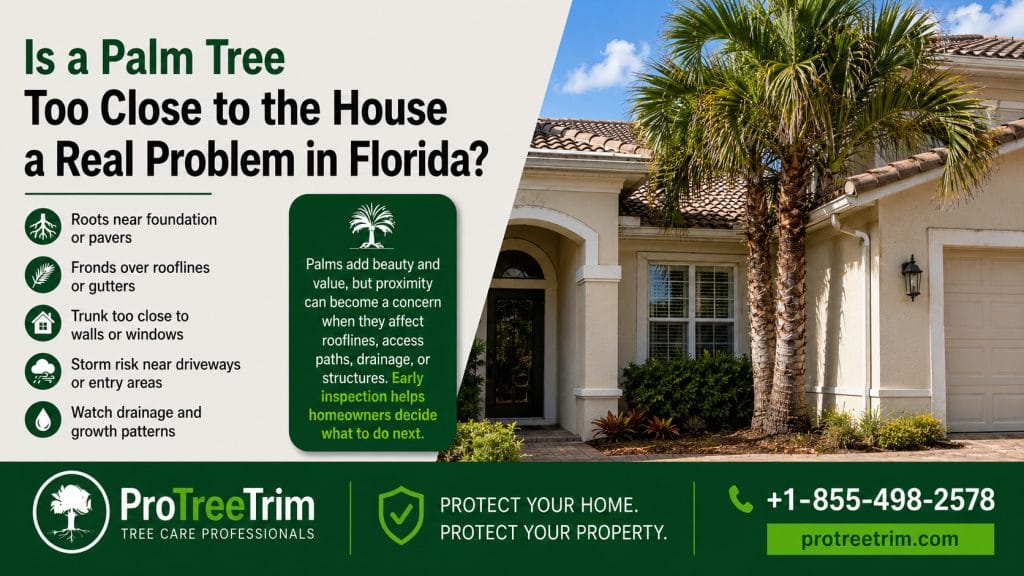
Is a Palm Tree Too Close to the House a Real Problem in Florida?
A palm tree close to the house is not automatically a problem, but it can become one depending on the palm’s size, lean, crown position, and what it touches. Florida homeowners should pay attention to fronds over the roof, trunks near walls, falling debris, tight access, pool cages, gutters, and whether the palm could create trouble during storm season.
Continue reading Is a Palm Tree Too Close to the House a Real Problem in Florida?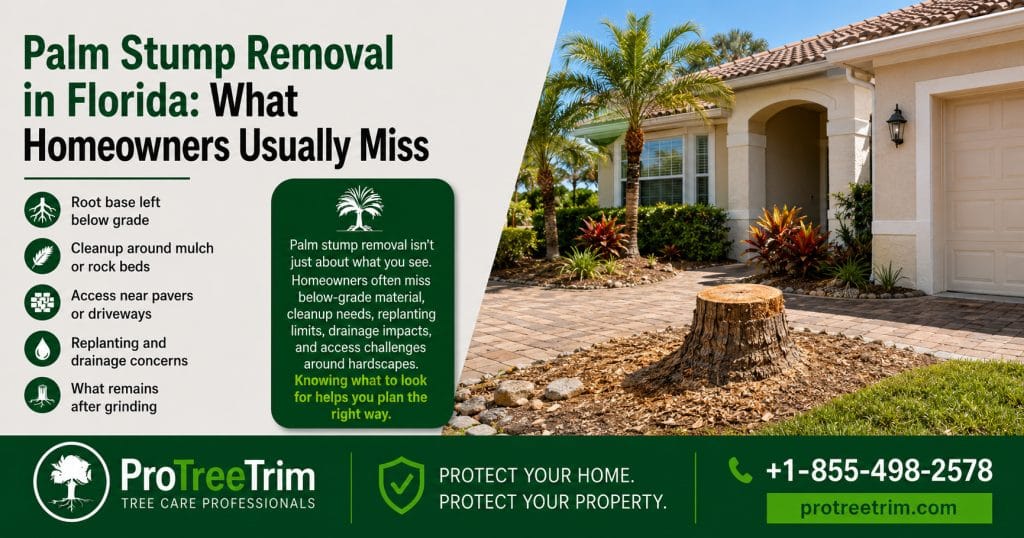
Palm Stump Removal in Florida: What Homeowners Usually Miss
Palm stump removal in Florida is not always as simple as grinding down what is visible above the lawn. Homeowners often miss the root mass, nearby irrigation, soft soil, access limits, and what happens to the area after the stump is gone. A clean-looking removal can still leave settling, loose material, or replanting issues behind.
Continue reading Palm Stump Removal in Florida: What Homeowners Usually Miss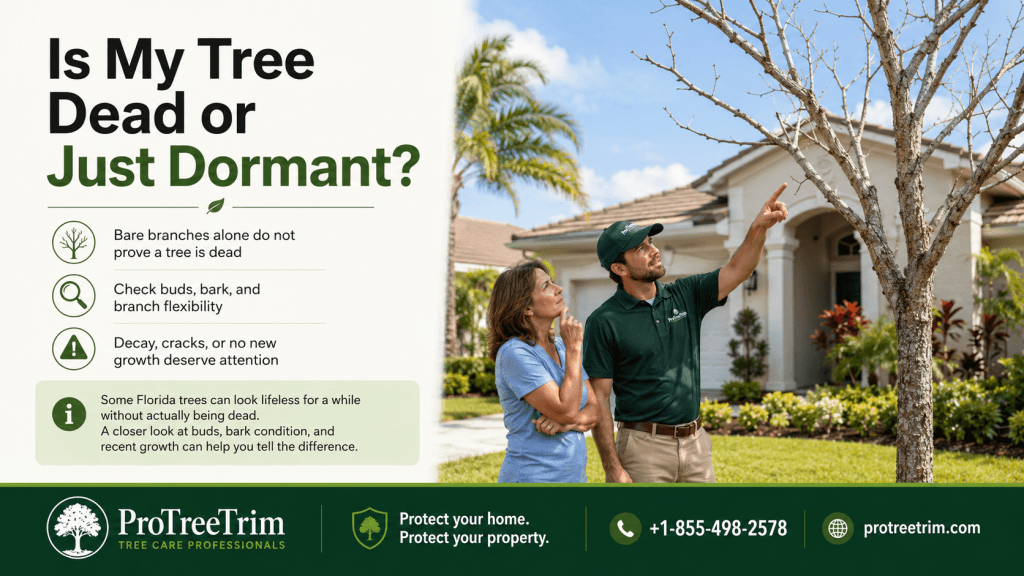
Is My Tree Dead or Just Dormant?
A tree with no leaves is not automatically dead. It may be dormant, stressed, delayed by weather, or declining from root, water, pest, or trunk problems. Before cutting it down, homeowners should check the season, species, buds, bark, branches, trunk base, and whether the tree has changed suddenly.
Continue reading Is My Tree Dead or Just Dormant?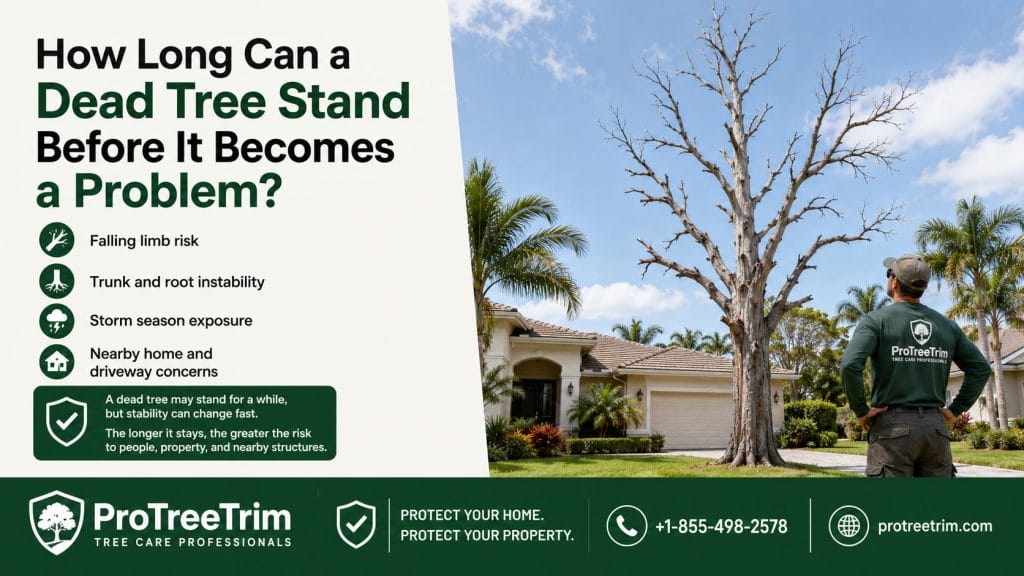
How Long Can a Dead Tree Stand Before It Becomes a Problem?
A dead tree may stay upright for months or even longer, but that does not mean it is safe to ignore. Once a tree is dead, it no longer repairs wounds, responds to decay, or holds branches the same way a living tree does. The real question is what it could hit if the trunk, roots, or limbs fail.
Continue reading How Long Can a Dead Tree Stand Before It Becomes a Problem?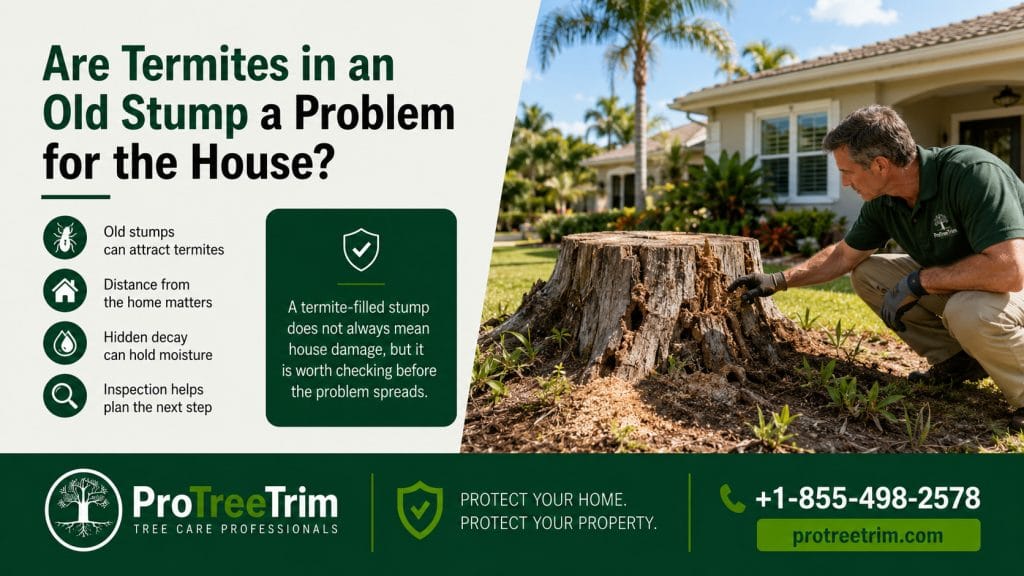
Are Termites in an Old Stump a Problem for the House?
Termites in an old stump are not proof that your house is infested, but they are not something to ignore. A rotting stump is wood in contact with soil, often holding moisture and decay. That makes it a place homeowners should inspect, especially if the stump is close to the home, deck, fence, garage, or crawl space.
Continue reading Are Termites in an Old Stump a Problem for the House?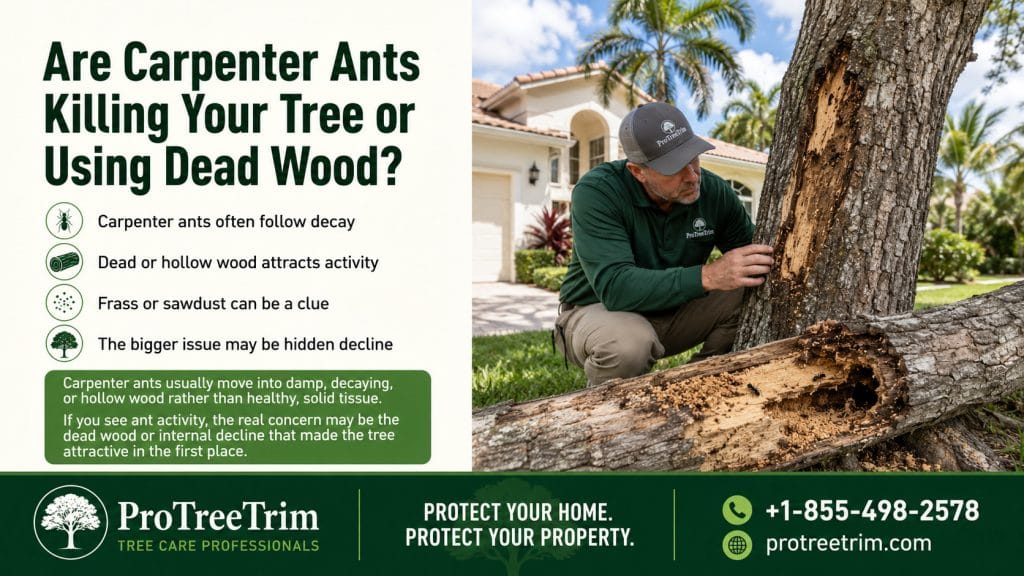
Are Carpenter Ants Killing Your Tree or Using Dead Wood?
Carpenter ants in a tree usually mean there is already softened, decayed, or damaged wood available. They do not eat wood the way termites do. They excavate galleries for nesting. The bigger homeowner question is not only “How do I kill the ants?” It is “Why was this tree suitable for ants in the first place?”
Continue reading Are Carpenter Ants Killing Your Tree or Using Dead Wood?