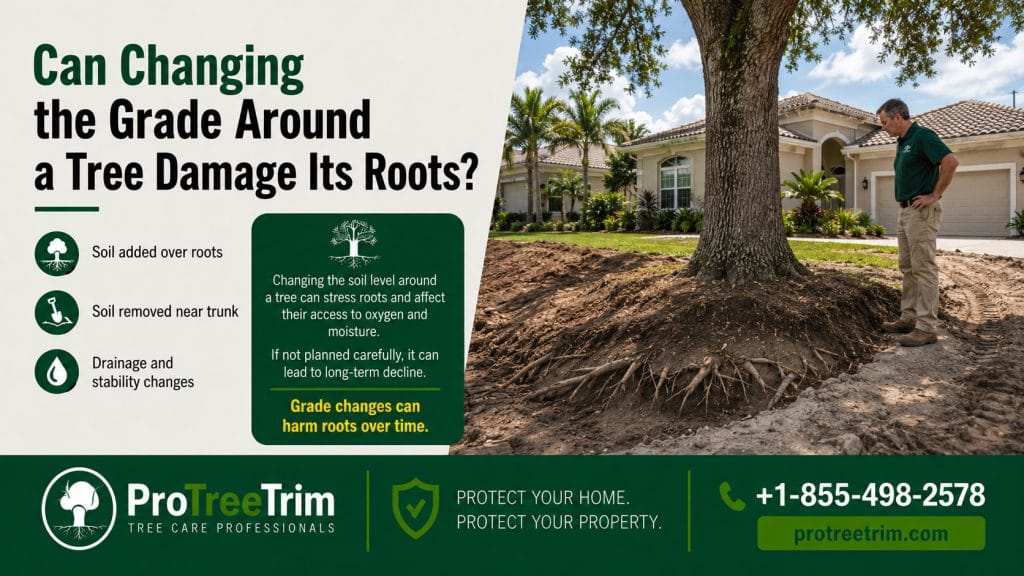
A few inches of soil can change more than the look of a yard. Raising or lowering the grade around a tree can affect roots, drainage, oxygen, trunk health, and long-term stability. The tree may not react right away, but stress can show later as smaller leaves, a thinning canopy, dead branch tips, or root problems.
Continue reading Can Changing the Grade Around a Tree Damage Its Roots?Guides
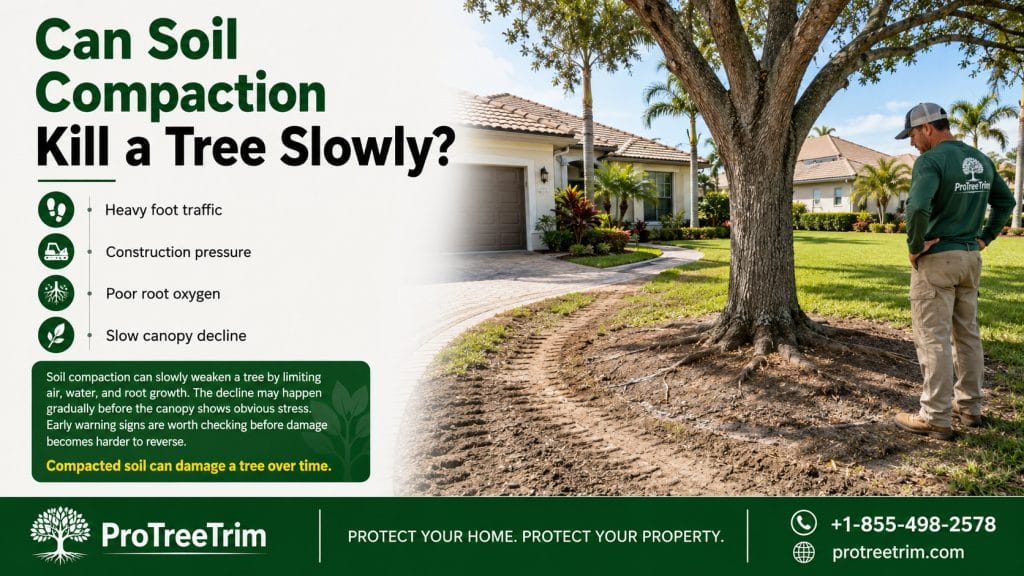
Can Soil Compaction Kill a Tree Slowly?
Yes, soil compaction can weaken a tree slowly. The tree may not fall over or turn brown right away. Instead, roots struggle for air, water movement changes, and the canopy may thin over time. Homeowners often notice the damage months later as smaller leaves, dead branch tips, early leaf drop, or one-sided decline.
Continue reading Can Soil Compaction Kill a Tree Slowly?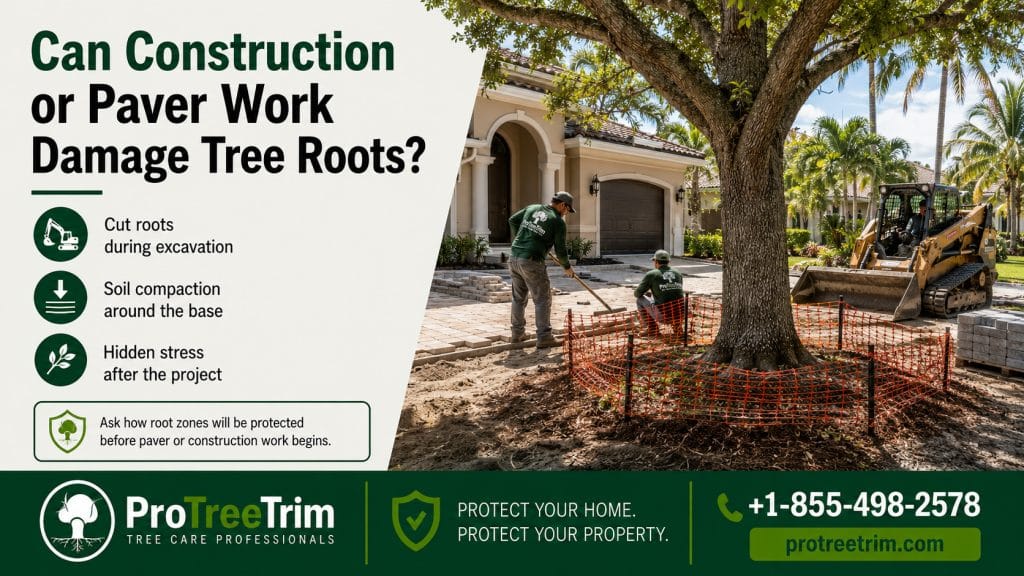
Can Construction or Paver Work Damage Tree Roots?
Yes, construction or paver work can damage tree roots, even when the trunk is never touched. The risk often comes from trenching, digging, soil compaction, grade changes, root cutting, or equipment traffic over the root zone. A tree may look fine right after the project and show stress weeks, months, or even seasons later.
Continue reading Can Construction or Paver Work Damage Tree Roots?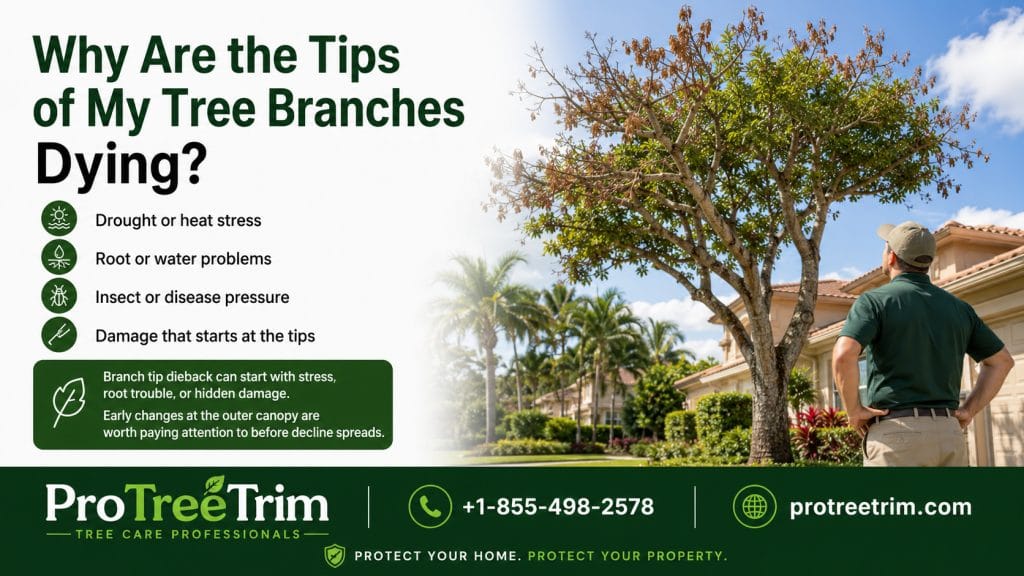
Why Are the Tips of My Tree Branches Dying?
Dying branch tips usually mean the tree is under stress somewhere. The cause may be dry soil, waterlogged roots, root damage, insects, cankers, storm injury, or old pruning wounds. A few small dead tips may be minor. Spreading tip dieback, dead limbs over property, or symptoms after construction or storms deserve a closer look.
Continue reading Why Are the Tips of My Tree Branches Dying?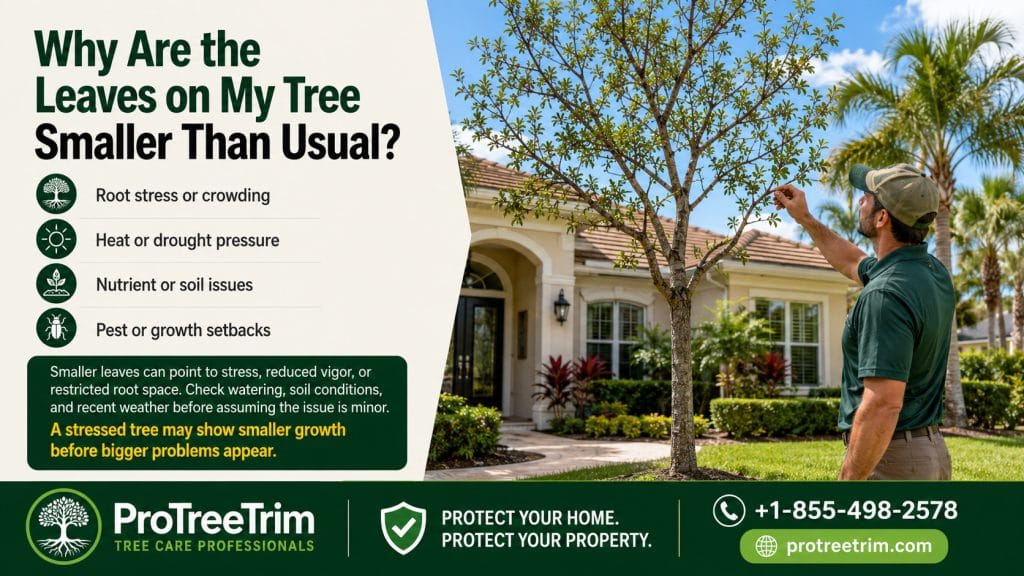
Why Are the Leaves on My Tree Smaller Than Usual?
Smaller-than-usual leaves are easy to overlook because the tree may still look “green enough” from the street. But reduced leaf size can be a clue that the tree is conserving energy, dealing with root stress, recovering from damage, or struggling with water, soil, pest, or nutrient issues. The pattern matters more than one branch.
Continue reading Why Are the Leaves on My Tree Smaller Than Usual?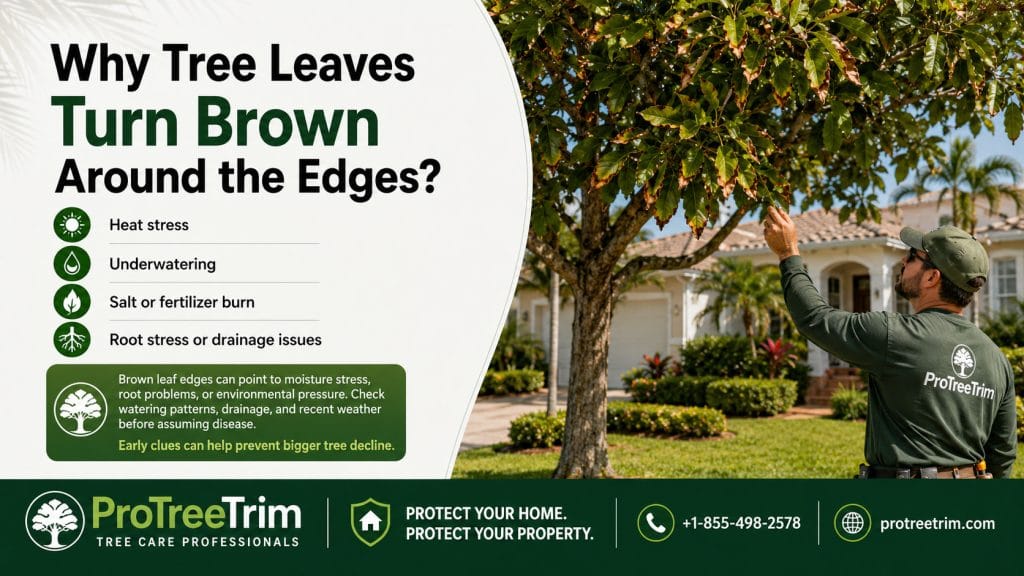
Why Tree Leaves Turn Brown Around the Edges?
Brown edges on tree leaves usually mean the leaf is under stress, but the cause is not always disease. Heat, dry soil, waterlogged roots, fertilizer burn, reflected sun, root damage, and some pathogens can all create a scorched look. Before treating the tree, check the water pattern, the root zone, and whether the browning is spreading.
Continue reading Why Tree Leaves Turn Brown Around the Edges?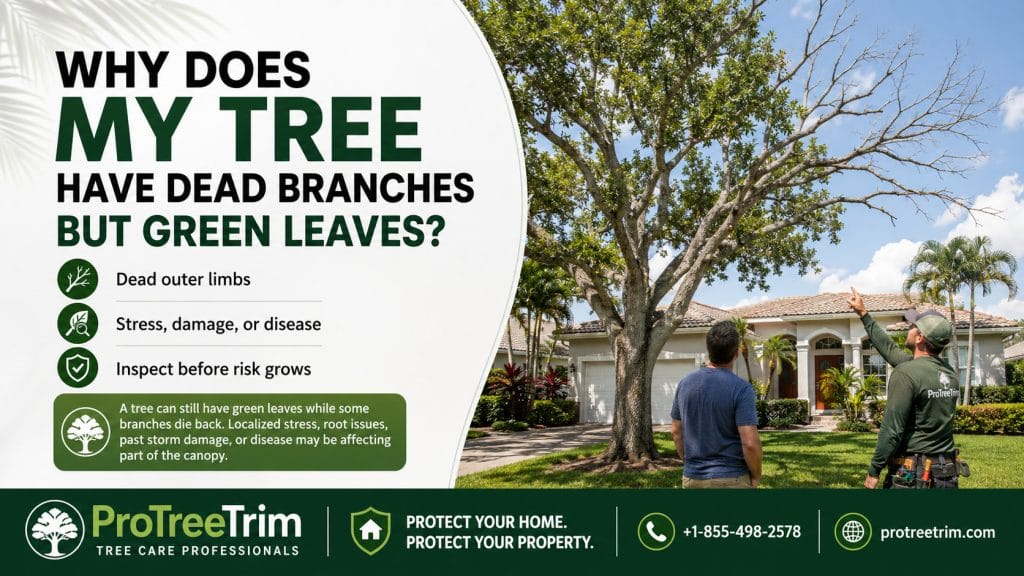
Why Does My Tree Have Dead Branches but Green Leaves?
A tree can look alive and still have dead branches. Green leaves show that parts of the tree are functioning, but they do not prove every limb is sound. Dead branches may come from old storm damage, shading, root stress, drought, pests, disease, pruning wounds, or a branch that simply lost its connection to the tree’s energy flow.
Continue reading Why Does My Tree Have Dead Branches but Green Leaves?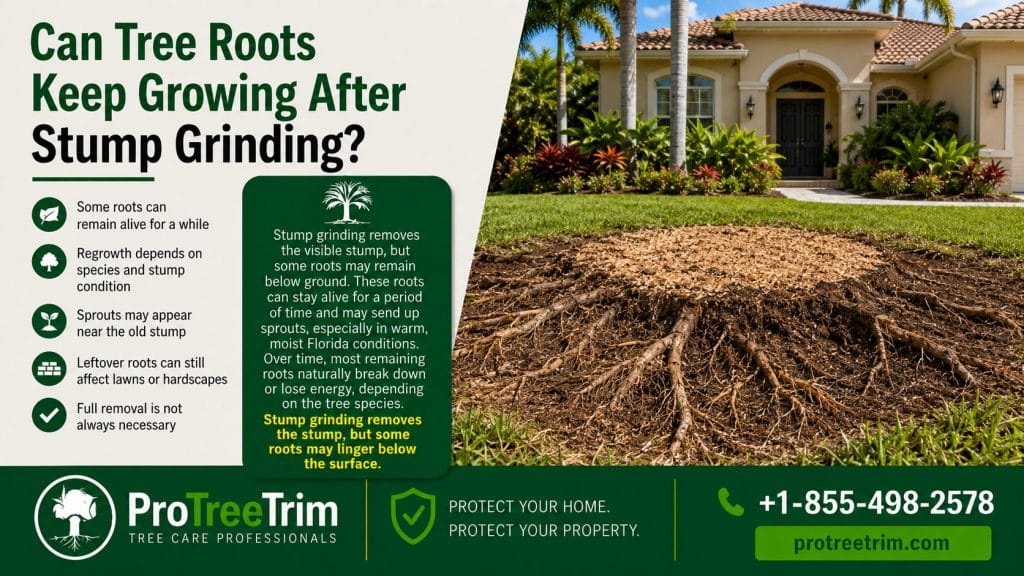
Can Tree Roots Keep Growing After Stump Grinding?
Tree roots usually do not keep growing in the same way after stump grinding, because the tree no longer has its trunk and leaf canopy feeding the root system. But roots can remain underground for a long time, slowly decay, interfere with digging, or occasionally produce sprouts depending on the tree species and how much living tissue remains.
Continue reading Can Tree Roots Keep Growing After Stump Grinding?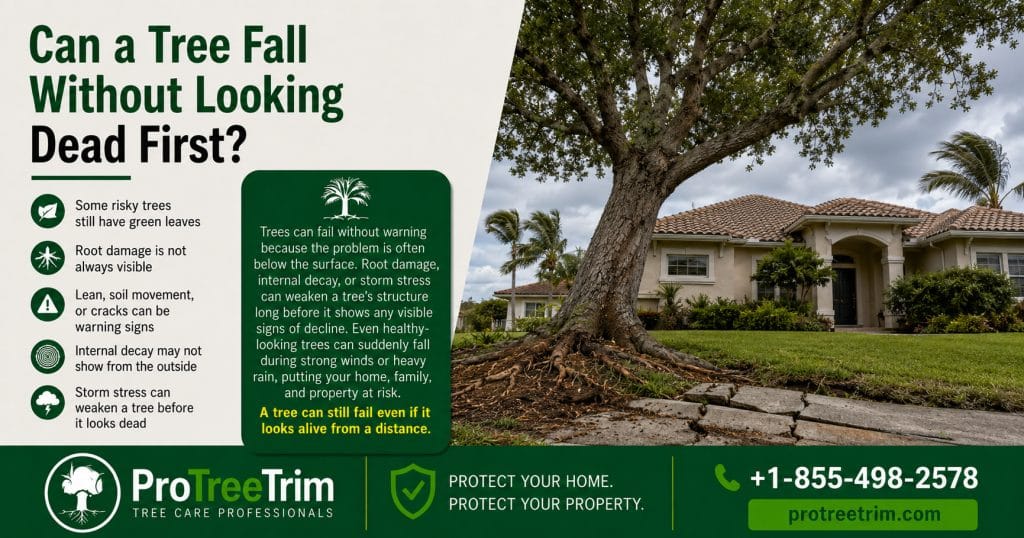
Can a Tree Fall Without Looking Dead First?
Yes, a tree can fall without looking dead first. Green leaves do not always mean the trunk, roots, or major limbs are structurally sound. In Florida, heavy rain, saturated sandy soil, hidden decay, old storm damage, and uneven canopy weight can turn a healthy-looking tree into a yard safety concern.
Continue reading Can a Tree Fall Without Looking Dead First?
Does Homeowners Insurance Cover Preventive Tree Removal in Florida?
In most cases, homeowners insurance does not pay for preventive tree removal before damage happens. Florida homeowners may have coverage after a tree falls and damages insured property, but removing a leaning, decaying, or risky tree ahead of time is usually treated as maintenance. Always check your own policy and agent before assuming either way.
Continue reading Does Homeowners Insurance Cover Preventive Tree Removal in Florida?