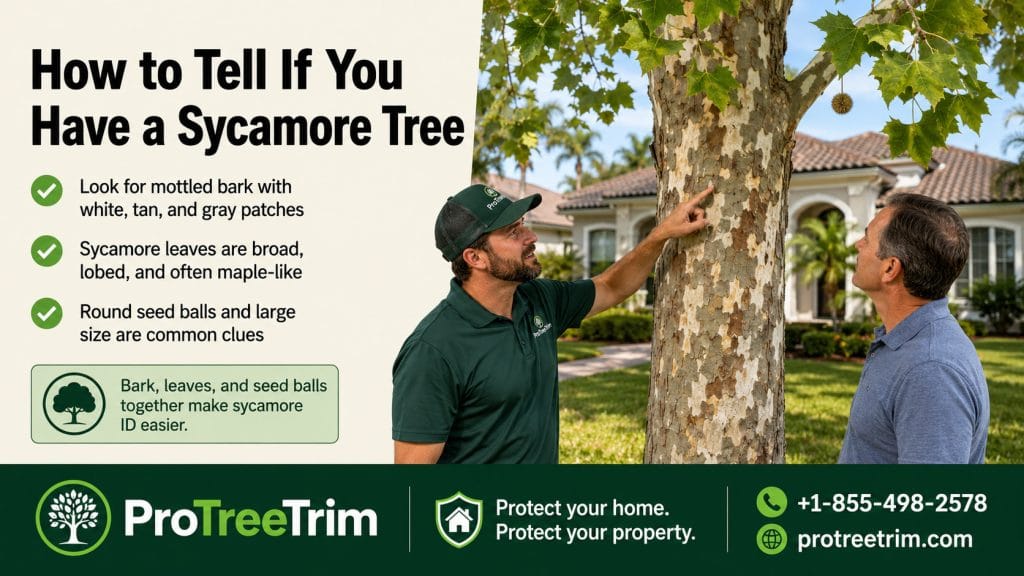
A sycamore tree is often easy to recognize once you know what to look for. Large maple-like leaves, round seed balls, broad shade, and patchy peeling bark are some of the biggest clues. Mature sycamores can become impressive yard trees, but they can also create cleanup, root, branch, and placement questions when they grow near homes, sidewalks, driveways, patios, or utility areas.
Continue reading How to Tell If You Have a Sycamore TreeCategory: Tree Health & Pest Awareness
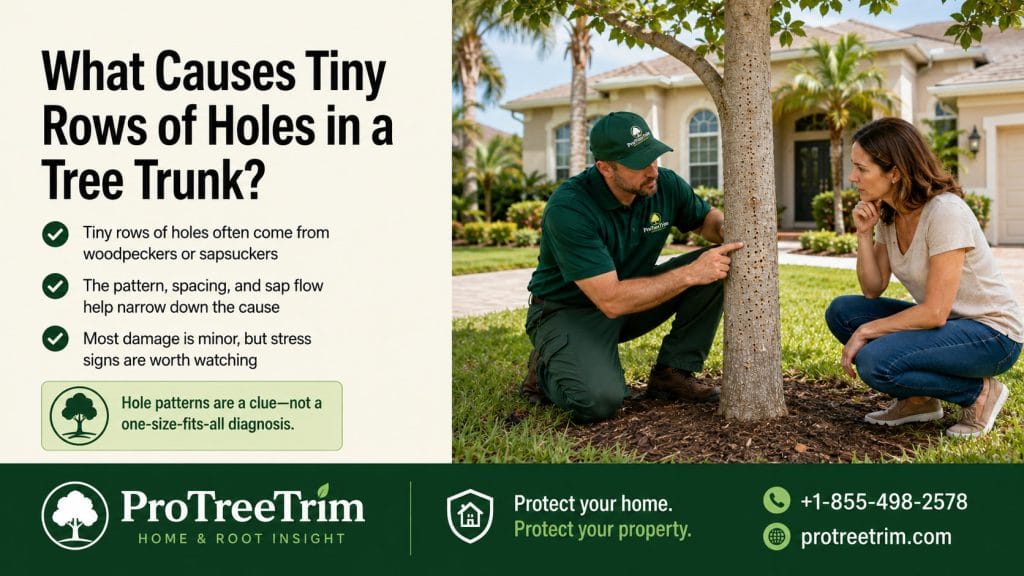
What Causes Tiny Rows of Holes in a Tree Trunk?
Tiny rows of holes in a tree trunk often worry homeowners because they look too organized to be random. In many cases, neat horizontal or vertical rows of small holes are made by sapsuckers, a type of woodpecker that drills shallow holes to feed on sap and insects. But not every hole pattern is the same. Holes can also relate to insects, decay, old wounds, or other tree stress.
Continue reading What Causes Tiny Rows of Holes in a Tree Trunk?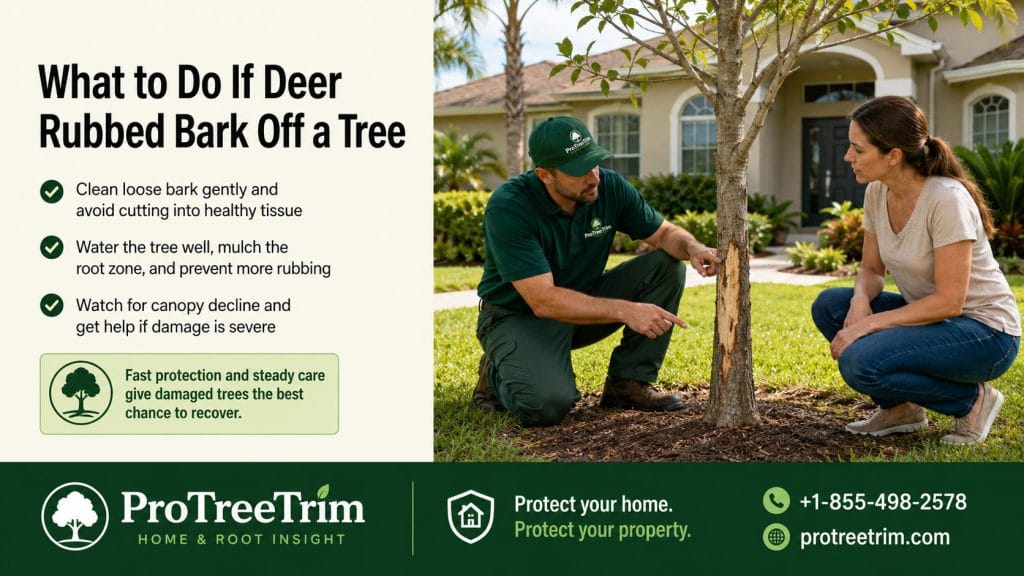
What to Do If Deer Rubbed Bark Off a Tree
When deer rub bark off a tree, the damage can look sudden and severe. The trunk may have scraped bark, shredded strips, exposed wood, or a raw-looking wound where a buck rubbed antlers against it. Some trees can recover from limited damage. Others may struggle if the bark is removed around much of the trunk, especially young trees with thin bark.
Continue reading What to Do If Deer Rubbed Bark Off a Tree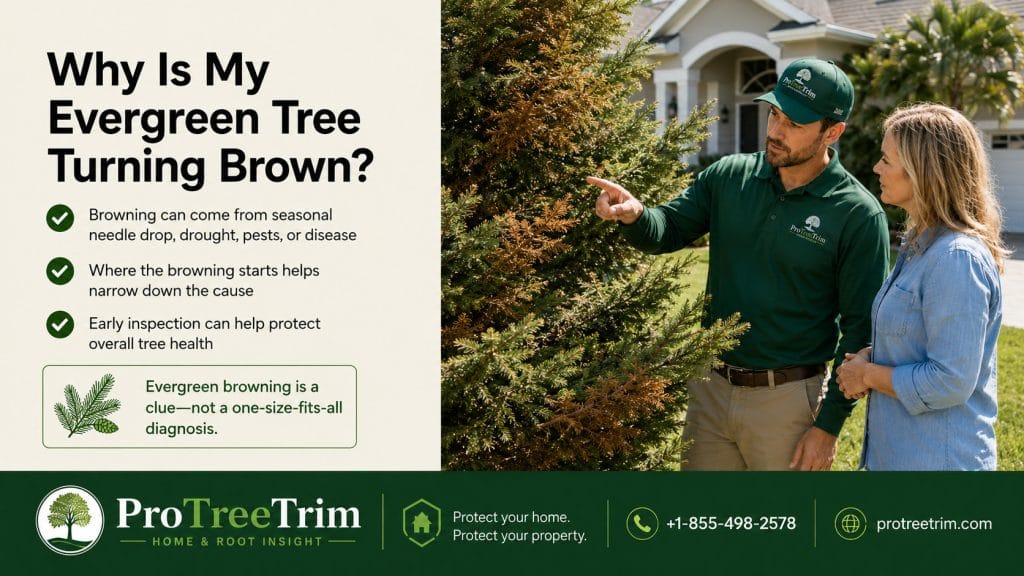
Why Is My Evergreen Tree Turning Brown?
An evergreen tree turning brown can be confusing because “evergreen” sounds like it should stay green all year. But evergreens still shed older foliage, react to stress, and show damage when roots, water, pests, weather, or planting conditions are not right.
Continue reading Why Is My Evergreen Tree Turning Brown?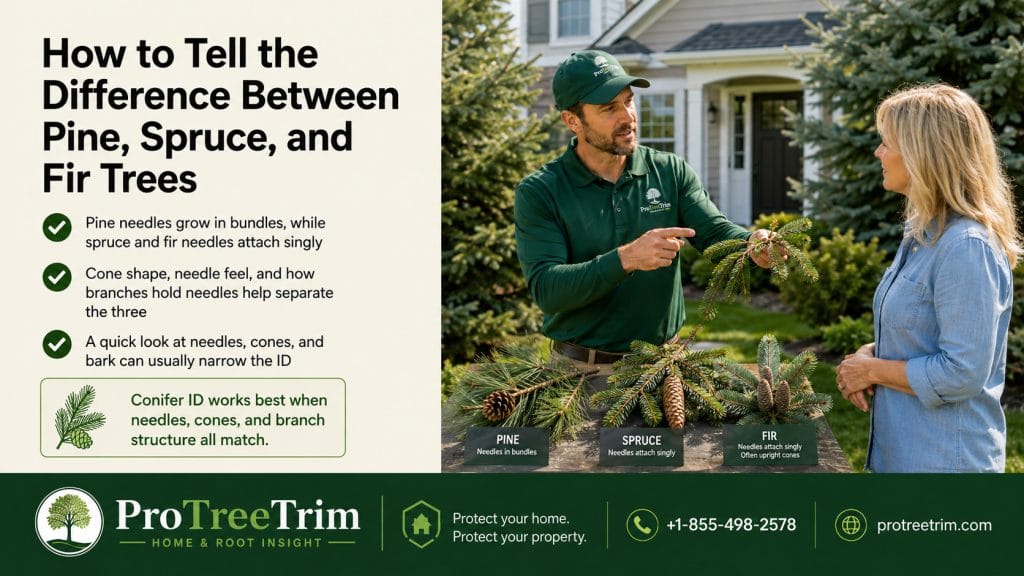
How to Tell the Difference Between Pine, Spruce, and Fir Trees
Pine, spruce, and fir trees are all evergreens, but they are not the same tree. They can look similar from a distance, especially when they are tall, mature, or planted in a group. The easiest way to tell them apart is to look at the needles, cones, branches, bark, and overall shape.
Continue reading How to Tell the Difference Between Pine, Spruce, and Fir Trees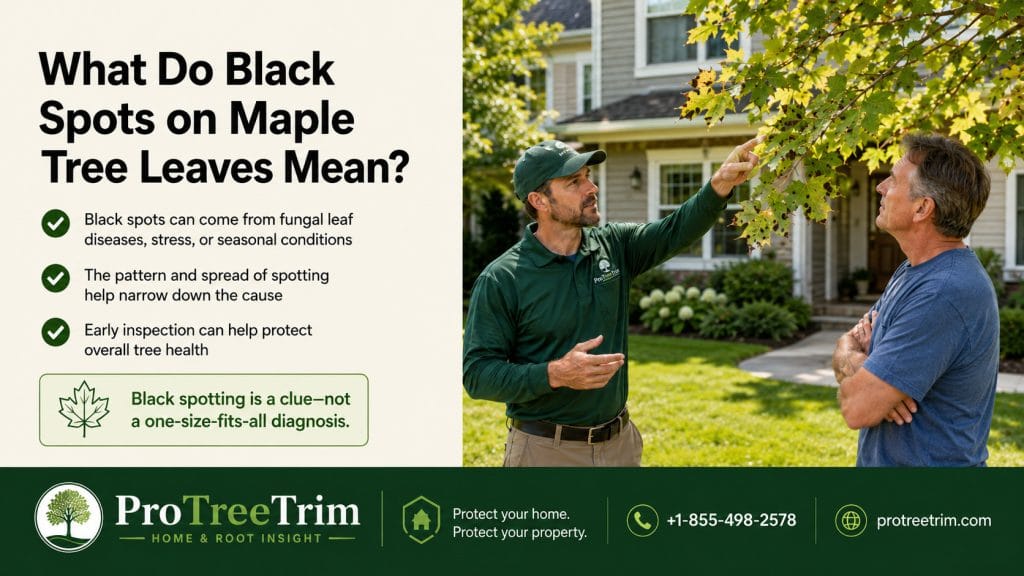
What Do Black Spots on Maple Tree Leaves Mean?
Black spots on maple leaves can look serious, especially when they spread across the canopy or make the tree look diseased. In many cases, black spots on maple leaves are more of a leaf-level or cosmetic issue than an immediate tree-risk problem. But homeowners should still look at the whole tree before deciding it is harmless.
Continue reading What Do Black Spots on Maple Tree Leaves Mean?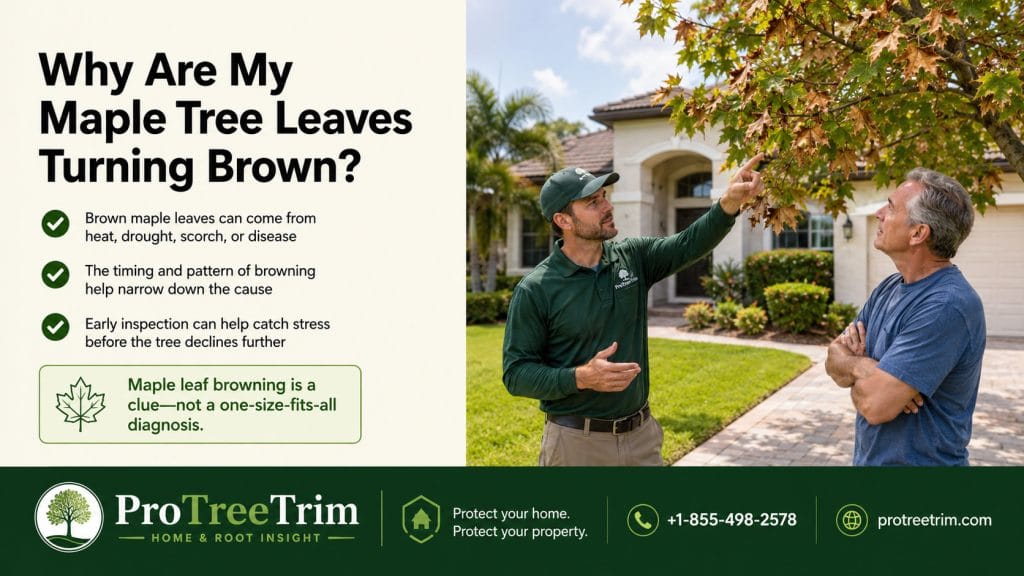
Why Are My Maple Tree Leaves Turning Brown?
Maple tree leaves can turn brown for many reasons. Sometimes the problem is heat, drought, or normal seasonal stress. Other times, browning can point to leaf scorch, poor watering, compacted soil, root damage, girdling roots, pests, fungal leaf spots, construction injury, or broader decline.
Continue reading Why Are My Maple Tree Leaves Turning Brown?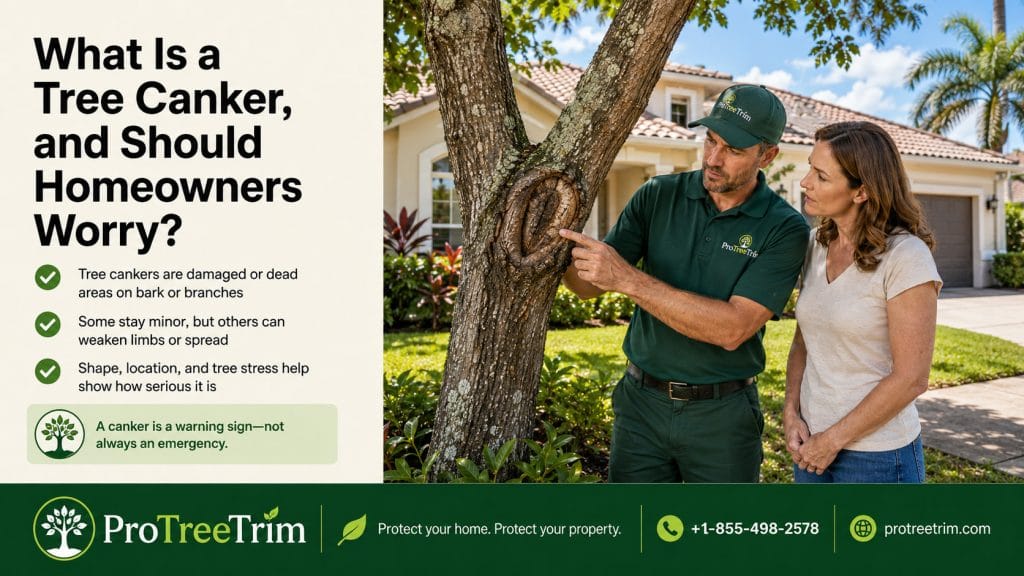
What Is a Tree Canker, and Should Homeowners Worry?
A tree canker is an area of dead, damaged, or diseased bark and underlying tissue on a trunk, branch, or stem. To homeowners, it may look like a sunken patch, cracked bark, an oozing wound, a dark stain, peeling bark, or a dead-looking section on one side of the tree.
Continue reading What Is a Tree Canker, and Should Homeowners Worry?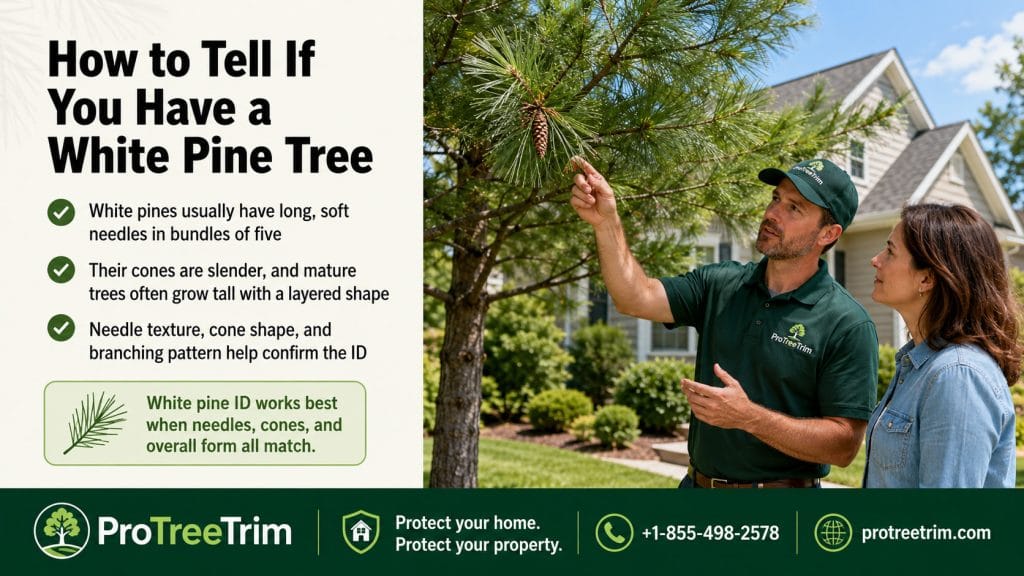
How to Tell If You Have a White Pine Tree
White pine trees are known for their soft-looking needles, graceful branching, and tall evergreen form. They can be beautiful shade and screening trees, but homeowners often do not know they have one until needles start browning, branches drop, cones appear, or the tree begins crowding a roof, driveway, fence, or utility area.
Continue reading How to Tell If You Have a White Pine Tree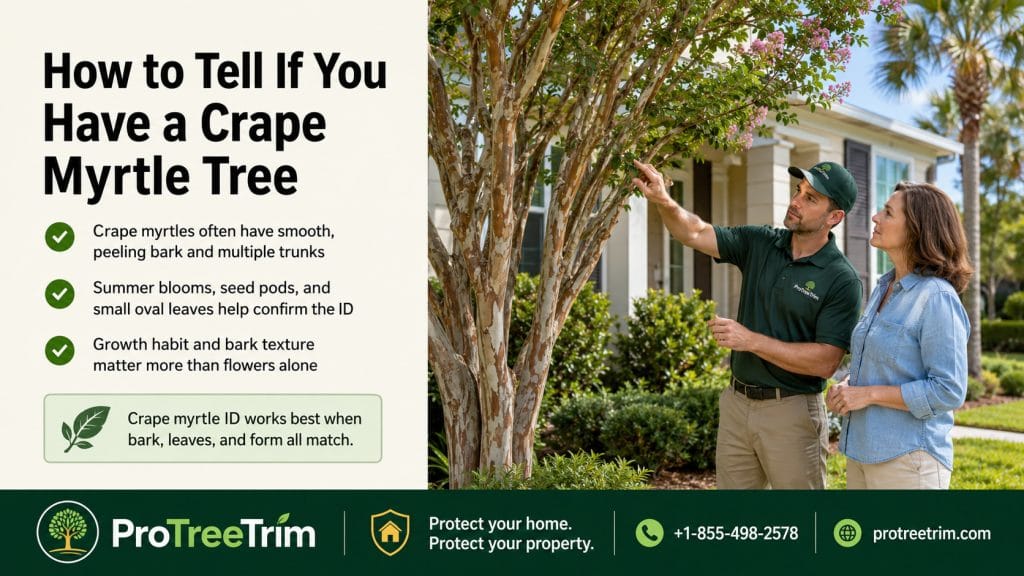
How to Tell If You Have a Crape Myrtle Tree
Crape myrtle, also spelled crepe myrtle, is one of the most recognizable flowering trees in many warm-climate yards. It is known for bright summer flowers, smooth peeling bark, small oval leaves, seed capsules, and often a multi-stem shape. But homeowners do not always know what they have until the tree needs pruning, starts dropping bark, develops black residue, or gets cut back too hard.
Continue reading How to Tell If You Have a Crape Myrtle Tree