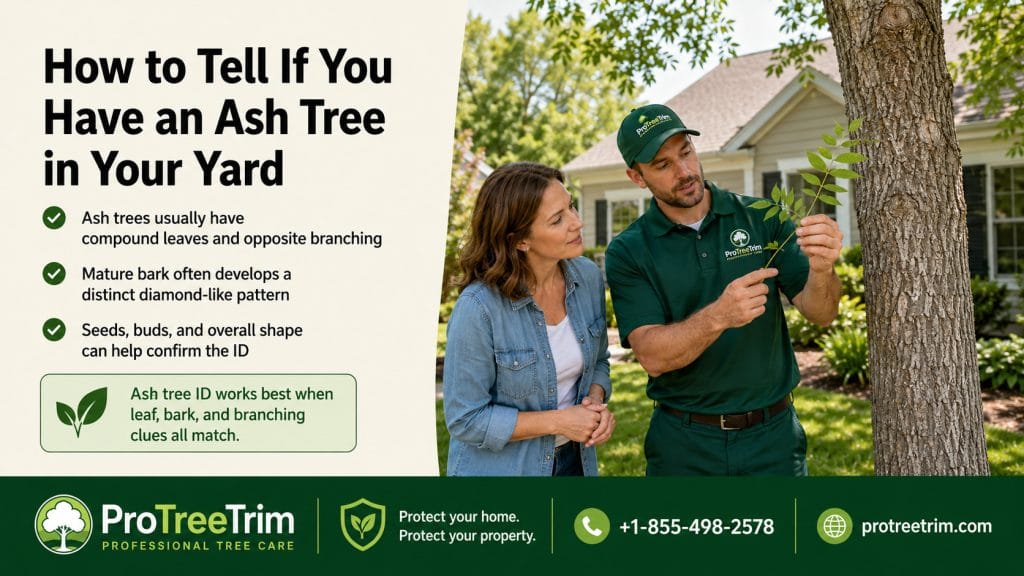
Ash trees can be valuable shade trees, but homeowners often do not know they have one until a branch drops, leaves thin out, or an insect problem raises questions. Identifying an ash tree starts with a few simple clues: opposite branching, compound leaves, bark pattern, seed clusters, overall shape, and where the tree is growing.
Continue reading How to Tell If You Have an Ash Tree in Your YardCategory: Tree Health & Pest Awareness
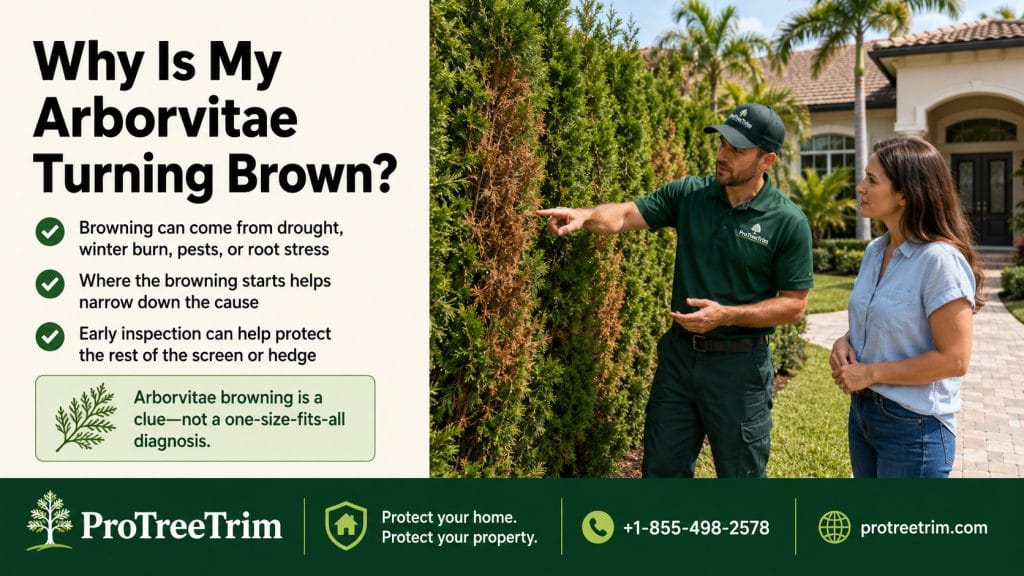
Why Is My Arborvitae Turning Brown?
Arborvitae turning brown can worry homeowners because these evergreens are often planted for privacy, screening, and curb appeal. When one tree in a row starts browning, the whole landscape can look damaged. Sometimes the browning is normal interior shedding. Other times it may point to drought stress, overwatering, poor drainage, pests, winter injury, root damage, crowding, or a planting problem.
Continue reading Why Is My Arborvitae Turning Brown?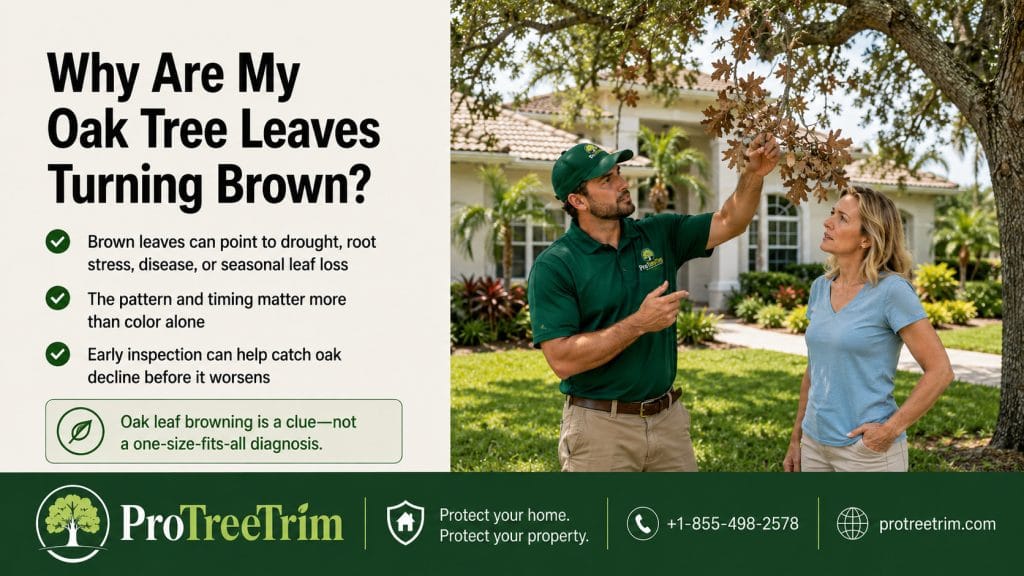
Why Are My Oak Tree Leaves Turning Brown?
Oak leaves can turn brown for several reasons. Sometimes the cause is an ordinary seasonal change or older leaves aging out. Other times, brown leaves can point to drought stress, too much water, poor drainage, root damage, leaf scorch, fungal leaf spots, pests, construction injury, or broader tree decline.
Continue reading Why Are My Oak Tree Leaves Turning Brown?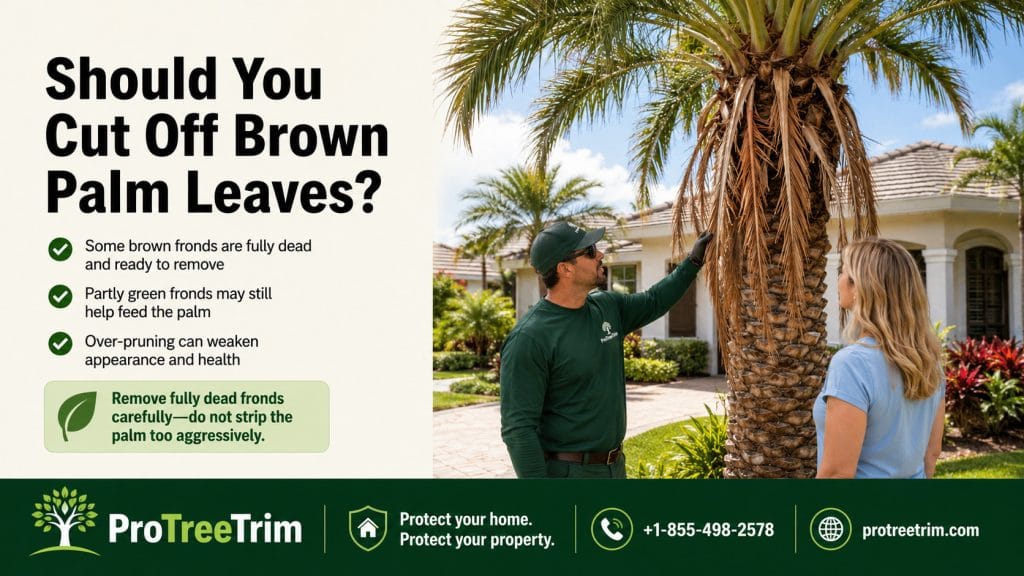
Should You Cut Off Brown Palm Leaves?
You can cut off fully brown, dead palm leaves when they are hanging, unattractive, or creating a cleanup or safety issue. But you should be careful about cutting palm leaves that are only partly brown, yellowing, or still green. Brown palm leaves can be normal aging, but they can also point to water stress, poor drainage, nutrient problems, pests, over-pruning, weather damage, or a deeper palm-health issue.
Continue reading Should You Cut Off Brown Palm Leaves?
What Is the Best Fertilizer for Palm Trees?
The best fertilizer for a palm tree is usually one made specifically for palms, applied at the right time, in the right amount, and only after basic site problems are checked. Yellow fronds, weak growth, brown tips, or a thin crown may involve nutrients, but they can also come from overwatering, poor drainage, root damage, pests, cold stress, or over-pruning. Fertilizer helps only when the real issue is something fertilizer can actually fix.
Continue reading What Is the Best Fertilizer for Palm Trees?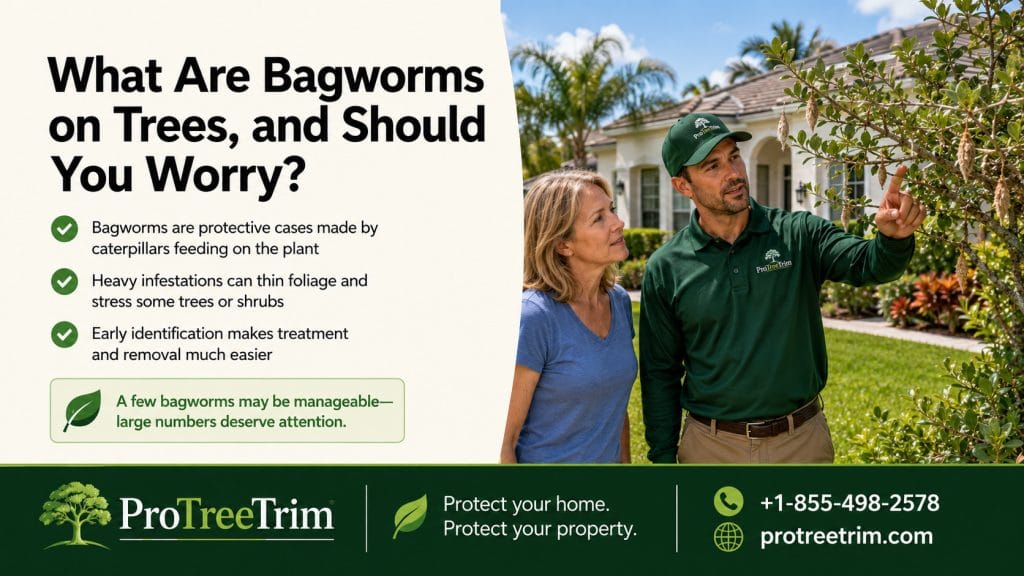
What Are Bagworms on Trees, and Should You Worry?
Bagworms are small caterpillars that live inside protective bags made from silk, leaves, needles, bark pieces, and plant debris. They often look like tiny hanging cones or rough brown ornaments attached to branches. A few may go unnoticed. A heavy infestation can strip foliage, stress trees, and make evergreens look thin, brown, or patchy.
Continue reading What Are Bagworms on Trees, and Should You Worry?
What Are the Webs in My Tree?
Webs in a tree can look alarming, especially when they appear suddenly across branches, leaves, or the outer canopy. Sometimes they are harmless spider webs. Other times, they may be from webworms, caterpillars, mites, or insects feeding on foliage. The right response depends on where the webs are, how much leaf damage you see, and whether the tree is otherwise healthy.
Continue reading What Are the Webs in My Tree?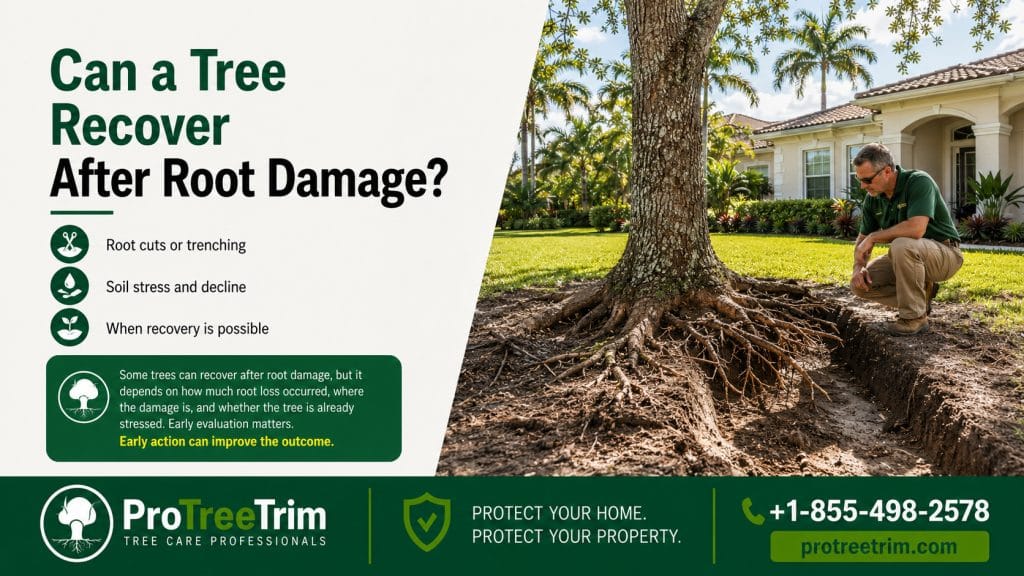
Can a Tree Recover After Root Damage?
A tree can sometimes recover after root damage, but the answer depends on how much root was lost, where the damage happened, how old the tree is, and whether the roots were cut, compacted, buried, or waterlogged. The tree may look normal at first, then show stress months later.
Continue reading Can a Tree Recover After Root Damage?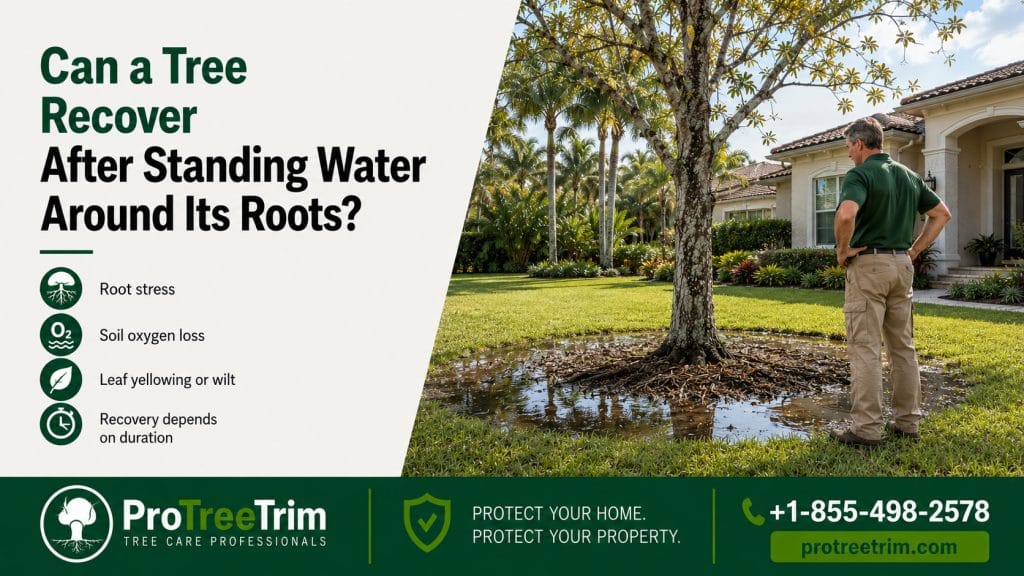
Can a Tree Recover After Standing Water Around Its Roots?
A tree can sometimes recover after standing water around its roots, but recovery depends on how long the soil stayed saturated, the tree species, root condition, drainage, and whether the tree was already stressed. The first step is not pruning or fertilizing. It is checking whether the root zone can breathe again.
Continue reading Can a Tree Recover After Standing Water Around Its Roots?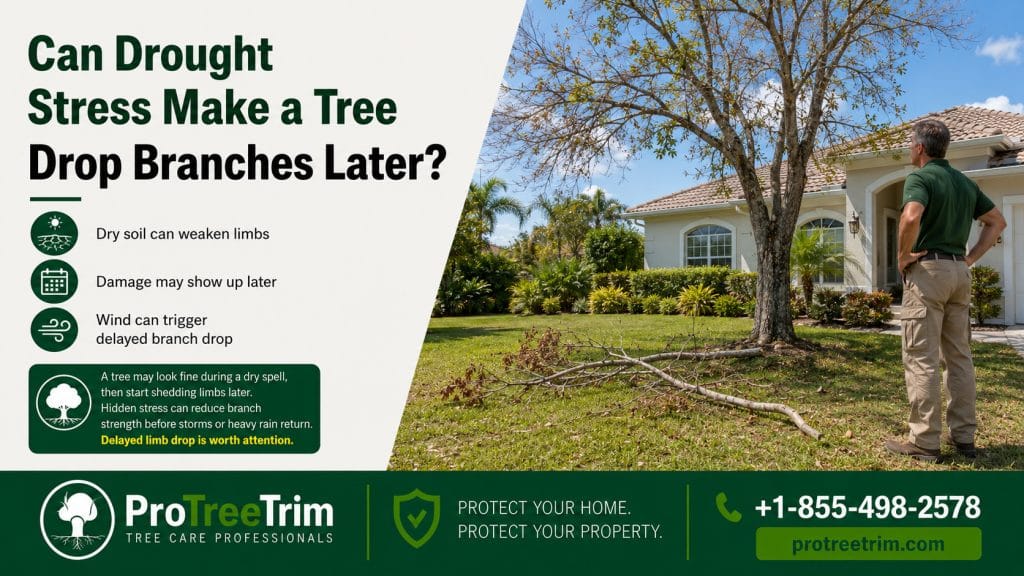
Can Drought Stress Make a Tree Drop Branches Later?
Drought stress can make a tree more likely to develop dead tips, weak limbs, thinning canopy, and root problems later. The tree may not drop branches during the dry spell itself. The warning signs often appear after the weather changes, when heat, rain, wind, or old damage exposes what the tree has been carrying quietly.
Continue reading Can Drought Stress Make a Tree Drop Branches Later?