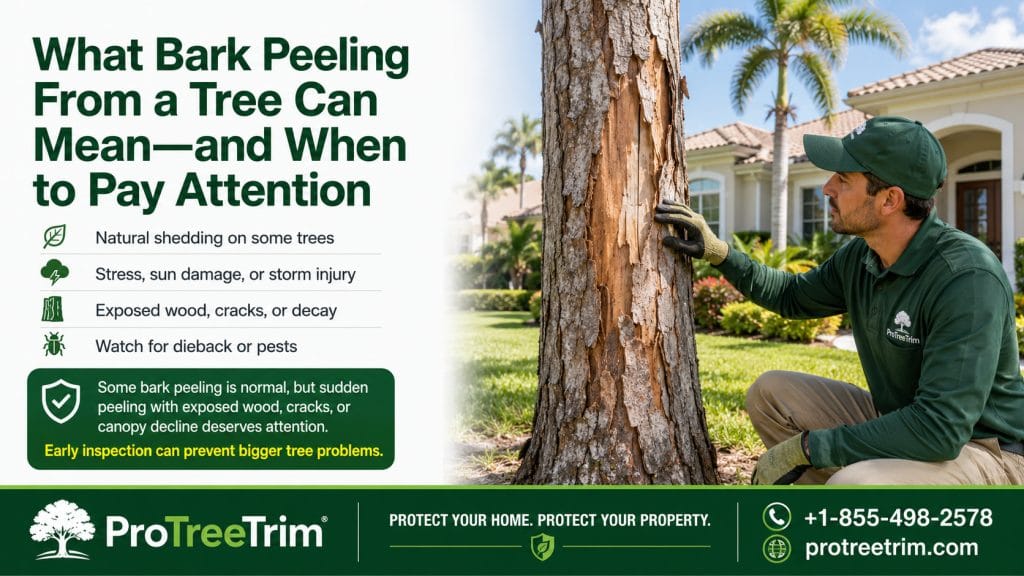
Bark peeling from a tree is not always a sign of trouble. Some trees naturally shed outer bark as they grow. The concern starts when peeling is fresh, deep, spreading, wet-looking, accompanied by cracks, or occurring near dead branches, trunk wounds, insects, mushrooms, or a sudden change in the canopy.
First, Ask Whether This Tree Normally Sheds Bark
Some trees have bark that flakes, plates, curls, or sheds as part of normal growth. If the tree has looked that way for years and the canopy is full, the bark may simply be part of the species’ character.
The situation changes when the bark loss is new or uneven. A fresh strip of missing bark after a storm, a mower scrape at the base, or a large patch exposing inner wood deserves more attention. Bark is part of the tree’s protective system. Once the underlying wood is exposed, the area can become more vulnerable to moisture, insects, decay organisms, or further injury.
UF/IFAS research on sunscald notes that stressed root systems can also stress trunk tissues, making them more susceptible to trunk injuries such as sunscald. That matters for homeowners because bark problems are not always “just bark.” The trigger may be water stress, root damage, planting depth, construction, or sudden exposure after heavy pruning.
| What you notice | Less concerning | Worth a closer look |
|---|---|---|
| Thin outer flakes on a tree that always sheds bark | Yes | Usually monitor |
| Fresh exposed wood after storm or impact | No | Yes |
| Bark peeling near a mower or trimmer wound | No | Yes |
| Peeling with dead branches above | No | Yes |
| Bark lifting with insects or sawdust-like material | No | Yes |
| Peeling near mushrooms, soft wood, or trunk cracks | No | Yes |
| Large vertical crack through bark and wood | No | Yes |
Look Around the Bark Problem, Not Only at It
A patch of peeling bark means more when it appears with other changes. Step back and check the whole tree. Is one side thinning? Are leaves smaller than usual? Are dead branches appearing at the top? Is the tree leaning more than before? Are roots exposed or soil lifting near the base?
ISA’s TreesAreGood guidance notes that stressed trees can become more prone to some pest and disease problems, and that severe damage and decline may lead to defects and decay. So a bark wound should be read together with the tree’s overall condition, not as a single isolated clue.
For Florida homeowners, location matters too. Peeling bark on a tree in an open back corner may be a monitoring issue. Peeling bark on a large oak with limbs over a roof, driveway, pool cage, fence, or walkway deserves a more cautious response. A trunk defect becomes more important when people or structures sit below the tree.
Cracks also deserve careful attention. Extension guidance on tree risk explains that cracks are more than surface bark splits when they extend through the bark into the wood, because they can reflect stress in the tree or branch structure.
What Homeowners Should Avoid
Do not peel loose bark back to “clean it up.” If bark is still attached, removing it can enlarge the wound. Do not paint, seal, or fill the area unless a qualified professional has recommended a specific reason. Old advice about sealing tree wounds has largely fallen out of favor because covering the wound does not necessarily fix the underlying problem.
Also avoid blaming insects too quickly. Insects may be the cause, a secondary issue, or simply using already damaged bark. Take clear photos instead: the full tree, the peeling area, any cracks, insects, mushrooms, root flare, nearby pavers, irrigation, driveway, or mulch bed.
If the bark loss followed storm damage, lightning, pruning, mower injury, or construction near roots, write that down. A simple timeline helps separate fresh injury from long-term decline.
If you are unsure whether peeling bark, trunk damage, dead branches, or root stress needs professional attention, ProTreeTrim can help connect homeowners with local tree service support. Call +1-855-498-2578 or visit protreetrim.com.
FAQs
Is peeling bark always a sign that a tree is dying?
No. Some trees naturally shed bark. New, deep, spreading, or wound-related bark loss deserves more attention.
Should I pull loose bark off the tree?
No. Avoid peeling bark away. If it is still attached, removing it can enlarge the wound and expose more tissue.
What makes peeling bark more concerning?
Peeling with trunk cracks, soft wood, mushrooms, insects, dead limbs, canopy thinning, or a new lean should be checked carefully.
Can bark damage make a tree unsafe?
Bark loss alone does not prove a tree is unsafe. But bark damage combined with decay, cracks, root movement, or heavy limbs over structures can raise risk.
ProTreeTrim™ can help you take the next step.
If you are dealing with a damaged tree, fallen branch, stump, root issue, palm concern, or storm cleanup question in Florida, call ProTreeTrim for tree service support.