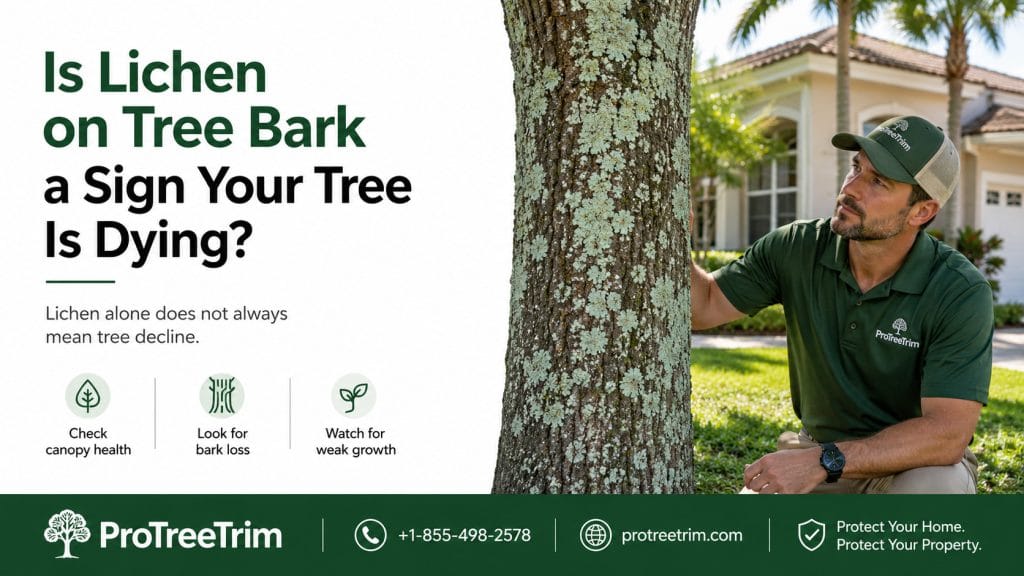
Lichen on tree bark does not usually mean the tree is dying. Those gray, green, white, or crusty patches are often harmless organisms growing on the bark surface. The part homeowners should pay attention to is not the lichen itself, but whether the tree also has thinning leaves, dead limbs, slow growth, bark wounds, or root problems.
Continue reading Is Lichen on Tree Bark a Sign Your Tree Is Dying?Category: Tree Health & Pest Awareness
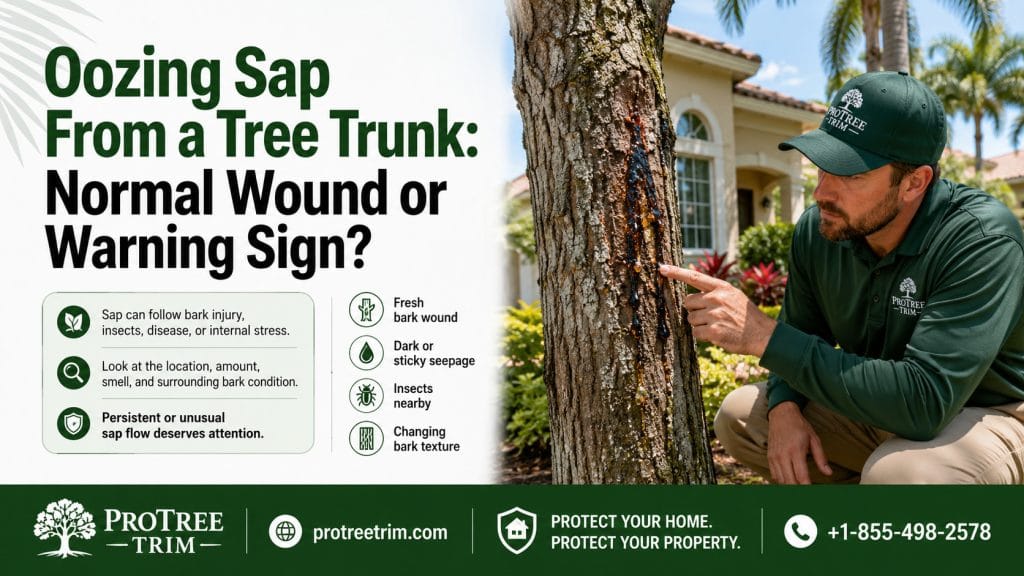
Oozing Sap From a Tree Trunk: Normal Wound or Warning Sign?
Oozing sap or liquid on a tree trunk is not always an emergency, but it deserves a careful look. The cause may be a pruning wound, mower injury, insect activity, bacterial wetwood, storm damage, or decay. The key is to notice where the liquid starts, whether it smells, and what else is happening to the tree.
Continue reading Oozing Sap From a Tree Trunk: Normal Wound or Warning Sign?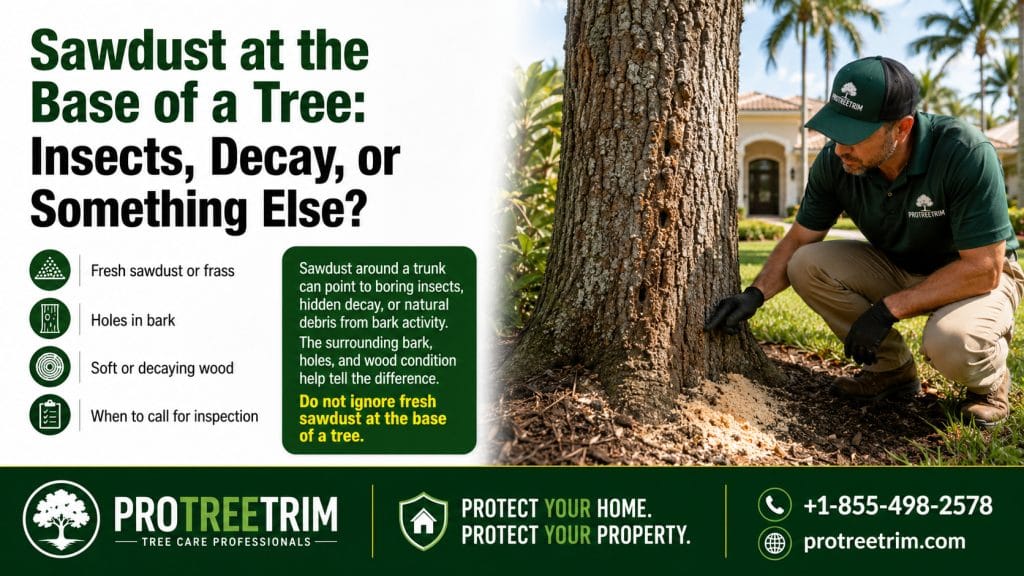
Sawdust at the Base of a Tree: Insects, Decay, or Something Else?
A pile of sawdust at the base of a tree is worth checking, but it does not point to one single answer. It may come from carpenter ants excavating decayed wood, wood-boring insects, old wounds, storm damage, or dead interior wood. The real concern is whether the tree also has decay, holes, dieback, cracks, or large limbs over something important.
Continue reading Sawdust at the Base of a Tree: Insects, Decay, or Something Else?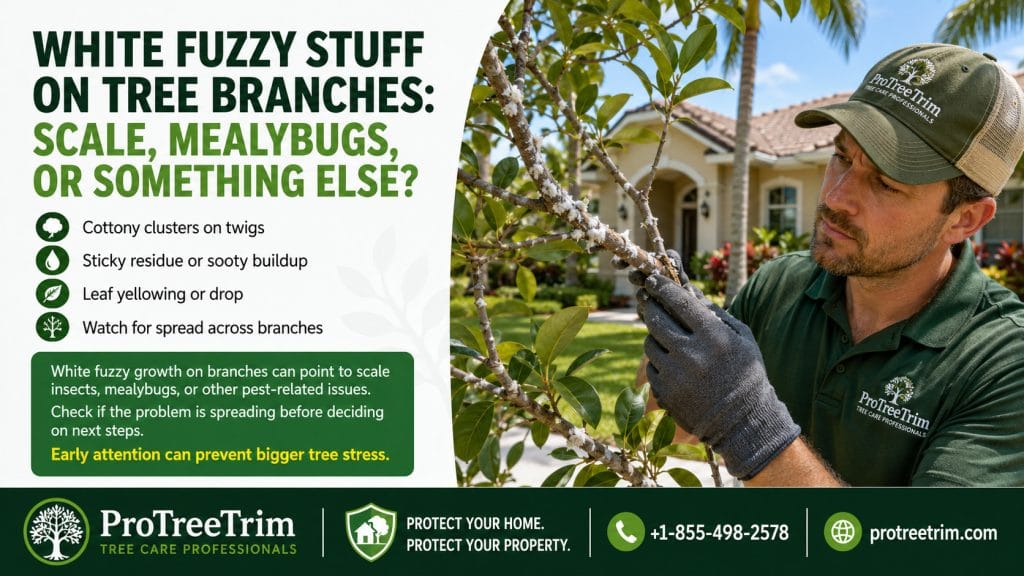
White Fuzzy Stuff on Tree Branches: Scale, Mealybugs, or Something Else?
White fuzzy material on tree branches is worth a closer look, but it is not a reason to panic. It may be mealybugs, cottony scale, waxy insect covering, egg sacs, old debris, or fungal-looking growth on stressed wood. The real question is whether the tree also shows sticky residue, ants, leaf yellowing, branch dieback, or spreading decline.
Continue reading White Fuzzy Stuff on Tree Branches: Scale, Mealybugs, or Something Else?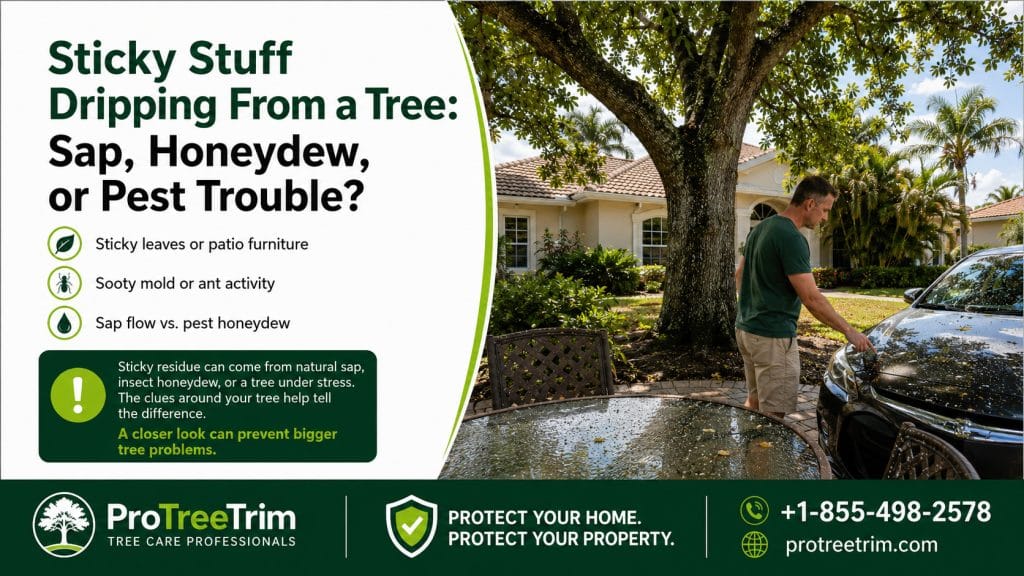
Sticky Stuff Dripping From a Tree: Sap, Honeydew, or Pest Trouble?
Sticky residue under a tree is easy to mistake for sap. Sometimes it is sap from a wound, but often the “dripping” is honeydew from sap-feeding insects such as aphids, whiteflies, or scale. Before treating the tree, check where the sticky material appears, whether leaves are shiny or blackened, and whether ants are active.
Continue reading Sticky Stuff Dripping From a Tree: Sap, Honeydew, or Pest Trouble?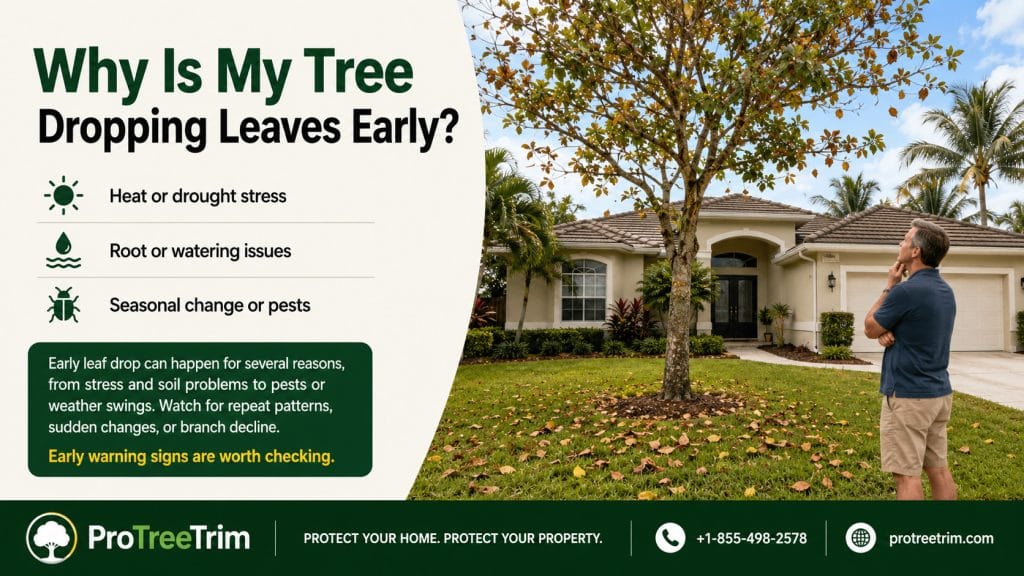
Why Is My Tree Dropping Leaves Early?
Early leaf drop can be a stress response, not an automatic sign that a tree is dying. A tree may shed leaves early because of drought, too much water, compacted soil, root damage, heat, pests, disease, or normal seasonal change. The useful question is not just “Why are leaves falling?” It is “What else changed around the tree?”
Continue reading Why Is My Tree Dropping Leaves Early?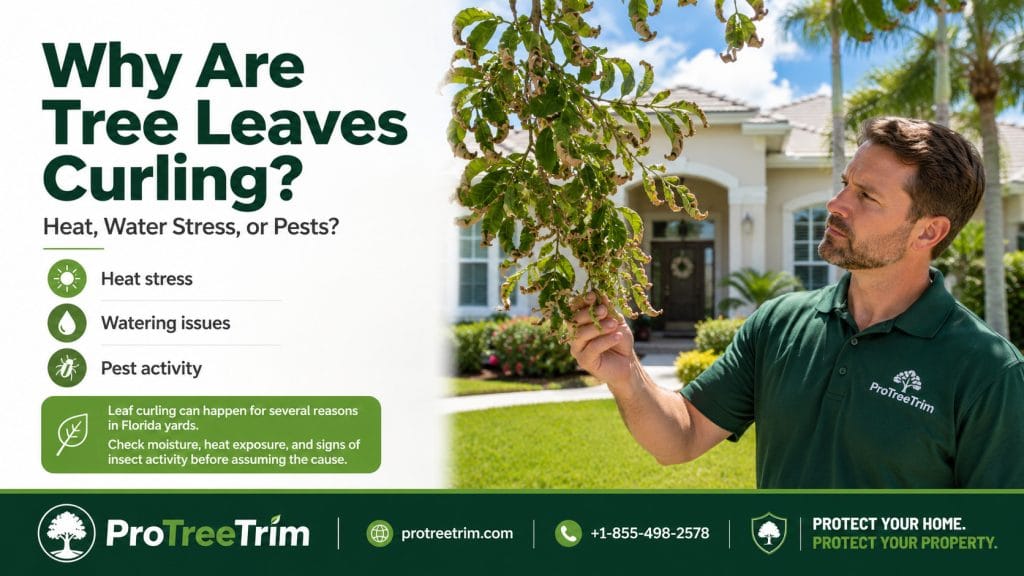
Why Are Tree Leaves Curling? Heat, Water Stress, or Pests?
Curling leaves are a stress signal, not a diagnosis. A tree may curl leaves because of dry soil, too much water, heat, insects, herbicide drift, disease, or root trouble. Before spraying or pruning, homeowners should look at the pattern: which leaves are curling, when it started, and what changed around the tree.
Continue reading Why Are Tree Leaves Curling? Heat, Water Stress, or Pests?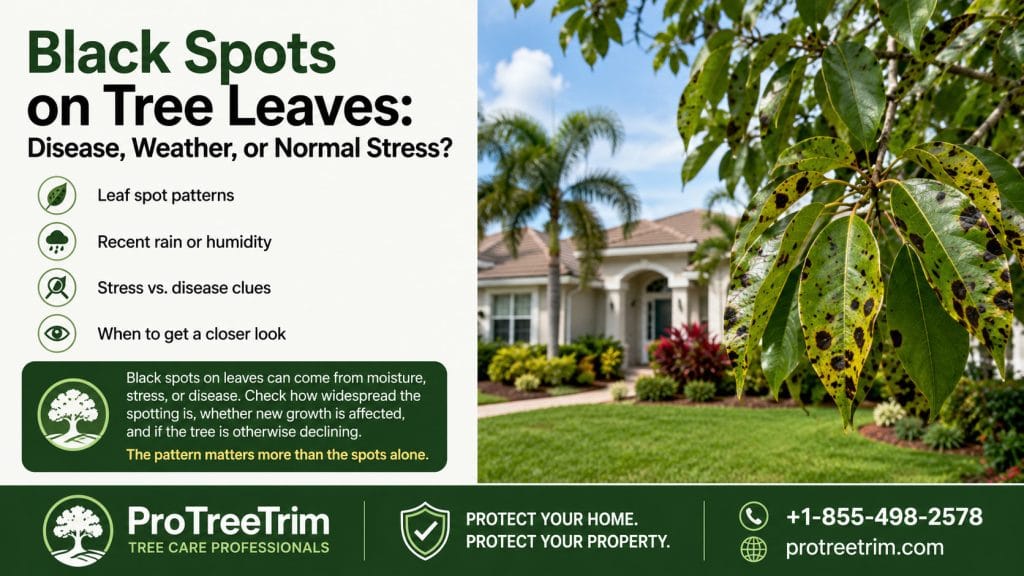
Black Spots on Tree Leaves: Disease, Weather, or Normal Stress?
Black spots on tree leaves can look alarming, but they do not always mean the tree is in serious decline. Wet weather, fungal leaf spots, insects, old stress, irrigation patterns, and normal seasonal leaf aging can all leave marks. The better first step is to check the pattern, not reach for spray or pruning tools.
Continue reading Black Spots on Tree Leaves: Disease, Weather, or Normal Stress?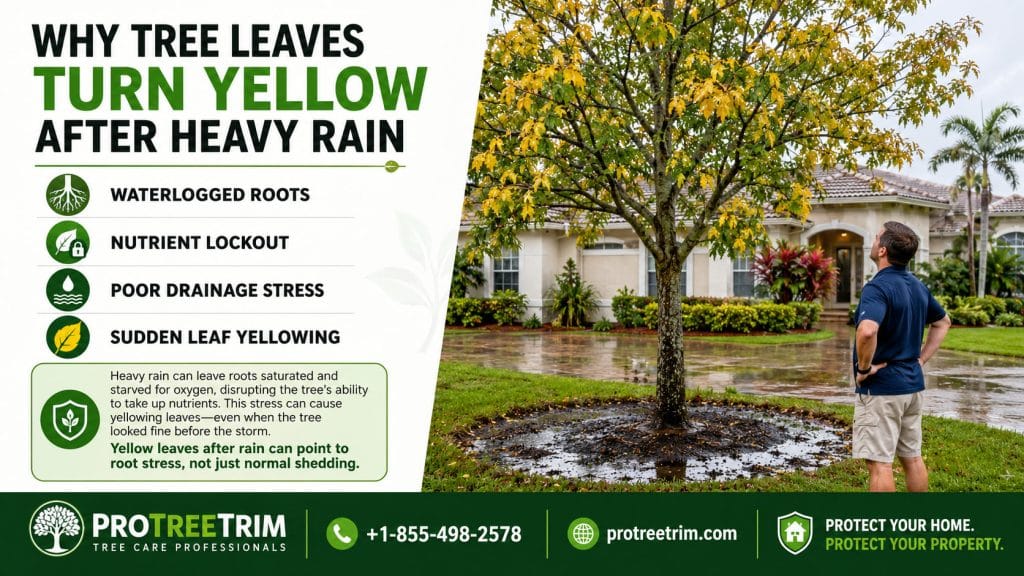
Why Tree Leaves Turn Yellow After Heavy Rain
Yellow leaves after heavy rain do not automatically mean a tree is dying. Rain can expose problems that were already building around the roots: poor drainage, compacted soil, irrigation overspray, buried root flares, mulch buildup, or older stress from pruning, construction, or drought. The first place to check is the ground, not the leaves.
Continue reading Why Tree Leaves Turn Yellow After Heavy Rain