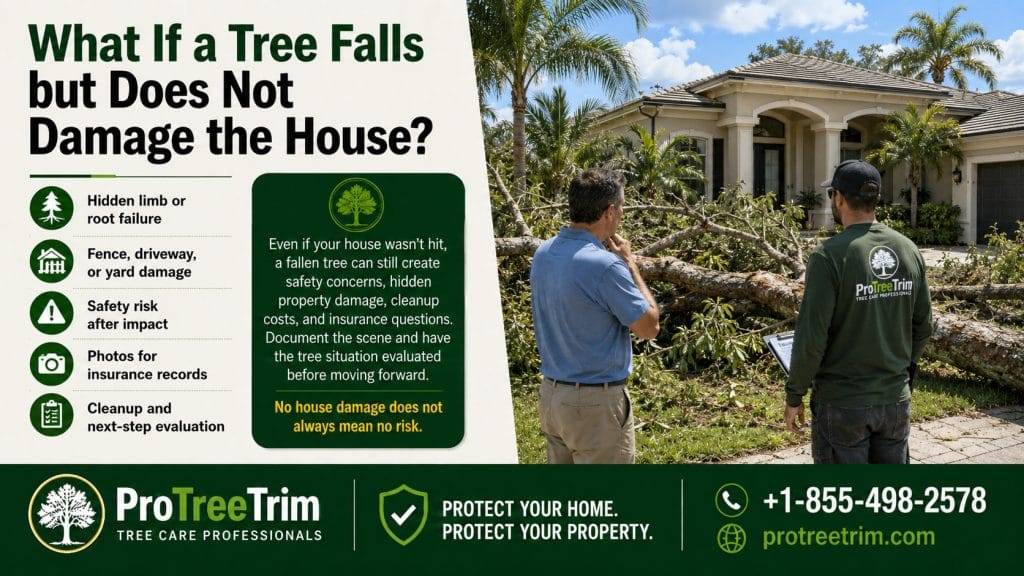
If a tree falls but does not damage the house, Florida homeowners should still check the yard carefully before calling it “lucky.” A fallen tree can block access, damage fences, pavers, irrigation, pool screens, septic areas, or utility lines. It can also reveal root problems or leave unstable limbs in the tree it came from.
Continue reading What If a Tree Falls but Does Not Damage the House?Guides
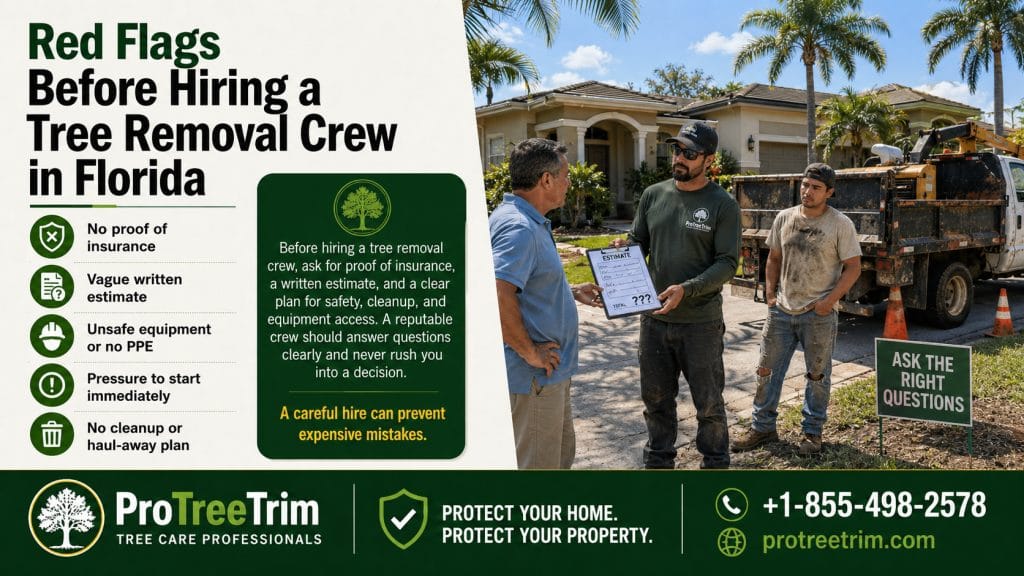
Red Flags Before Hiring a Tree Removal Crew in Florida
A tree removal crew may look ready because they have a truck, a saw, and a quick price. That is not enough. Florida homeowners should slow down before hiring, especially if the tree is near a roof, pool cage, driveway, fence, septic area, power service line, or neighbor’s property. The biggest red flags usually show up before work starts.
Continue reading Red Flags Before Hiring a Tree Removal Crew in Florida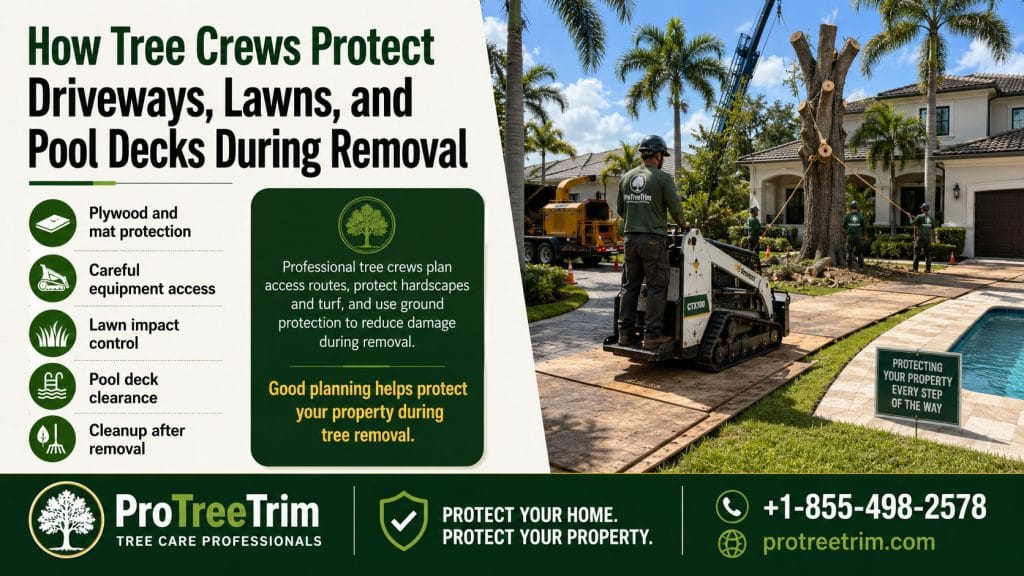
How Tree Crews Protect Driveways, Lawns, and Pool Decks During Removal
Tree removal is not only about cutting the tree. In a Florida yard, the crew also has to protect what sits around it: the driveway, lawn, pool deck, pavers, irrigation, fences, and sometimes a screened enclosure. Homeowners should ask about access, equipment, debris handling, and surface protection before the first cut is made.
Continue reading How Tree Crews Protect Driveways, Lawns, and Pool Decks During Removal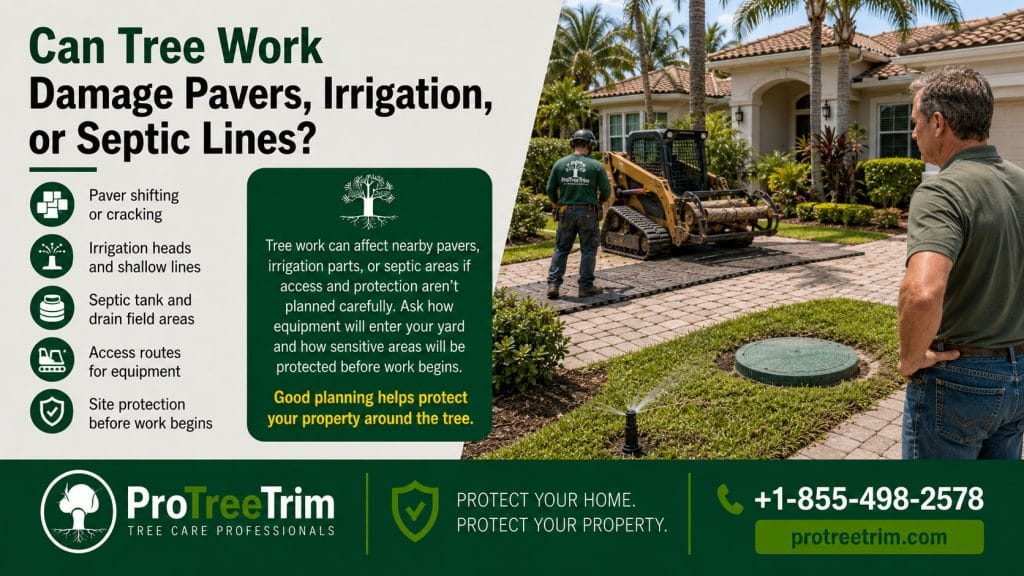
Can Tree Work Damage Pavers, Irrigation, or Septic Lines?
Yes, tree work can damage pavers, irrigation, septic areas, lighting wires, or buried utility lines if access and underground features are not planned before the job. In Florida yards, the risk is often less about the tree itself and more about what crews must cross to reach it: soft soil, narrow gates, pool decks, driveways, and hidden lines.
Continue reading Can Tree Work Damage Pavers, Irrigation, or Septic Lines?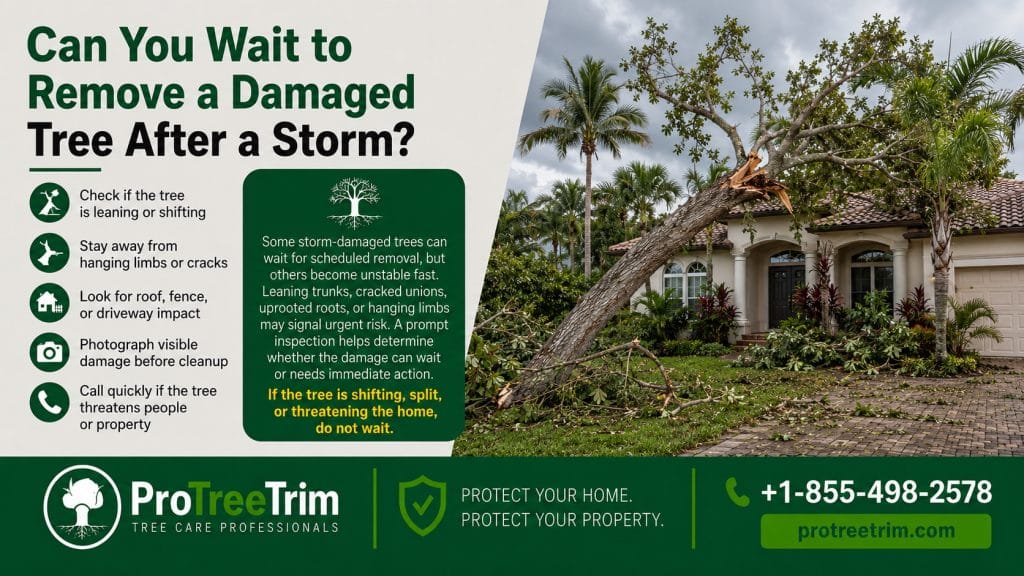
Can You Wait to Remove a Damaged Tree After a Storm?
Sometimes you can wait to remove a storm-damaged tree, but only if the tree is stable, not blocking access, not touching utilities, and not threatening a home, fence, pool cage, driveway, or neighboring property. If the damage involves a split trunk, exposed roots, a new lean, or large hanging limbs, it should be treated more urgently.
Continue reading Can You Wait to Remove a Damaged Tree After a Storm?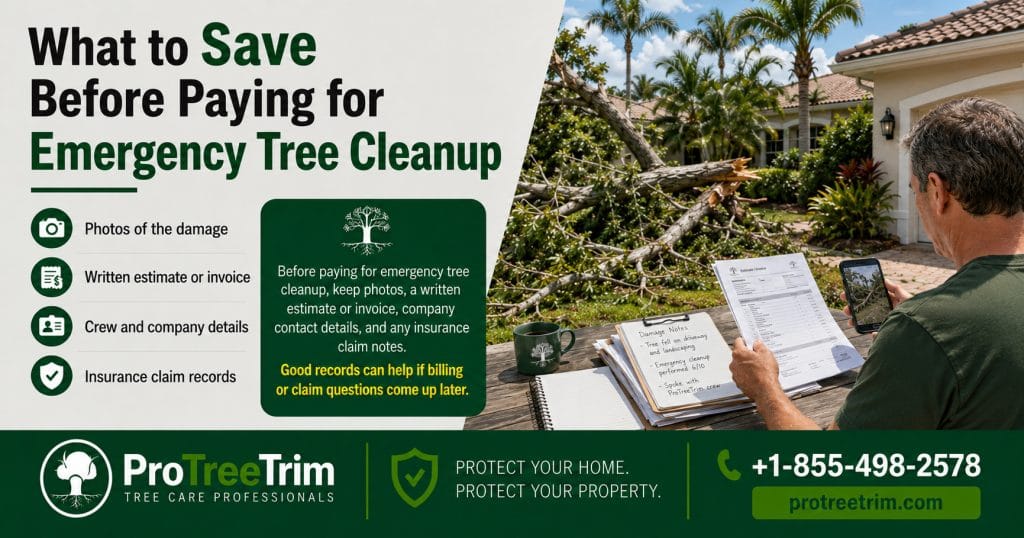
What to Save Before Paying for Emergency Tree Cleanup
Before paying for emergency tree cleanup, save proof of what happened, what was damaged, what work was promised, and what work was completed. In a Florida yard, storm debris can be cut, moved, and hauled away quickly. Once that happens, photos, messages, and written records become much harder to recreate.
Continue reading What to Save Before Paying for Emergency Tree Cleanup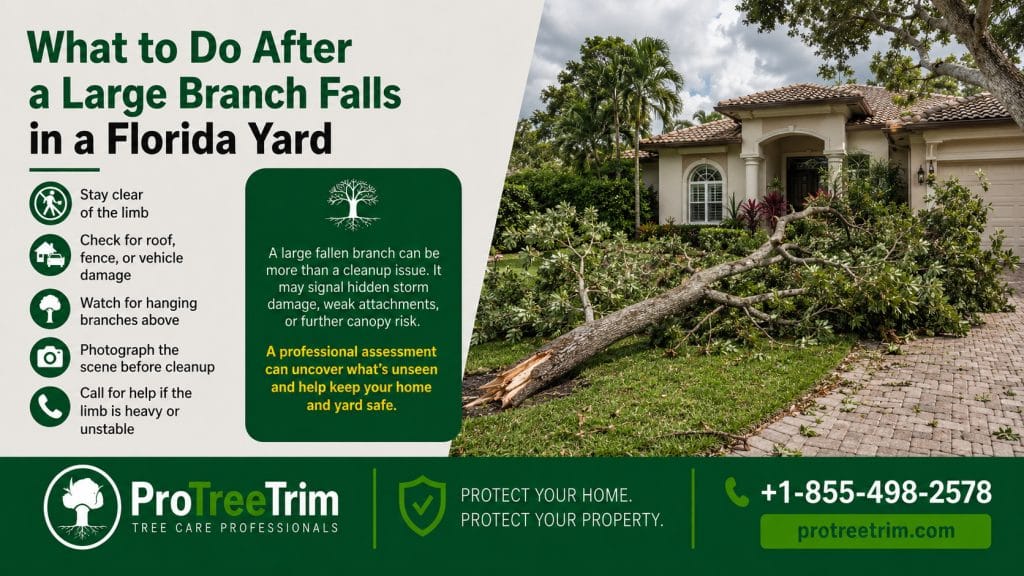
What to Do After a Large Branch Falls in a Florida Yard
After a large branch falls in a Florida yard, start by checking safety from a distance. Do not rush to drag it away or cut it up. Look for power lines, cracked limbs still hanging overhead, damage to fences, pool cages, pavers, irrigation, or roof edges. Then document the scene before major cleanup begins.
Continue reading What to Do After a Large Branch Falls in a Florida Yard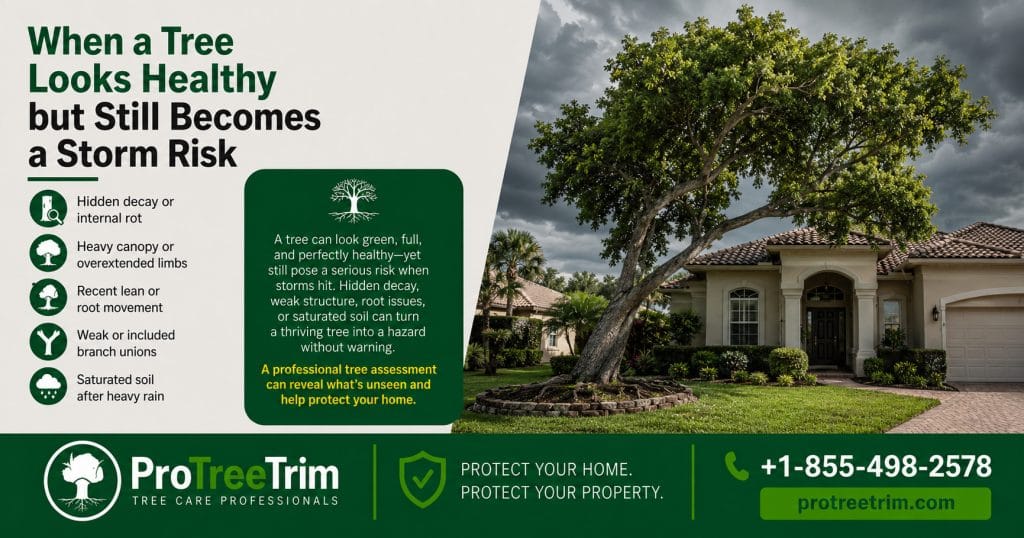
When a Tree Looks Healthy but Still Becomes a Storm Risk
A tree can have green leaves, good shade, and a full canopy but still create storm concerns. Florida homeowners should look beyond “healthy-looking” growth and check structure, roots, limb weight, nearby targets, and recent changes around the yard. The question is not only whether the tree is alive. It is whether it can handle wind, rain, and saturated soil safely.
Continue reading When a Tree Looks Healthy but Still Becomes a Storm Risk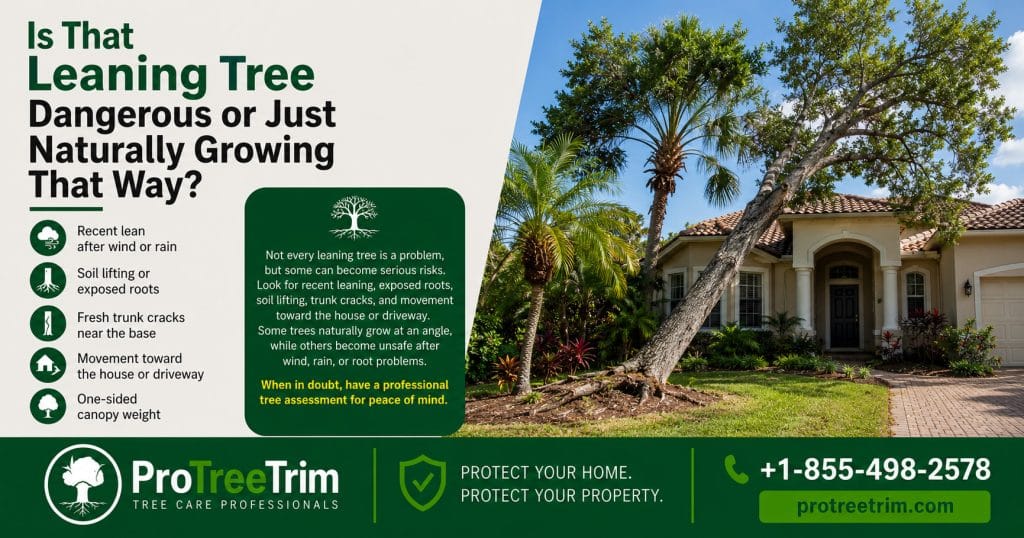
Is That Leaning Tree Dangerous or Just Naturally Growing That Way?
A leaning tree is not always an emergency. Some trees grow at an angle for years, especially in coastal yards, sandy soil, or crowded landscapes. The concern starts when the lean is new, worsening, or paired with cracked soil, exposed roots, trunk damage, or heavy limbs pulling toward a house, driveway, fence, or pool cage.
Continue reading Is That Leaning Tree Dangerous or Just Naturally Growing That Way?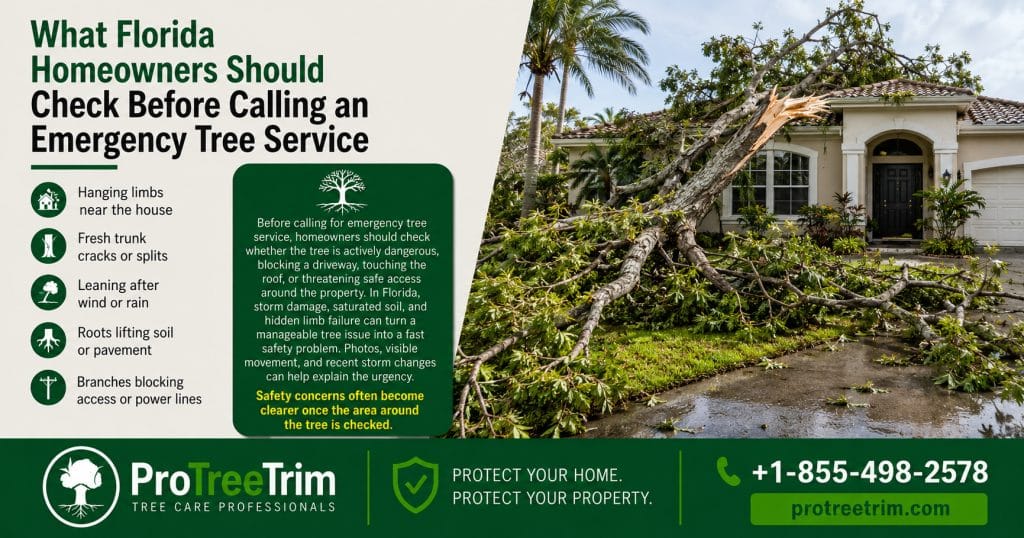
What Florida Homeowners Should Check Before Calling an Emergency Tree Service
If a tree or palm looks unsafe after wind, heavy rain, or sudden limb failure, start with safety, not cleanup. Stay away from anything touching power lines, avoid standing under cracked limbs, and take a few photos from a safe distance. A good emergency tree service call goes faster when you can explain what happened, where the hazard is, and what property is at risk.
Continue reading What Florida Homeowners Should Check Before Calling an Emergency Tree Service