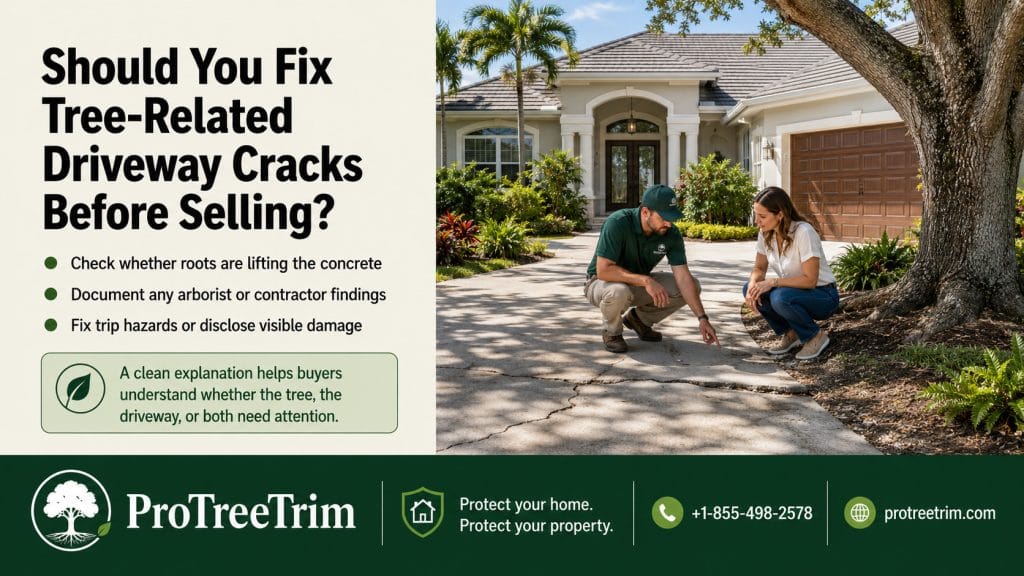
Driveway cracks near a tree can make buyers wonder whether the problem is cosmetic, structural, or likely to get worse. Before selling, the right move is not always “patch it fast.” First, check whether roots, drainage, soil movement, settling, or the tree’s location are part of the issue. A clean repair helps only if it does not hide a problem that will return.
Start With the Pattern of the Crack
Not every driveway crack is caused by tree roots. Concrete, asphalt, and pavers can move because of age, poor base preparation, water movement, soil settling, heat, heavy vehicles, or past repairs. Tree roots may be part of the story, but they are not the only possible cause.
Look at the shape and location. A crack that starts near the tree side and lifts upward may suggest root pressure or soil movement. A sunken section may point more toward base failure or settling. A repeated crack along the same repair line may mean the original cause was never solved.
| What you see | What to check before repair |
|---|---|
| Driveway edge lifted near a tree | Roots, soil pressure, or base movement |
| Section sinking near an old stump | Decaying roots or poor fill may be settling |
| Crack follows a paver edge | Base support or drainage may be involved |
| Water pools after rain | Drainage may be weakening the surface |
| Roots visible beside the driveway | Root conflict should be understood before cutting |
| Same crack repaired before | The cause may still be active |
Do Not Cut Roots Just to Make the Driveway Look Flat
Root cutting can create a bigger problem than the crack. Large roots may help support the tree. If they are cut close to the trunk, the tree may decline, lean, or become less stable later. That matters even more if the tree stands near a garage, roofline, fence, pool cage, walkway, or neighbor’s property.
For sellers, root cutting also creates a timing issue. The driveway may look cleaner for listing photos, but if the tree starts dropping leaves, browning, or leaning after the work, the problem has not really been solved.
Before approving root cutting, ask:
- How large are the roots?
- How close are they to the trunk?
- Is the tree already leaning or stressed?
- Are branches over the house, driveway, or walkway?
- Will the driveway repair fail again if the tree remains?
- Would a different driveway repair method reduce conflict without major root damage?
A repair that respects the tree may take more planning, but it is usually better than a fast cosmetic fix that creates a tree-risk issue.
Think About Buyer Perception
Buyers do not need to know the exact cause of a driveway crack to feel concerned. They see uneven concrete, lifted pavers, or roots near the parking area and start estimating future costs.
That does not mean every crack must be repaired before listing. A small stable crack in an older driveway may be less important than a raised section where people walk, park, or roll trash bins. A crack near the front entry or garage will likely get more attention than one in a far side area.
Before deciding, walk the driveway as if you were visiting the home for the first time:
- Can someone trip near the entry path?
- Does the crack show clearly in listing photos?
- Is the driveway edge lifting near visible roots?
- Does water collect there after rain?
- Are vehicles scraping or rocking on uneven pavers?
- Is the tree also touching the roof or dropping limbs over parking areas?
The buyer’s concern is often simple: “Will I have to fix this right after closing?”
Repair, Remove, or Document?
There are usually three paths.
Repair the surface if the issue is minor, visible, and the underlying cause appears manageable. Keep before-and-after photos and the invoice.
Address the tree first if the roots are actively lifting hardscape, the tree is too close to the driveway, or the tree also has dead limbs, leaning, trunk damage, or repeated storm issues.
Document and disclose clearly if the crack is stable, the tree is valuable, and immediate repair would be unnecessary or risky. Do not overstate what you know. Keep the explanation factual.
If tree removal is part of the plan, remember that removal can leave a stump, roots, wood chips, soil settling, and a bare area beside the driveway. A full pre-sale plan may include stump grinding, chip removal, clean fill, paver reset, sod, mulch, or driveway repair.
Keep the Paper Trail Clean
A driveway repair near a tree can raise questions later. Good records help.
| Record | Why it helps |
|---|---|
| Before photos | Shows the original crack and root area |
| Tree service invoice | Explains pruning, removal, stump grinding, or root work |
| Driveway repair invoice | Shows what was repaired and when |
| After photos | Shows the finished condition |
| Drainage or paver notes | Helps explain whether water or base issues were addressed |
| Utility or 811 notes if digging occurred | Shows basic underground-line planning |
Avoid telling buyers the problem is “fixed forever.” A better statement is more grounded: the damaged section was repaired, the stump was ground, debris was removed, or drainage was corrected.
If you are unsure whether driveway cracks, tree roots, stump issues, or nearby limbs should be handled before listing your home, ProTreeTrim can help connect homeowners with local tree service support. Call +1-855-498-2578 or visit protreetrim.com.
FAQs
Should I repair driveway cracks before selling?
Often, yes, if the cracks are visible, uneven, or near the main entry. But check whether roots, drainage, or settling are likely to make the repair fail again.
Do tree roots always cause driveway cracks?
No. Roots can contribute, but driveway cracks may also come from soil settling, poor base support, water movement, heavy vehicles, or age.
Can I cut roots to repair the driveway?
Be careful. Cutting large roots near the trunk can stress the tree or affect stability, especially if the tree leans toward the house or driveway.
Should I remove the tree before fixing the driveway?
Only if there is a clear reason. Consider tree condition, root size, driveway damage, buyer visibility, and whether the problem is likely to continue.
ProTreeTrim™ can help you take the next step.
If you are dealing with a damaged tree, fallen branch, stump, root issue, palm concern, or storm cleanup question in Florida, call ProTreeTrim for tree service support.