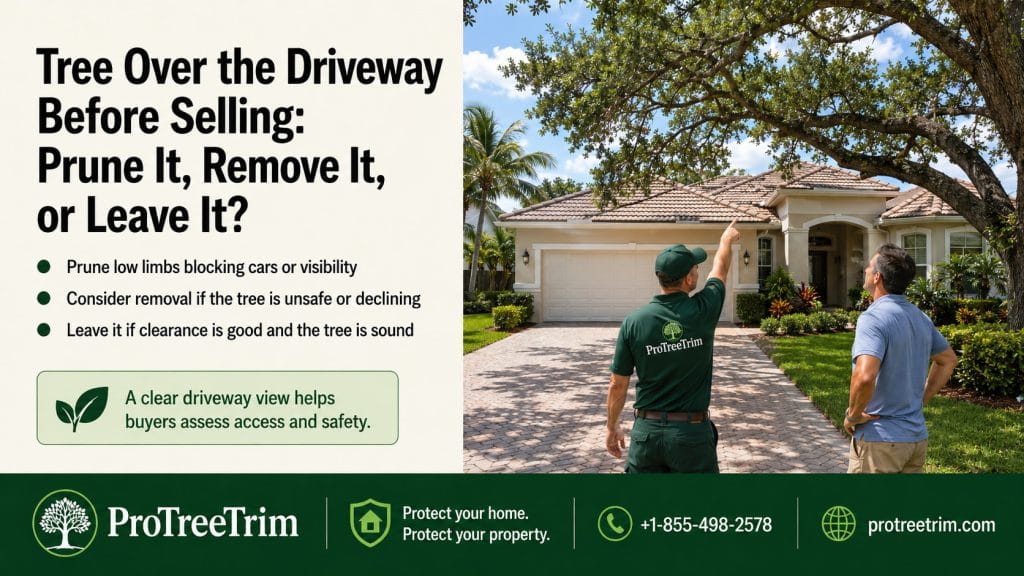
A tree over the driveway can be a strong selling feature or a buyer concern. Shade over parked cars is useful. A large dead limb over the same area is not. Before selling, homeowners should look at clearance, branch condition, root impact, parking access, and whether the tree makes the property feel maintained or risky.
Start With What Happens Under the Tree Every Day
Driveways are high-use areas. Buyers park there, walk through them during showings, roll trash bins across them, and picture their own vehicles in the space. If a tree hangs over that area, the buyer’s question is simple: “Will this be a problem for me?”
Not every overhanging tree needs work. A healthy shade tree with good clearance can make a driveway more comfortable and attractive. The concern starts when branches are low, dead, cracked, dripping sap, dropping heavy debris, rubbing vehicles, or blocking access.
| What buyers may notice | Why it matters before selling |
|---|---|
| Low limbs over parking area | Vehicle clearance and access concern |
| Dead branch above driveway | Safety and inspection concern |
| Sap or sticky residue on cars | Maintenance concern |
| Heavy acorns, seed pods, or palm debris | Cleanup and vehicle-damage concern |
| Roots lifting driveway edge | Repair and trip concern |
| Tree blocks garage view or lighting | Curb appeal and access concern |
| Branches near service line | Utility safety question |
Pruning May Be Enough If the Tree Is Otherwise Sound
If the tree is healthy but creating a clearance issue, selective pruning may solve the visible problem before listing. That might mean lifting low branches, removing deadwood, clearing a garage entry, or reducing a limb that hangs too heavily over the parking area.
The work should be specific. “Cut it back hard” is not a good pre-sale plan. A tree that looks freshly hacked can make buyers wonder whether the seller rushed to hide a bigger issue.
A better scope sounds like this:
- remove deadwood over the driveway
- improve clearance above parked vehicles
- trim branches rubbing the garage or roofline
- reduce obvious debris over the parking area
- avoid unnecessary live-canopy removal
- protect pavers, irrigation, garage trim, and landscaping during work
If the tree is near overhead wires, stop there. Utility coordination comes before tree trimming.
When Removal Deserves Discussion
Removal may be worth considering if the tree is dead, leaning toward the driveway, repeatedly dropping large limbs, cracking the driveway, crowding the garage, or growing in a space where pruning will never solve the conflict.
A tree that forces vehicles to park awkwardly, blocks access to the garage, or drops branches after every storm may become a buyer negotiation point. The issue is not only tree health. It is how the tree affects the daily use of the property.
Removal is not always the clean finish sellers imagine, though. A removed tree can leave a stump, roots, loose chips, soil settling, exposed irrigation, or a bare patch beside the driveway. If removal happens before listing, plan the after-work area too.
Check the Driveway Surface Before Photos
A tree over the driveway often creates a second question: what is happening below it?
Look for lifted concrete, cracked asphalt, uneven pavers, root exposure, pooling water, or settling near an old stump. Buyers may connect every driveway issue to the tree, even when drainage, age, or base failure also play a role.
Before listing, decide what needs to be repaired, documented, or simply cleaned. A visible crack near roots may need a closer look. A few leaves on the driveway may only need routine cleanup before photos.
If you do repair the driveway or perform tree work, keep the records together: before photos, tree invoice, stump grinding details, driveway repair receipt, and after photos.
What to Leave Alone
Do not remove a valuable shade tree only because it hangs over the driveway. If the tree is healthy, has good clearance, does not drop hazardous limbs, and adds curb appeal, it may be better to leave it alone.
Do not cut large roots to make the driveway look flatter without understanding the tree’s stability. Do not over-prune the canopy just because a buyer might ask. A calm, maintained tree usually reads better than a rushed pre-sale cutback.
If you are unsure whether a driveway tree, dead limb, stump, root issue, or clearance problem should be handled before listing your home, ProTreeTrim can help connect homeowners with local tree service support. Call +1-855-498-2578 or visit protreetrim.com.
FAQs
Should I prune a tree over the driveway before selling?
Often, yes, if branches are low, dead, touching the garage, dropping heavy debris, or limiting vehicle clearance. Healthy shade with good clearance may not need work.
Does a driveway tree hurt curb appeal?
It can help or hurt. A well-placed shade tree can look attractive, while dead limbs, low branches, roots lifting hardscape, or messy debris can make the property feel less maintained.
Should I remove a tree that drops sap on cars?
Not automatically. First check whether the sticky material is seasonal, pest-related, or coming from specific branches. Pruning, pest review, or cleaning may be enough.
What records should I keep after driveway tree work?
Save before-and-after photos, tree service invoices, stump grinding details, debris hauling notes, and any driveway or paver repair receipts.
ProTreeTrim™ can help you take the next step.
If you are dealing with a damaged tree, fallen branch, stump, root issue, palm concern, or storm cleanup question in Florida, call ProTreeTrim for tree service support.