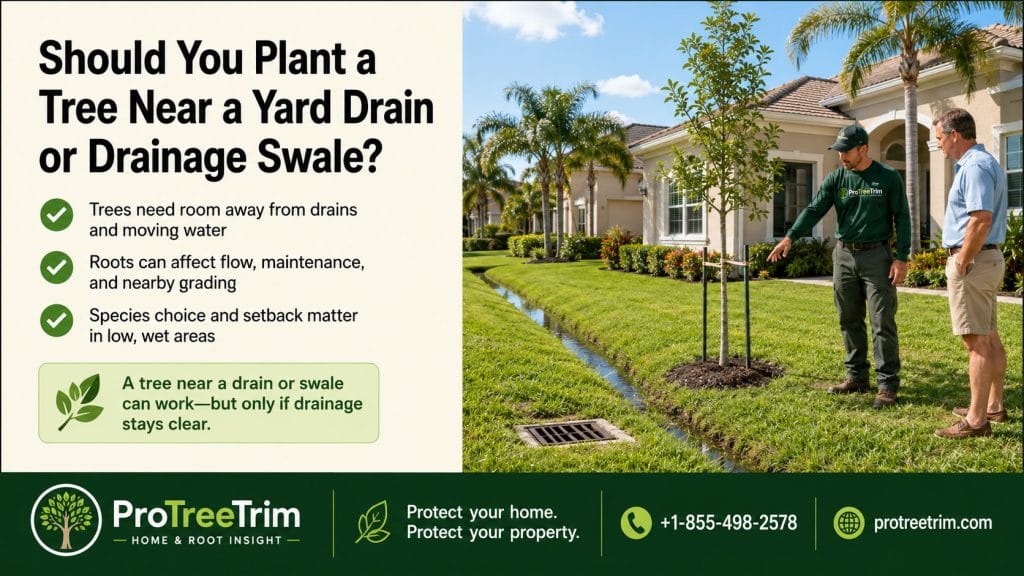
You should be careful about planting a tree near a yard drain, drainage swale, catch basin, French drain, or low runoff path. A tree may help soften the look of a wet or empty area, but poor placement can block water flow, encourage roots toward moisture, hide drainage problems, or make future repair harder. Drainage areas need to function first. Landscaping comes second.
A Drainage Area Is Not Just Empty Yard Space
Many homeowners see a swale or drain area as unused space that could use a tree. That is understandable. A low grassy strip, side-yard swale, or bare area near a drain can look unfinished.
But drainage areas have a job. They move water away from the house, driveway, patio, pool cage, fence, septic area, or neighbor’s property. If a tree, raised mulch bed, roots, soil mound, or falling debris interferes with that job, the planting can create bigger problems than it solves.
| Drainage feature | Why tree placement matters |
|---|---|
| Yard drain | Roots and debris may block access or flow |
| Drainage swale | Trunk, roots, or mulch can slow water movement |
| French drain | Roots may follow moisture or complicate repair |
| Downspout runoff area | Wet soil may attract roots and stress the tree |
| Low side yard | Tree may block access and drainage together |
| Catch basin | Leaves and roots can make cleaning harder |
| Drainage easement | Local rules or access needs may limit planting |
Before planting, ask what the area is supposed to do during heavy rain.
Do Not Plant Where Water Needs to Flow
A swale is usually shaped to move water across the yard. If you plant a tree directly in the flow path, the trunk, roots, mulch, and soil around the tree can interrupt that movement.
At first, the change may be small. Over time, roots rise, mulch collects, leaves settle, and water begins to slow down or redirect. That can create wet spots, soil erosion, standing water, or runoff toward areas that should stay dry.
A tree should not be used to “fill” a drainage path. If the path is needed, keep it open.
Roots May Follow Moisture
Tree roots grow where conditions are favorable: moisture, oxygen, loose soil, and space. Drainage areas often provide at least some of those conditions.
That does not mean every tree near a drain will invade it. But planting a large or moisture-seeking tree beside a wet trench, pipe, or swale can create future risk.
Be cautious if the planting area has:
- standing water after rain
- consistently soft soil
- downspout discharge nearby
- a buried drain line
- a French drain trench
- wet mulch that never dries
- roots from old removed trees
- pavers or hardscape that limit other root space
If the best water source in the yard is the drain area, roots may naturally grow in that direction.
Do Not Hide a Drainage Problem With a Tree
A wet or ugly yard spot can tempt homeowners to plant something there. But if the area is wet because of poor grading, clogged drains, broken irrigation, compacted soil, or downspout runoff, a tree is not the first fix.
Planting into a drainage problem can create two issues at once: the water problem remains, and the tree may struggle.
Before planting, understand why the area is wet:
- Does water sit for hours or days?
- Is a drain clogged?
- Is runoff coming from the roof?
- Is irrigation overspraying the area?
- Did a patio, driveway, or fence change water flow?
- Is the soil compacted?
- Is the area near septic components?
- Is the swale still shaped correctly?
Fix drainage first. Then decide whether a tree belongs nearby.
Keep Access Open for Cleaning and Repairs
Yard drains, catch basins, and drain lines may need cleaning or repair. If a tree is planted too close, future work becomes harder.
A mature trunk may block access. Roots may grow around pipes. Mulch may cover drain grates. Branches may drop leaves into the opening. If the drain line needs repair, cutting roots or removing the tree may become part of the job.
Before planting, ask:
| Future task | Why access matters |
|---|---|
| Cleaning drain grates | Leaves and mulch should not hide the opening |
| Flushing a drain line | Technicians need room to work |
| Repairing a French drain | Roots and trunk should not block excavation |
| Regrading a swale | Tree roots may limit reshaping |
| Removing sediment | Equipment or tools may need access |
| Fixing erosion | Tree placement should not worsen water flow |
A drainage feature that cannot be serviced can become a bigger yard problem later.
Be Careful With Mulch and Raised Beds
Mulch can help around trees, but in a drainage area it can also move, float, collect, or block flow. A raised planting bed can be even more disruptive if it changes the grade.
Avoid piling mulch where water needs to pass. Avoid building mounded beds in swales. Avoid covering drain openings with bark, chips, soil, or decorative rock.
If you plant near a drainage area, keep the bed shallow, stable, and outside the main flow path. The root flare should stay visible, and mulch should stay away from the trunk.
Leaves and Debris Matter Near Drains
Some trees drop large leaves, seed pods, flowers, fruit, twigs, palm fronds, or messy seasonal debris. Near a yard drain, that debris can become more than a cleanup issue. It can collect at grates, block water movement, or clog a drainage path.
Avoid planting messy trees close to:
- drain grates
- catch basins
- narrow swales
- pool deck drains
- driveway drains
- patio drains
- side-yard runoff channels
- downspout extensions
A tree that is acceptable in open lawn may be a poor choice beside a drain.
Drainage Easements Need Extra Caution
Some properties have drainage easements or shared drainage areas. These may involve access rights, HOA rules, municipal requirements, or neighborhood drainage plans.
Do not plant a tree in an easement or shared drainage path without checking the relevant rules. A tree that blocks access or changes water flow could become a problem later, especially if maintenance crews need to enter the area.
This is not just a tree-care decision. It may be a property-use decision.
Choose Smaller Plants Near Drainage Features
If you want to soften a drainage area, smaller plants may be better than trees. Groundcovers, grasses, low shrubs, or moisture-tolerant planting outside the main flow path may improve appearance without creating root and access problems.
Better choices near drainage areas usually have:
| Better trait | Why it helps |
|---|---|
| Smaller mature size | Less root and canopy conflict |
| Low debris | Less clogging and cleanup |
| Tolerance for site moisture | Better survival in damp soil |
| Shallow, manageable growth | Easier maintenance near drains |
| Easy removal | Less disruption if drainage repairs are needed |
| Placement outside flow path | Keeps water moving properly |
The goal is to improve the area without weakening its function.
When a Tree Nearby Can Work
A tree can work near a drainage area if it is far enough away from the main flow path, chosen for the site, and not likely to block access or send roots directly toward a drain line.
It may be reasonable when:
- water flow remains open
- the tree is not planted over a drain line
- the mature root system has room elsewhere
- debris will not collect at a drain grate
- the tree is not in an easement or restricted access area
- future drain repair remains possible
- the soil is moist but not constantly saturated
- the tree fits the space at maturity
Nearby is not always a problem. Directly in the drainage function often is.
When to Avoid Planting a Tree There
Avoid planting a tree if the area is a main water path, stays soggy for days, contains a drain line, blocks access, sits in a drainage easement, or already has erosion or standing water problems.
Also avoid planting large trees near drainage features if the tree will eventually crowd:
- the house
- driveway
- sidewalk
- patio
- pool cage
- fence
- septic area
- utility access
- neighbor drainage path
A tree should not make water management harder.
Final Drainage-Area Planting Test
Before planting, visit the spot after rain.
Where does the water go?
Does it move or sit?
Would the tree block that movement?
Is there a buried drain line?
Would leaves collect at a grate?
Could roots complicate repair later?
Would a smaller plant solve the visual problem better?
If the tree interferes with drainage, choose another spot.
If you are unsure whether a tree is a good fit near a yard drain, swale, wet spot, driveway drain, patio drain, or side-yard drainage path, ProTreeTrim can help connect homeowners with local tree service support. Call +1-855-498-2578 or visit protreetrim.com.
FAQs
Can you plant a tree near a yard drain?
Sometimes, but avoid planting directly over drain lines, grates, or access points. Keep future cleaning and repair access open.
Can tree roots clog a drainage pipe?
Roots may follow moisture and can complicate drainage systems if there are openings, weak points, or favorable soil conditions nearby.
Should I plant a tree in a drainage swale?
Usually, be careful. A swale needs to move water. A tree, roots, mulch, or raised bed can slow or redirect flow.
What should I plant near a drainage area instead of a tree?
Low plants, grasses, groundcovers, or smaller shrubs outside the main flow path are often easier to manage than trees.
ProTreeTrim™ can help you take the next step.
If you are dealing with a damaged tree, fallen branch, stump, root issue, palm concern, or storm cleanup question in Florida, call ProTreeTrim for tree service support.