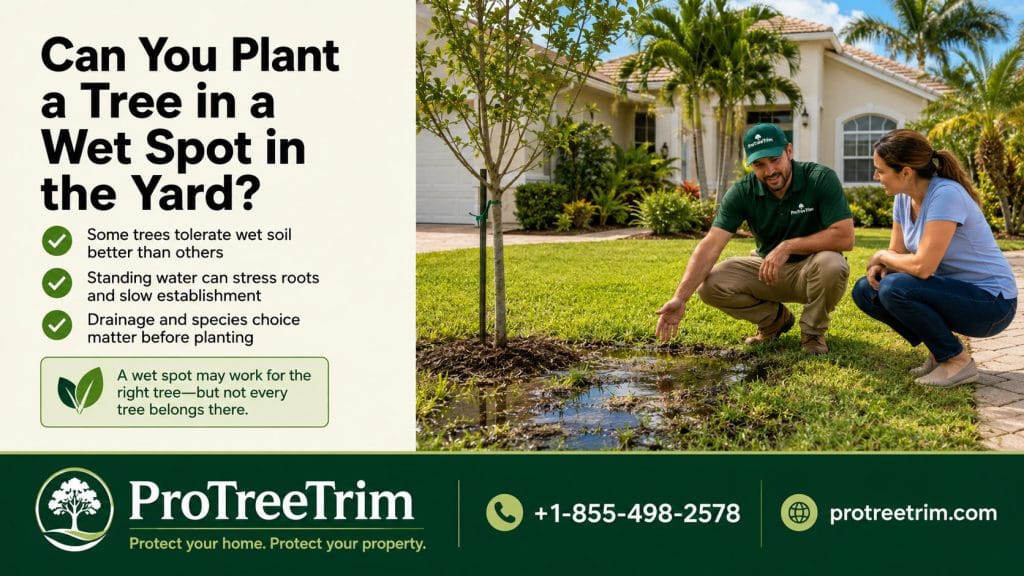
You can plant a tree in a wet spot, but only if the site and tree are matched carefully. Some trees tolerate moist soil better than others. Many common yard trees struggle when their roots sit in saturated soil for too long. Before planting, figure out whether the spot is naturally moist, poorly drained, compacted, over-irrigated, or part of a larger drainage problem.
Wet Soil Is Not the Same as Good Watering
A tree needs water, but roots also need oxygen. That is where wet planting sites become tricky.
A yard spot that stays damp for a short time after heavy rain may be normal. A spot that stays soggy for days, smells sour, grows mushrooms, or stays soft underfoot may be a poor planting area for many trees.
| What you notice | What it may mean |
|---|---|
| Water disappears within a few hours | May be manageable for many trees |
| Soil stays soggy for days | Root oxygen may be limited |
| Grass is always thin or muddy | Drainage or compaction may be present |
| Mulch floats or washes away | Runoff path may cross the area |
| Soil smells sour | Poor aeration may be involved |
| Water collects near a downspout | Roof runoff may need redirecting |
| Wet spot is near septic area | Do not plant without understanding the system layout |
The question is not only “Will this tree get enough water?” It is also “Can the roots breathe here?”
First, Find Out Why the Spot Is Wet
Before planting, identify the source of the wetness. A naturally low area is different from an irrigation leak or downspout problem.
Ask:
- Does the area stay wet only after storms?
- Does water collect there after irrigation runs?
- Is a downspout emptying nearby?
- Did recent grading, patio, paver, or driveway work change runoff?
- Is the soil compacted from foot traffic or vehicles?
- Is the spot near a septic drain field?
- Does water flow from a neighbor’s yard or street?
- Has mulch or soil been added over the area recently?
If the wet spot is caused by a fixable drainage issue, solve that first. Planting a tree into the problem may only hide it for a season or two.
Choose the Tree for the Site, Not the Other Way Around
Some trees are more tolerant of moist soil, but “tolerant” does not mean they want to sit in standing water forever. Even wet-site trees can struggle if the soil stays waterlogged, compacted, or unstable.
Avoid choosing a tree only because you like its look. In a wet area, the site has more control over the decision.
A good wet-site tree should match:
- local climate
- soil type
- mature size
- available root space
- drainage pattern
- distance from house, driveway, sidewalk, fence, pool cage, and septic system
- future pruning and removal access
A tree that tolerates moisture may still be wrong if it grows too large for the space or drops heavy debris near a patio or pool.
Do Not Plant Too Deep to “Anchor” the Tree
Wet spots often have soft soil. Homeowners may be tempted to plant deeper so the tree feels more stable. That is a mistake.
Planting too deep can bury the root flare, trap moisture around the trunk, and create long-term root problems. In a wet site, that risk becomes even more important because bark and roots may already be exposed to excess moisture.
A new tree should sit at the proper height, with the root flare visible. Do not cover the trunk base with deep soil or mulch. Do not build a mulch mound to hide wet soil. That can make the tree look finished while making the root zone worse.
Be Careful Near Hardscape
Wet spots near driveways, sidewalks, patios, pavers, and pool decks deserve extra caution. Water and roots can both affect hardscape over time.
If the soil is soft, pavers may settle. If roots grow shallow because oxygen is limited deeper in the soil, surface roots may become more visible. If water keeps collecting near a driveway edge, a future repair may involve drainage, roots, and pavement together.
Before planting near hardscape, ask:
| Nearby feature | Why it matters in a wet spot |
|---|---|
| Driveway | Wet soil and roots can complicate pavement repair |
| Sidewalk | Soft soil and surface roots may create uneven panels |
| Patio or pavers | Settling and root conflicts may appear later |
| Pool cage | Moisture, debris, and access concerns overlap |
| Fence | Wet soil can affect posts and root growth |
| Foundation side of house | Drainage should be corrected before planting |
A tree should not be used as a cover-up for poor drainage around important structures.
Wet Spots Near Septic Areas Need Extra Care
If the wet area is near a septic system, do not plant a tree there casually. A wet patch may be related to drainage, soil conditions, or septic function. Trees near septic components can create root and service-access concerns.
Before planting anywhere near a septic system, locate the tank, drain field, access lids, and reserve area. Do not guess. The wrong tree in the wrong septic location can create expensive problems later.
In many septic areas, grass or low plantings are safer than trees.
Watch for Compacted Soil
Sometimes a yard is wet not because it receives too much water, but because the soil is compacted. Compacted soil drains poorly and limits oxygen. Tree roots may struggle to establish, even if the tree is moisture-tolerant.
Compaction is common near:
- driveways
- side yards
- construction areas
- patios
- footpaths
- parking spots
- fence gates
- equipment routes
- recently graded areas
Planting into compacted wet soil can lead to slow growth, yellowing leaves, shallow roots, or leaning after storms.
Do Not Assume a Raised Bed Solves Everything
A raised planting bed may help in some wet sites, but it can also create new problems if done poorly.
If soil is piled against the trunk, the tree may be planted too deep. If the raised bed traps water, roots may still stay saturated. If the bed is built over compacted soil without improving drainage, the wet problem may remain below the surface.
A raised bed should not be a decorative mound around a trunk. It should be part of a real planting and drainage plan.
Think About Storms Before Planting
Wet soil and wind are a bad combination for poorly placed trees. When soil is saturated, root support can become more important. A young tree in soft ground may lean. A mature tree in a chronic wet spot may develop root stress over time.
Before planting in a wet area, look at what the mature tree could hit if it leaned or failed:
- house
- driveway
- sidewalk
- pool cage
- fence
- patio
- parked vehicles
- utility lines
- neighbor’s property
A wet-site tree in open yard is different from a wet-site tree aimed at a roof or pool enclosure.
When Planting in a Wet Spot Can Work
Planting can work when the site is moist but not constantly waterlogged, the tree species is suited to the conditions, the planting height is correct, and there is enough room for roots and canopy growth.
It may be reasonable if:
- water drains within a reasonable time
- soil is not sour-smelling or constantly saturated
- the tree is chosen for moisture tolerance
- the spot is away from structures and septic components
- roots have enough room
- the tree will not block drainage paths
- future maintenance access is realistic
A wet spot is not automatically unusable. It just needs better planning.
When You Should Fix the Site First
Fix the site before planting if the area stays soggy for days, water flows toward the house, irrigation leaks nearby, pavers are settling, the soil is compacted, or the wet spot is near septic components.
Possible first steps may include:
- redirecting downspouts
- adjusting irrigation
- improving grading
- reducing compaction
- creating a better drainage path
- moving the planting location
- choosing shrubs or wet-tolerant low plantings instead
- asking the right professional to evaluate septic or drainage concerns
A tree should not be the first solution to a drainage problem you do not understand.
Final Planting Test
Before planting a tree in a wet spot, stand there after rain if possible.
Does water sit around your shoes?
Does the soil stay soft for days?
Is the wet area near the house, pavers, septic system, or driveway?
Will the tree have enough oxygen and root space?
Will the mature tree still fit the location?
Are you solving a landscape need or hiding a drainage issue?
If the site still seems questionable, move the tree or fix the drainage first.
If you are unsure whether a wet yard spot is safe for planting, ProTreeTrim can help connect homeowners with local tree service support. Call +1-855-498-2578 or visit protreetrim.com.
FAQs
Can trees grow in wet soil?
Some trees tolerate moist soil better than others, but many trees struggle if roots stay saturated for too long.
Is standing water around a new tree bad?
It can be. Short-term water after heavy rain may be manageable, but standing water that lasts for days can limit root oxygen and stress the tree.
Should I plant a tree in a low spot to soak up water?
Not as the first solution. A tree may use water, but it will not fix a serious drainage, grading, irrigation, or septic issue by itself.
What should I do before planting in a wet area?
Identify why the area is wet, check drainage, avoid planting too deep, choose the right tree, and make sure the spot is not near septic or structural drainage concerns.
ProTreeTrim™ can help you take the next step.
If you are dealing with a damaged tree, fallen branch, stump, root issue, palm concern, or storm cleanup question in Florida, call ProTreeTrim for tree service support.