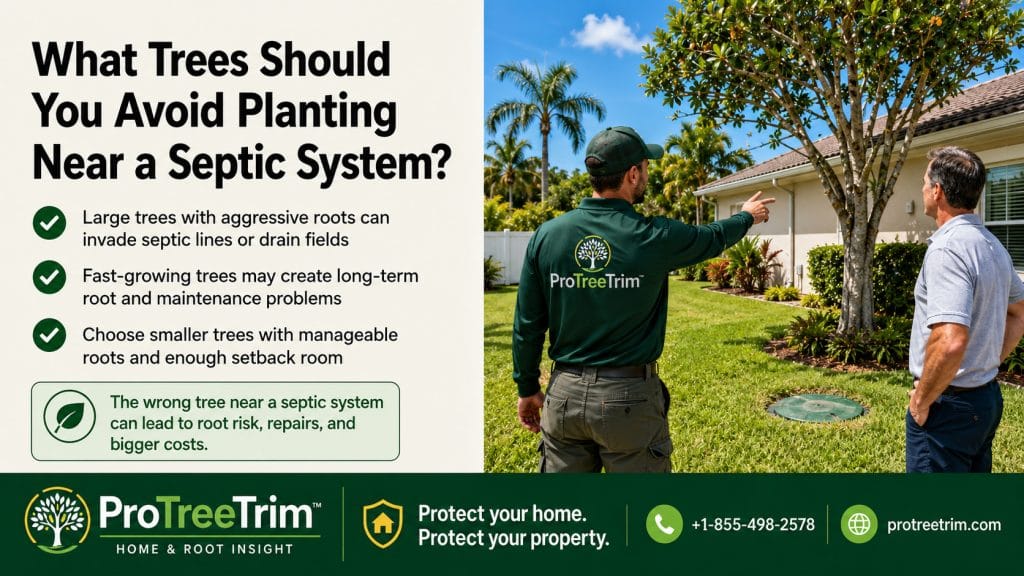
Planting trees near a septic system can create problems years after the yard looks finished. The wrong tree may send roots toward moist soil, block service access, complicate repairs, or make future removal difficult. The safest approach is to understand where the septic tank, drain field, access lids, and reserve area are before choosing any tree.
First, Know Where the Septic System Is
Many homeowners know they have a septic system but do not know the exact layout. That is risky when planting trees.
The visible lid or cleanout may only show part of the system. The tank, drain field, distribution lines, and reserve area may extend farther than expected. Before planting, get the site plan, septic records, or a professional location check if needed.
Do not plant based on guesswork.
| Septic feature | Why it matters before planting |
|---|---|
| Septic tank | Service access must remain open |
| Drain field | Roots and soil compaction can create problems |
| Access lids | Crews need room for inspection and pumping |
| Distribution lines | Roots and digging can interfere with system function |
| Reserve area | Future septic repair may need this space |
| Service path | Trucks and workers need practical access |
A tree planted in the wrong spot can become expensive to remove later, especially if roots or the stump are near septic components.
Avoid Large, Fast-Growing, Thirsty Trees Near the Drain Field
Trees do not “attack” septic systems on purpose. Roots grow toward moisture, oxygen, and favorable soil conditions. A septic drain field can create conditions roots may explore over time.
Large, fast-growing, or moisture-seeking trees are usually poor choices near septic areas. They may develop wide root systems, grow quickly into the space, and become difficult to manage once mature.
Be careful with trees that have:
- aggressive root systems
- fast growth
- large mature size
- strong surface roots
- high water demand
- heavy canopy spread
- tendency to sucker or regrow from roots
- messy or brittle limbs near service areas
A tree may be beautiful in the right place and still be a bad choice near a septic system.
Do Not Block Future Septic Access
Tree placement is not only about roots. It is also about service.
A septic system needs to be inspected, pumped, repaired, and sometimes replaced. If a tree, stump, large shrub, fence, patio, or dense planting bed blocks access, routine service becomes harder. A tree planted near an access lid may look harmless for a few years, then become a real obstacle.
Before planting, ask:
- Can a septic professional reach the tank lids?
- Can equipment access the area without driving over sensitive parts?
- Will roots or trunk growth block service paths?
- Would future stump grinding be possible here?
- Would tree removal require digging near septic lines?
- Is the planting area also needed for future system repair?
A good planting plan keeps the septic system serviceable.
Roots Are Not the Only Problem
A tree near a septic area can create several kinds of issues beyond root intrusion.
Heavy shade may change how the ground dries. Falling leaves and debris may hide access lids. Large limbs may block service routes. A tree removed later may leave roots, chips, and settling soil. Stump grinding may be limited if underground components are nearby.
| Tree-related issue | Why it matters near septic systems |
|---|---|
| Root growth | May interfere with lines or drain field areas |
| Stump left after removal | Can block access or decay unevenly |
| Heavy equipment for removal | May compact soil if routed poorly |
| Falling limbs | May damage lids, pipes, fencing, or access areas |
| Dense planting | Can hide system components |
| Soil disturbance | Digging near lines can create repair problems |
| Future root decay | May cause settling after tree removal |
This is why septic-area planting should be planned before the tree goes in, not after it becomes a problem.
What to Plant Instead
In many septic areas, shallow-rooted grasses or low plantings are usually easier to manage than trees. If you want screening or shade, place trees farther away and choose species that fit the available space without reaching into septic components.
A better septic-area landscape plan usually favors:
- grass or low groundcover over the drain field
- open access around tank lids
- trees placed well away from septic components
- smaller plants with less aggressive root systems
- clear service paths
- no deep digging near system lines
- no heavy mulch piles over access points
If privacy is the goal, consider planting outside the septic zone rather than directly over it.
Be Careful With “Small” Trees Too
A small ornamental tree may sound safer than a large shade tree, but it still needs planning. Some smaller trees produce dense roots, suckers, fruit drop, or heavy debris. Others may stay small above ground but still spread roots wider than expected.
Before choosing a small tree, check:
- mature height and spread
- root behavior
- water needs
- debris and fruit drop
- planting distance from septic components
- access for future removal
- whether it will block lids or inspection points
Small does not always mean septic-safe. It simply means the risk may be easier to manage if the tree is well chosen and properly placed.
Do Not Remove Existing Trees Without a Plan
If a large tree is already near a septic system, do not rush into removal without understanding the layout. Removing the trunk may be straightforward, but stump grinding, root disturbance, equipment access, and soil compaction can all create separate concerns.
A removal plan near septic areas should consider:
- where equipment will travel
- whether the stump can be ground safely
- whether roots are near lines
- how chips will be handled
- whether soil will settle after roots decay
- whether the area should be replanted
- whether septic service access will improve afterward
Sometimes removal is the right move. Sometimes careful monitoring and limited pruning are better. The septic layout should guide the decision.
Avoid Planting Where Future Repairs May Be Needed
Septic systems do not last forever. A drain field, tank area, or reserve area may need future service. If you plant a tree where future repair work may be needed, you may have to remove a mature tree later just to access the system.
That can create extra cost and yard disruption.
Before planting, ask yourself: If the septic system needed repair, would this tree be in the way?
If the answer is yes, choose another spot.
A Practical Septic-Safe Planting Checklist
Before planting any tree near a septic system, work through this checklist:
- Locate the tank and drain field.
- Identify access lids and service routes.
- Avoid planting over septic components.
- Avoid large, fast-growing, moisture-seeking trees nearby.
- Keep future equipment access open.
- Avoid deep digging near system lines.
- Avoid planting where future repairs may happen.
- Choose smaller, lower-risk plants outside sensitive areas.
- Leave records for future homeowners.
A few minutes of planning can prevent years of root, access, and repair problems.
Final Homeowner Takeaway
The best tree near a septic system is often the tree planted somewhere else. That does not mean the yard has to be bare. It means trees should be placed with the septic layout in mind, not planted randomly for shade or privacy.
A septic system needs space, access, and protection from unnecessary root and soil disturbance. A tree needs room to grow. If both needs conflict, move the tree.
If you are unsure whether a tree, stump, or root issue near a septic area needs attention, ProTreeTrim can help connect homeowners with local tree service support. Call +1-855-498-2578 or visit protreetrim.com.
FAQs
Can you plant trees near a septic system?
Sometimes, but placement matters. Avoid planting over the tank, drain field, access lids, or areas needed for future septic service.
What trees are worst near septic systems?
Large, fast-growing, moisture-seeking trees with aggressive root systems are usually poor choices near septic components.
Can tree roots damage septic lines?
Roots can contribute to problems if they grow into areas with moisture and available space. If septic trouble is suspected, a septic professional should evaluate the system.
What should I plant over a drain field instead of trees?
Low plantings, grass, or shallow-rooted groundcover are usually easier to manage than trees. Keep access points visible and serviceable.
ProTreeTrim™ can help you take the next step.
If you are dealing with a damaged tree, fallen branch, stump, root issue, palm concern, or storm cleanup question in Florida, call ProTreeTrim for tree service support.