
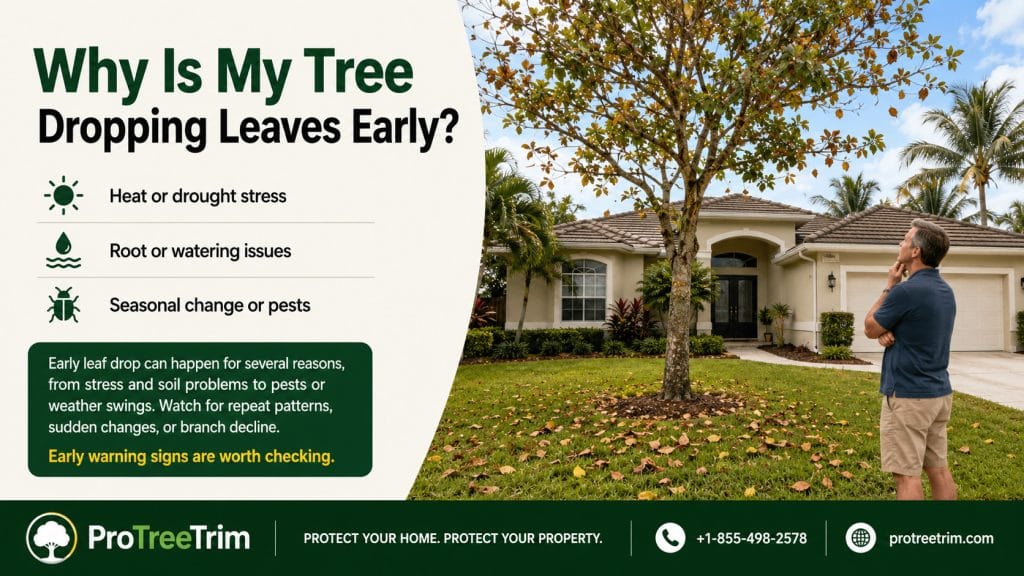
Early leaf drop can be a stress response, not an automatic sign that a tree is dying. A tree may shed leaves early because of drought, too much water, compacted soil, root damage, heat, pests, disease, or normal seasonal change. The useful question is not just “Why are leaves falling?” It is “What else changed around the tree?”
First, Decide Whether the Timing Is Actually Early
Some leaf drop is normal. Deciduous trees lose leaves as seasons change, and even evergreen trees shed older leaves over time. The concern starts when leaves fall well before the usual season, drop suddenly from one part of the canopy, or fall along with other symptoms such as dead branches, bark damage, sticky residue, or soil movement.
Drought is one of the common stress triggers. Oregon State University Extension notes that prematurely shedding leaves can be a sign of drought stress and recommends deep watering during dry periods for trees that need supplemental water. Heat can also create drought-like symptoms even when some moisture is present, because trees use large amounts of water to cool leaf surfaces.
| What you notice | What to check first |
|---|---|
| Leaves drop after a dry spell | Soil moisture, irrigation coverage, heat exposure |
| Leaves drop after heavy rain | Drainage, saturated soil, root stress |
| One side drops leaves first | Root damage, reflected heat, irrigation pattern |
| Leaves yellow before dropping | Water stress, root trouble, pests, nutrients |
| Leaves are chewed or spotted | Insects, leaf disease, weather-related damage |
| Drop follows digging or paving | Root disturbance or soil compaction |
| Drop appears with dead limbs | Larger tree stress or structural concern |
Water Stress Can Go Both Ways
A dry tree can drop leaves to reduce water demand. That does not mean the tree is beyond saving, but it does mean the root zone deserves attention.
Check the soil a few inches below the mulch, not just the surface. A bed can look dry on top but still hold moisture lower down. The opposite can happen too: a lawn may look green because sprinklers are running, while the tree’s deeper root zone is not getting enough water.
Too much water can create a similar-looking problem. Overwatering can waterlog soil and harm roots, and symptoms may be confused with drought or nutrient problems, including yellowing leaves that drop early, poor growth, thinning canopy, or dead tree tops. In Florida and other rainy markets, this is easy to miss after several storms or a leaking irrigation zone.
Before changing anything, ask:
- Has the weather been unusually dry or unusually wet?
- Did irrigation recently change?
- Is water collecting near the trunk?
- Is mulch piled against the bark?
- Did the leaf drop begin after driveway, paver, fence, pool, or utility work?
- Are roots exposed, cut, buried, or surrounded by compacted soil?
Do Not Prune Just Because Leaves Are Falling
Early leaf drop can make a tree look thin and messy. That does not mean heavy pruning is the right response.
Leaves are part of how the tree produces energy. If the tree is stressed by drought, root damage, or saturated soil, removing live canopy may make recovery harder unless there is a clear safety reason. Dead, cracked, hanging, or roofline branches are different. Those may need attention because they can fall, not because the tree is dropping leaves.
Pests can also cause leaf drop in some trees. UF/IFAS notes, for example, that plant bug and leafhopper feeding can cause leaves to drop on thornless honeylocust, while boring insects are often associated with trees already under stress from other problems. The broader homeowner lesson is simple: insects may be the cause, a secondary problem, or a sign the tree was already struggling.
Avoid making several changes at once. If you prune, fertilize, spray, add mulch, and increase watering in the same week, you may never learn what actually helped or hurt.
When Early Leaf Drop Deserves Faster Attention
Leaf drop becomes more concerning when it is paired with structural or safety clues. A tree that drops leaves early but otherwise looks stable may need monitoring. A tree dropping leaves while also showing trunk cracks, mushrooms near the base, large dead limbs, lifted soil, exposed roots, or a new lean deserves a closer look.
Location also matters. A declining tree over open lawn creates a different decision than one over a roof, driveway, pool cage, fence, sidewalk, parked vehicle, or service line.
Take photos before cleanup or pruning begins. Capture the full tree, fallen leaves, canopy pattern, trunk base, root flare, soil condition, irrigation heads, nearby pavers, driveway edges, and any recent work around the tree. A simple timeline helps too: dry spell, heavy rain, construction, pruning, storm damage, pest activity, or irrigation repair.
If you are unsure whether early leaf drop, root stress, pest activity, or dead limbs point to a larger tree issue, ProTreeTrim can help connect homeowners with local tree service support. Call +1-855-498-2578 or visit protreetrim.com.
FAQs
Does early leaf drop mean my tree is dying?
Not automatically. Early leaf drop can be a temporary stress response, especially after drought, heat, heavy rain, or root disturbance.
Should I water a tree that is dropping leaves?
Check the soil first. Dry soil may call for deep watering, but wet or waterlogged soil needs a different response.
Can overwatering make leaves fall early?
Yes. Waterlogged soil can stress roots, and stressed roots can lead to yellowing, thinning, and early leaf drop.
Should I prune a tree that has dropped many leaves?
Not unless there is a clear reason, such as dead, cracked, hanging, or hazardous limbs. Avoid heavy pruning just to make a stressed tree look cleaner.
ProTreeTrim™ can help you take the next step.
If you are dealing with a damaged tree, fallen branch, stump, root issue, palm concern, or storm cleanup question in Florida, call ProTreeTrim for tree service support.