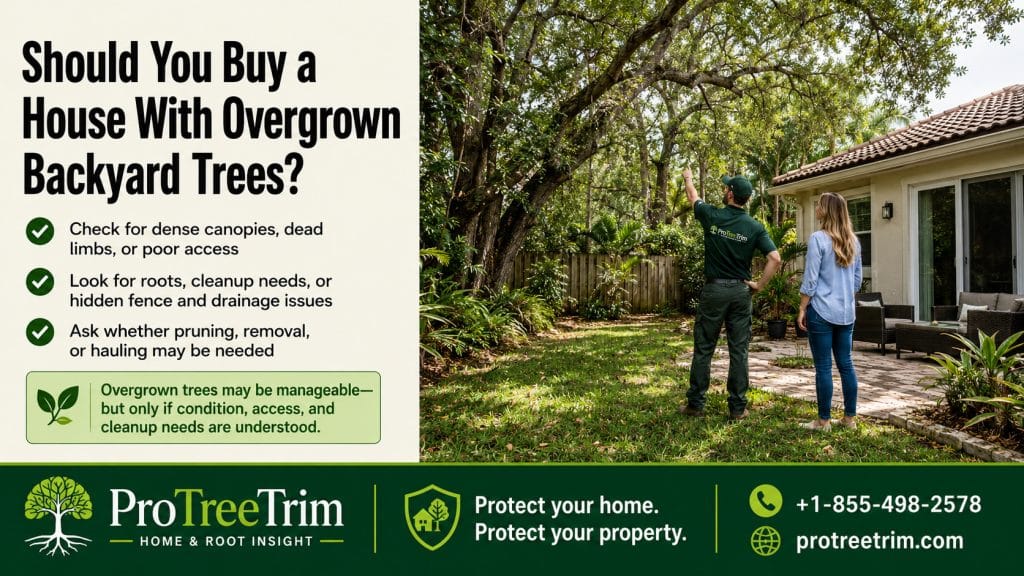
Overgrown backyard trees are not automatically a problem. They may give the property privacy, shade, and a more established feel. But thick growth can also hide dead limbs, fence damage, roof contact, poor drainage, old stumps, uneven pavers, or access issues that become your responsibility after closing.
A Full Backyard Can Hide Useful Clues
A backyard may look lush in listing photos and crowded in person. Before you decide whether the trees are a benefit or a burden, walk the yard slowly. Look at how the trees affect the spaces people actually use: patio, pool cage, fence line, side gate, shed, walkway, outdoor seating area, and lawn.
The issue is not simply whether the trees are large. It is whether they make the yard harder to use, harder to maintain, or more expensive to manage later.
| What you see | Why it matters as a buyer |
|---|---|
| Low limbs over patio or deck | May limit usable outdoor space |
| Branches touching roof, shed, or pool cage | May need trimming or repair |
| Dense growth along fence line | Can hide broken panels, roots, or neighbor issues |
| Dead limbs inside the canopy | May become future cleanup or safety concerns |
| Tree debris covering pavers | Can hide uneven surfaces or settling |
| Overgrown side gate area | Future tree work access may be harder |
| Old stump hidden in growth | May mean unfinished removal work |
Shade and Privacy Still Have Value
Do not assume overgrown means bad. A backyard with mature trees may be more attractive than an exposed yard with no shade. In warm climates, shaded outdoor spaces can make patios, pool areas, and backyards more comfortable.
The question is whether the trees are well placed.
A healthy tree creating privacy along the back fence may be a major plus. A heavy limb resting on a pool screen is not. A shade tree over lawn may be fine. A tree blocking the only side-yard access route could make future trimming or removal more complicated.
Think in two columns: what the tree adds and what it may cost.
| Tree benefit | Possible tradeoff |
|---|---|
| Privacy from neighbors | Boundary trimming may be needed |
| Cooler patio or yard | More leaf and debris cleanup |
| Mature landscape feel | Higher pruning or removal cost later |
| Wildlife and natural shade | Hidden deadwood or storm debris |
| Better backyard atmosphere | Access challenges for future tree work |
Look for Hidden Damage Before You Fall in Love With the Yard
Overgrown yards can hide small problems until you own them. During your inspection period, look under the canopy and along edges.
Check for:
- broken or leaning fence panels
- branches rubbing a shed, roof, or screen enclosure
- dead limbs caught inside the canopy
- old storm debris behind shrubs
- roots lifting pavers or stepping stones
- standing water under heavy shade
- soft soil around old stumps
- vines hiding trunk wounds or decay
- narrow gate access for future crews
If a backyard tree is close to a pool cage, fence, roofline, or utility area, do not treat it as a simple landscaping issue. It may involve trimming, debris control, repair records, or future access planning.
Ask What Work Has Already Been Done
A heavily grown backyard may have a maintenance history. Ask the seller whether trees were trimmed recently, whether any trees were removed, and whether storm damage was cleaned up.
Useful questions include:
- Has any tree work been done in the backyard recently?
- Were any trees removed from the yard?
- Are there old stumps or roots under the grass?
- Has the fence been repaired because of tree damage?
- Do branches touch the pool cage, shed, roof, or neighbor’s fence?
- Does the backyard flood or stay wet after rain?
- Can tree crews access the yard through the side gate?
If the seller has invoices, before-and-after photos, stump grinding notes, or repair receipts, ask to review them. Those records can help you separate normal maintenance from a hidden project.
Consider Post-Closing Costs
Overgrown trees may require more than one kind of work after closing. You may need selective pruning, deadwood removal, palm cleanup, stump grinding, fence repair, gutter cleaning, pool screen repair, or paver leveling.
Access can affect cost. A large tree in an open yard is one thing. A large tree behind a narrow gate, beside a pool cage, over a fence, or near irrigation lines can be more complicated.
Before closing, think about the first 90 days of ownership. Would you need tree work immediately to use the yard comfortably? Would you feel safe letting children, pets, or guests use the patio under those branches? Would you need to clear the side gate before any crew could even reach the tree?
When Overgrown Trees Are Manageable
Overgrown backyard trees may be manageable if they are healthy, not touching structures, not hiding major damage, and not blocking access. In that case, you may simply budget for routine pruning and cleanup after closing.
They may even be a reason to like the property more. A shaded, private backyard can be hard to recreate quickly with new plantings.
When to Slow Down Before Buying
Take the issue more seriously if you see large dead limbs, cracked trunks, leaning trees, branches on the pool cage, roots lifting pavers, fence damage, standing water, or old stumps in active-use areas.
Also slow down if the backyard is so overgrown that you cannot inspect the fence line, drainage, root areas, or tree bases clearly. Hidden conditions are where surprise costs often begin.
If you are unsure whether overgrown backyard trees, dead limbs, stumps, roots, or pool-cage branches should be handled before or after buying a home, ProTreeTrim can help connect homeowners with local tree service support. Call +1-855-498-2578 or visit protreetrim.com.
FAQs
Are overgrown backyard trees a dealbreaker when buying a home?
Not usually. They may add shade and privacy, but buyers should check for dead limbs, structure contact, hidden stumps, drainage issues, and access problems.
Should I ask the seller to trim backyard trees before closing?
If branches touch structures, block access, hang over a pool cage, or include large dead limbs, it is reasonable to ask for records, trimming, or further review.
Can overgrown trees hide property damage?
Yes. Dense growth can hide broken fences, uneven pavers, old stumps, standing water, roof contact, or deadwood inside the canopy.
What should I photograph during inspection?
Photograph the full backyard, tree bases, canopy over patios or pool cages, fence line, roots, stumps, side gate access, drainage areas, and any visible dead limbs.
ProTreeTrim™ can help you take the next step.
If you are dealing with a damaged tree, fallen branch, stump, root issue, palm concern, or storm cleanup question in Florida, call ProTreeTrim for tree service support.