
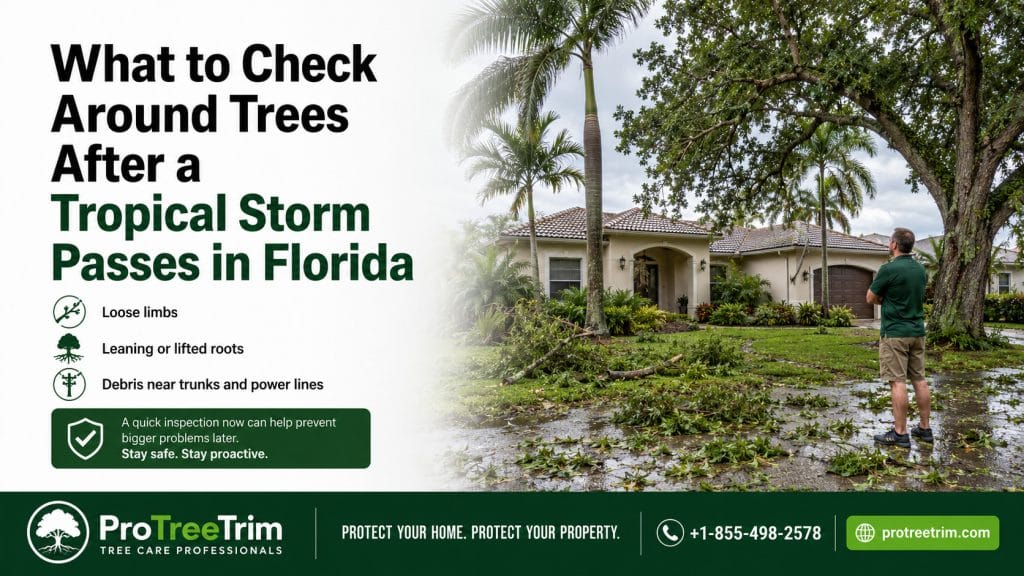
After a tropical storm passes, do not judge your yard only by what fell on the ground. Some of the most important tree problems are still overhead, near the trunk, or around the roots. Florida homeowners should check safely, document damage early, and avoid cutting heavy limbs or touching anything near utility lines.
Start With What Could Still Move
The first walk-through should be slow and cautious. Stay out from under large branches, even if they look still. A cracked limb can hang for hours or days before it drops, especially after wind has twisted it or another branch is holding part of the weight.
Look up before you look down. Are there limbs broken but still attached? Palm fronds hanging over the roof or pool cage? A branch resting on another tree? A split in the trunk that was not there before the storm?
Then check the direction of risk. A damaged tree over an open lawn is one situation. A damaged tree over a bedroom, driveway, fence, screen enclosure, septic area, or neighbor’s property is more urgent.
| What to check first | What to notice |
|---|---|
| Overhead limbs | Cracks, hanging branches, broken palm fronds |
| Trunk | Fresh splits, torn bark, new wounds |
| Base of tree | Lifted soil, exposed roots, soft ground |
| Lean | New angle or worsening lean after rain |
| Roofline and gutters | Branch contact, broken limbs, debris buildup |
| Pool cage or lanai | Torn screens, bent frame, limbs resting on panels |
| Driveway and gate | Blocked access, cracked pavers, trapped vehicles |
| Utility area | Trees, limbs, fences, or water near power lines |
Check the Roots and Soil Before Cleanup Hides the Evidence
Florida soil can change quickly after heavy rain. A tree may still be standing, but the ground around it may tell a different story. Look for a raised mound on one side of the trunk, cracks in the mulch, roots pulled out of the soil, or a gap opening near the base.
Do not step onto a lifted root plate. Do not dig around roots to “see how bad it is.” If the tree shifts, your weight or an improper cut can make the situation less stable.
Also watch for water patterns. Is one tree bed still mushy while the rest of the yard has drained? Did rain wash soil away from the roots? Is water collecting near a stump hole, driveway edge, or paver walkway? Those details matter for future cleanup, stump grinding, drainage repair, or replanting.
Photograph Before the Yard Changes
Before branches are cut, dragged, stacked, or hauled away, take photos from safe angles. Start wide: the full tree, the direction of fall, the yard layout, and nearby structures. Then move to close-ups of the damage.
Useful photos include:
| Photo | Why it helps |
|---|---|
| Full tree from the street or yard | Shows size, lean, and location |
| Broken limb or trunk split | Documents storm damage before cutting |
| Root area | Shows lifting, exposed roots, or soil movement |
| Roof, pool cage, fence, or driveway damage | Helps explain what the tree affected |
| Blocked access | Shows urgency if driveway or gate is unusable |
| Before-and-after cleanup | Keeps records clear for insurance, HOA, or property management |
For vacation homes or rental properties, ask whoever checks the house to take wide, steady photos before cleanup starts. A close-up of one branch is rarely enough to understand the situation.
Know What Can Wait and What Should Not
Light debris, small twigs, and scattered palm fronds can usually wait until conditions are safe. Large hanging limbs, split trunks, newly leaning trees, uprooted trees, or anything touching utility lines should not be treated as routine yard cleanup.
Do not turn post-storm cleanup into a rushed DIY pruning job. Wet limbs are heavy. Branches under tension can swing or roll. A tree resting on a fence, roof edge, vehicle, or pool cage may shift when the first cut is made.
If you are unsure whether storm-damaged trees, palms, roots, or stumps need professional attention after a tropical storm, ProTreeTrim can help connect Florida homeowners with local tree service support. Call +1-855-498-2578 or visit protreetrim.com.
FAQs
Should I inspect trees right after a tropical storm?
Only when it is safe. Avoid overhead limbs, wet roofs, unstable trees, and anything near power lines.
What tree damage is most urgent after a storm?
A split trunk, new lean, lifted roots, large hanging limb, blocked driveway, or tree touching utility lines should be handled carefully.
Should I clean up before taking photos?
If safety allows, take photos first. Once branches are cut and hauled away, it is harder to document what happened.
ProTreeTrim™ can help you take the next step.
If you are dealing with a damaged tree, fallen branch, stump, root issue, palm concern, or storm cleanup question in Florida, call ProTreeTrim for tree service support.