
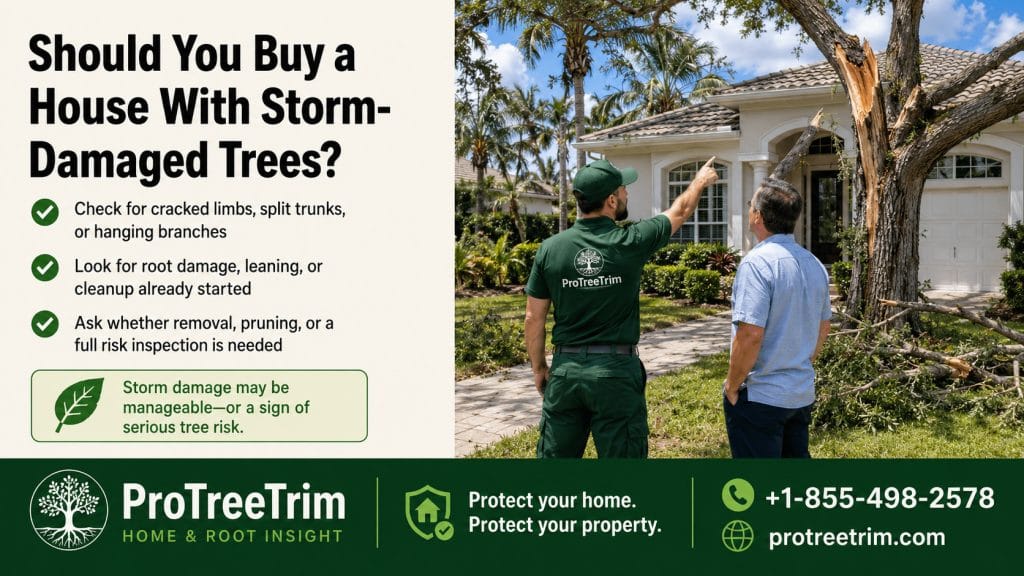
Storm-damaged trees do not automatically make a house a bad buy. Many yards recover well after branches are trimmed, debris is cleared, and damaged trees are removed. The concern is whether the damage is finished and documented—or whether you are about to inherit leaning trunks, cracked limbs, hidden root movement, roof contact, fence damage, or expensive cleanup after closing.
Start With What Is Still Standing
Storm debris on the ground is one thing. Storm damage still hanging in the tree is another.
During a showing or inspection period, look beyond the cleaned-up lawn. A seller may have removed fallen branches but left cracked limbs overhead. A tree may look green but have a split trunk. A palm may still stand but lean more than it used to. A large branch may be hanging above the driveway, roof, pool cage, or fence.
| What you see | Why it matters as a buyer |
|---|---|
| Broken limb still hanging | Safety and cleanup concern |
| Split trunk or torn bark | Structural concern may remain |
| Tree leaning after storm | Root or soil movement may be involved |
| Large limb over roof or driveway | Future damage risk and removal cost |
| Fresh stump but rough yard finish | Stump grinding, chips, or settling may remain |
| Fence or pool cage damage near tree | Related repairs may not be complete |
| Branches near power lines | Utility safety comes before tree work |
A yard can look “mostly cleaned up” and still have an unresolved tree problem.
Ask What Happened During the Storm
Storm damage has a history. Try to learn it before closing.
You do not need a dramatic story. You need practical details: what fell, what was removed, what was repaired, and what still needs attention.
Ask:
- Which trees were damaged?
- Did any tree hit the roof, fence, pool cage, driveway, or utility line?
- Were branches only cleared from the ground, or was the tree inspected and pruned?
- Was any tree removed?
- Was the stump ground?
- Were chips removed or left behind?
- Were roof, gutter, fence, pool screen, or paver repairs made?
- Are there invoices, photos, insurance records, or contractor notes?
A seller who can show records gives you a cleaner picture. A seller who says “the storm cleanup was handled” but has no details may still be telling the truth—but you may need to look more carefully.
Look for Hidden Post-Storm Problems
Storm damage is not always obvious after the first cleanup.
A tree can lose roots on one side and remain standing. A limb can crack without falling. A trunk can split inside a dense canopy. Soil can lift around the root plate and then be covered by mulch. A stump can be cut low but never ground. A fence can be patched while the damaged branch above it remains.
Pay attention to these clues:
| Hidden clue | What it may suggest |
|---|---|
| Fresh mulch around one tree | Could be routine landscaping or covering root disturbance |
| New sod patch | May cover stump grinding, root work, or storm cleanup |
| Recent fence panel replacement | Ask whether a limb caused the damage |
| Patched pool screen below a tree | Tree debris may have hit the enclosure |
| Dead branches inside green canopy | Storm damage may not be fully removed |
| Soil raised on one side of trunk | Possible root movement |
| Fresh large pruning cuts | Ask what was removed and why |
None of these signs automatically means the house is a bad purchase. They simply deserve questions before you own the yard.
Separate Cleanup Cost From Tree Risk
Some storm-related issues are mostly cleanup. Others affect safety, structures, or future cost.
A pile of small branches behind the shed may be annoying but manageable. A cracked oak limb over the bedroom is different. A palm frond on the pool deck is cleanup. A leaning palm aimed at the pool cage is a bigger question.
| More manageable | More concerning |
|---|---|
| Small debris already cleared | Hanging limb still overhead |
| Old stump in far corner | Fresh stump near walkway or patio |
| Minor leaf litter in gutters | Branches still touching roofline |
| One repaired fence panel | Tree still leaning into fence |
| Healthy tree with old broken twigs | Split trunk or large dead limb |
| Open access for future work | Tight access near pool cage, fence, or wires |
As a buyer, the decision is less about whether a storm happened and more about whether the remaining condition is clear.
Think About the First 90 Days After Closing
If you buy the home, what tree work might you need immediately?
You may need deadwood removal, roofline clearance, palm cleanup, stump grinding, debris hauling, fence repair, pool screen repair, gutter cleaning, or paver leveling. If the damaged tree is near a roof, driveway, utility area, pool cage, septic area, or neighbor’s property, the work may be more complicated.
Ask yourself:
- Would I feel comfortable parking under this tree?
- Would children, pets, or guests use this area?
- Can a crew access the tree safely?
- Are utility lines involved?
- Would removal require fence or pool-cage protection?
- Is the stump or root area finished cleanly?
- Will this become a negotiation issue, a repair credit, or a post-closing budget item?
A storm-damaged tree may not stop the purchase, but it should be part of your realistic ownership cost.
What to Photograph During the Inspection Period
Take wide, useful photos. Do not stand under cracked limbs or near wires for a better angle.
Photograph:
- full tree from several sides
- broken limbs, cracks, or torn bark
- trunk base and visible roots
- lean direction
- roofline, gutters, fence, pool cage, driveway, or walkway nearby
- fresh stump or stump grinding area
- patched screens, repaired fence panels, or reset pavers
- access route for future tree work
These photos help you ask better questions and compare conditions later if you decide to buy.
When Storm-Damaged Trees Are Manageable
Storm damage may be manageable if unsafe limbs were removed, the remaining trees look stable, access is reasonable, repairs are complete, and the seller has records.
A cleaned-up yard with invoices, photos, and finished repair areas is very different from a yard where the most visible debris was removed but the damaged tree remains unresolved.
When to Slow Down Before Buying
Slow down if you see a split trunk, new lean, lifted soil, large hanging limb, dead tree, branches near power lines, roof contact, pool cage damage, or fence damage that appears connected to an active tree issue.
Also slow down if the seller recently removed a tree but left a stump, loose chips, settling soil, or damaged hardscape in a visible area. That may become your project immediately after closing.
If you are unsure whether storm-damaged trees, hanging limbs, stumps, or root issues should be handled before or after buying a home, ProTreeTrim can help connect homeowners with local tree service support. Call +1-855-498-2578 or visit protreetrim.com.
FAQs
Is storm tree damage a dealbreaker when buying a house?
Not always. It depends on whether dangerous limbs, leaning trees, roof contact, stump issues, or related repairs are still unresolved.
Should I ask the seller for storm cleanup records?
Yes. Ask for tree service invoices, debris hauling receipts, before-and-after photos, stump grinding details, and any roof, fence, gutter, or pool screen repair records.
What if the yard looks clean after storm damage?
Still check the trees. Ground debris can be removed while cracked limbs, root movement, trunk splits, or deadwood remain overhead.
Should I ask for tree work before closing?
If damaged trees threaten the house, driveway, pool cage, fence, walkway, or utility area, it is reasonable to ask for records, repair, credit, or further review during the inspection period.
ProTreeTrim™ can help you take the next step.
If you are dealing with a damaged tree, fallen branch, stump, root issue, palm concern, or storm cleanup question in Florida, call ProTreeTrim for tree service support.