

A branch near wires may look like a small Saturday project. It is not. Tree trimming near electrical lines can turn dangerous before the first cut is finished. Homeowners should not use ladders, pole saws, ropes, pruning tools, or rented equipment near overhead wires. The safer first move is to step back and call the utility.
Continue reading Why DIY Tree Trimming Near Wires Is Not Worth the RiskGuides
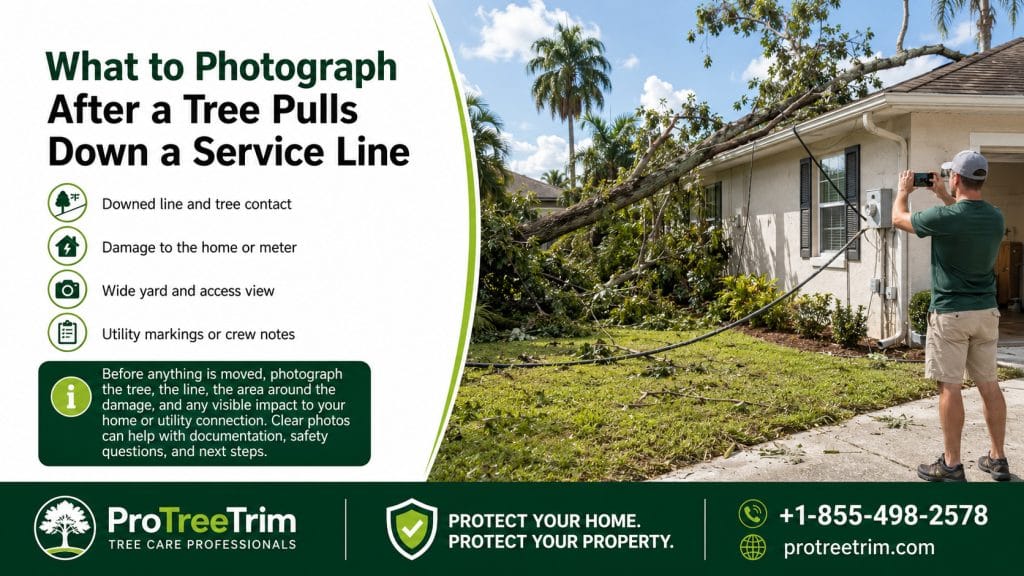
What to Photograph After a Tree Pulls Down a Service Line
If a tree pulls down a service line, photos matter—but distance matters more. Do not walk under the tree, touch the line, move the branch, or step near anything the wire may be touching. Call the utility or emergency services first. Once the electrical hazard is addressed, document the tree, the line path, property damage, and cleanup work from safe angles.
Continue reading What to Photograph After a Tree Pulls Down a Service Line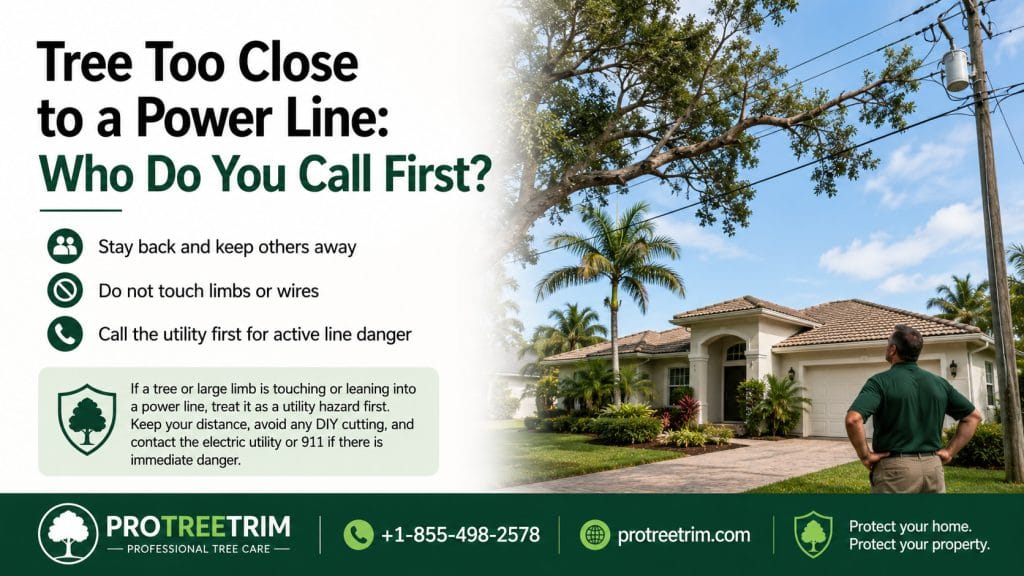
Tree Too Close to a Power Line: Who Do You Call First?
If a tree is too close to a power line, the first call is usually the utility, not a regular tree crew. Branches near electrical lines are not routine trimming. The safest next step depends on whether the branch is touching the line, close to it, storm-damaged, or part of a tree that may need pruning or removal after the electrical hazard is addressed.
Continue reading Tree Too Close to a Power Line: Who Do You Call First?
What Homeowners Should Not Do When Branches Grow Near Utility Lines
Branches near utility lines can turn a routine-looking trimming job into a serious safety problem. The safest move is usually not to cut, pull, climb, or guess. Homeowners should step back, identify whether electrical lines may be involved, contact the utility when needed, and save tree service work for after the electrical risk is addressed.
Continue reading What Homeowners Should Not Do When Branches Grow Near Utility Lines
Who Should Trim Trees Near the Service Line to Your Home?
Trees near the service line to your home are not a normal pruning job. If branches are close to electrical wires, touching a line, or hanging over the connection to the house, the first question is not how to cut them. It is who can handle the work safely and whether the utility needs to be contacted first.
Continue reading Who Should Trim Trees Near the Service Line to Your Home?
What Changes Around Trees Matter Most Between May and September?
Between May and September, trees can change quickly. A yard may move from dry soil and heat stress to heavy rain, soft ground, fast growth, and storm-season wind. Homeowners should not watch only the leaves. The most useful clues often show up around roots, drainage, limb weight, mulch beds, and nearby structures.
Continue reading What Changes Around Trees Matter Most Between May and September?
Why Spring Growth Can Hide Tree Risk Before Storm Season
Fresh spring growth can make a yard look healthy fast. New leaves, fuller shade, and bright palm crowns are reassuring, but they can also distract homeowners from older problems that did not disappear over winter: cracked limbs, weak branch unions, root stress, trunk wounds, poor drainage, or trees growing too close to the house.
Continue reading Why Spring Growth Can Hide Tree Risk Before Storm Season
What to Watch on Yard Trees After a Long Dry Spell
A long dry spell can leave a tree looking only slightly tired at first. The real signs may show up later: thinning leaves, dead branch tips, early leaf drop, cracked soil, exposed roots, or limbs that become more brittle before the next round of rain and wind. Homeowners should look at both the canopy and the ground before assuming the tree will bounce back on its own.
Continue reading What to Watch on Yard Trees After a Long Dry Spell
What to Check on Yard Trees Before Summer Rain Patterns Start
Summer rain can expose tree problems that looked quiet during drier weeks. Before the pattern shifts, homeowners should check the base of trees, drainage paths, heavy limbs, mulch depth, irrigation, and access routes. The goal is not to panic-prune. It is important to notice weak spots before repeated rain, wind, and saturated soil make decisions harder.
Continue reading What to Check on Yard Trees Before Summer Rain Patterns Start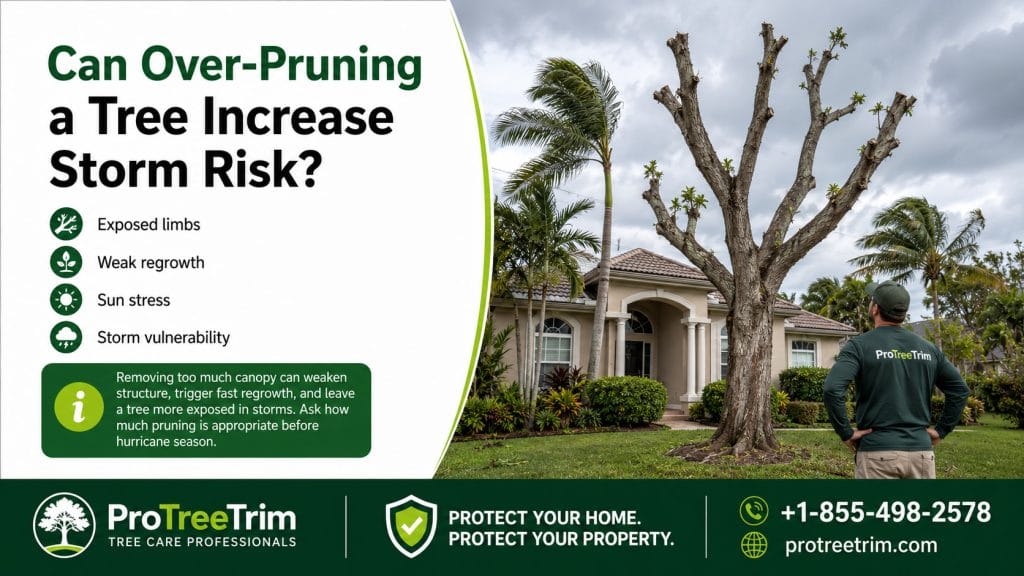
Can Over-Pruning a Tree Increase Storm Risk?
A freshly trimmed tree can look cleaner and safer from the driveway, but that first impression can be misleading. Over-pruning may remove too much live canopy, expose limbs to new stress, encourage weak regrowth, or leave the tree poorly balanced before wind and rain arrive. Good storm prep is selective. It is not stripping the tree down.
Continue reading Can Over-Pruning a Tree Increase Storm Risk?